Traditional SEO is fundamentally broken for 2026. When AI overviews dominate search results, users click through to traditional websites only 8% of the time. The game has changed from optimizing for clicks to optimizing for citations: and most businesses are completely unprepared.
Here’s the uncomfortable truth: AI systems now summarize and cite content rather than directing users to your website. If you’re not optimizing for generative AI engines like ChatGPT, Claude, and Google’s AI Overviews, you’re essentially invisible in the new search landscape.
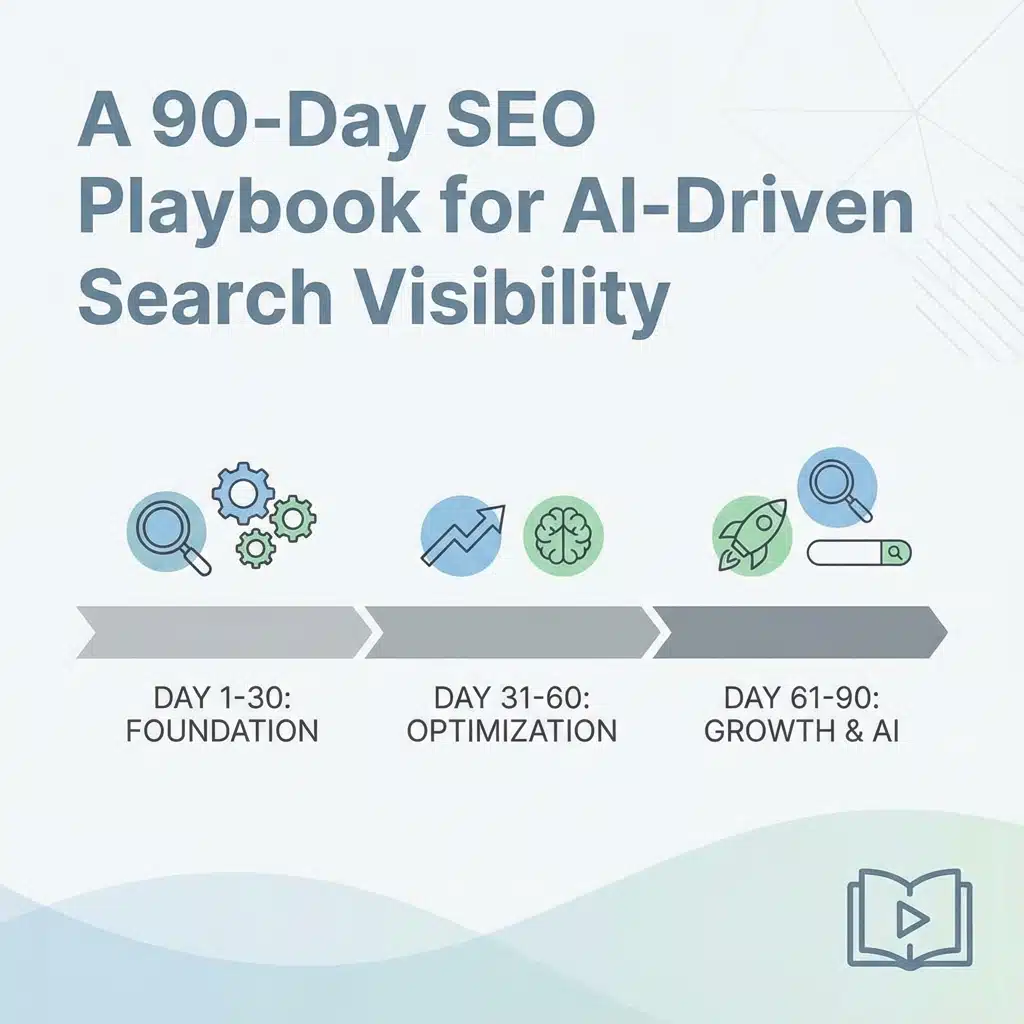
This 90-day playbook will transform your SEO strategy from outdated keyword targeting to AI-driven search visibility: the only approach that works when algorithms decide which brands deserve mentions in AI-generated answers.
Phase 1: Strategic Foundation (Days 1-14)
The critical difference between traditional SEO and AI optimization starts with strategic positioning rather than tactical keyword research. Your objective isn’t ranking for keywords: it’s becoming the authoritative source AI systems automatically cite.
Week 1: Topic Authority Mapping
Identify 5-10 core topics you want AI systems to associate with your brand. This isn’t about search volume: it’s about establishing topical dominance that makes AI engines recognize your expertise.
Map the questions users ask most often within each topic:
- Definitional queries (“What is…”)
- Comparison searches (“X vs Y”)
- Decision-making intent (“Best,” “How,” “Why”)
Week 2: Cross-Functional Alignment
Secure buy-in from product, sales, and content teams. AI optimization requires coordinated effort across departments because AI systems evaluate entity relationships and content depth, not isolated pages.
Document your current content gaps and establish content creation workflows that support long-term authority building.

Phase 2: Technical and Content Foundation (Days 15-42)
This phase focuses on making your website AI-readable and citation-worthy. AI systems have specific content preferences that differ dramatically from traditional SEO signals.
Week 3-4: Technical Infrastructure
Execute critical technical fixes that prevent AI crawling issues:
- Audit robots.txt files for accidental AI crawler blocks
- Eliminate redirect chains longer than 2 hops
- Implement canonical tags on all content pages
- Add structured data markup for enhanced entity recognition
Consider a comprehensive SEO audit to identify technical barriers preventing AI systems from properly indexing your content.
Week 5-6: AI-Optimized Content Templates
Create content structures proven to generate AI citations:
Definition Posts: 800-1,200 word articles that comprehensively define industry concepts. Include expert quotes, data points, and clear section headers.
Process Guides: Step-by-step tutorials with numbered lists, prerequisites, and expected outcomes. AI systems favor content that directly answers “how to” queries.
Comparison Articles: Head-to-head evaluations using consistent criteria. Include pros/cons tables and definitive recommendations.
Build topical clusters around each core topic: one pillar page supported by 5-7 cluster articles. This architecture helps AI systems understand your content relationships and topical depth.
Phase 3: Authority and Trust Signals (Days 43-70)
AI systems heavily weight expertise, authoritativeness, and trustworthiness (E-E-A-T) when selecting sources for citations. This phase builds the credibility signals that separate citation-worthy content from ignored pages.
Week 7-8: Original Data and Research
Publish proprietary content containing unique data points. AI systems prioritize original research over recycled information:
- Industry surveys with novel insights
- Case study data from client work
- Performance benchmarks from your tools or services
These assets become linkable resources that naturally attract backlinks from industry publications.
Week 9-10: Strategic Link Building
Target 15+ industry newsletters and publications with your original research. Focus on earning natural mentions rather than traditional link exchanges.
Content refresh strategy: Update your top-performing pages with:
- New data and statistics
- Enhanced author credentials
- FAQ schema markup addressing common questions
- Internal links to related cluster content
Expert SEO Consulting’s content optimization for AI search service can accelerate this process by identifying which existing pages have the highest citation potential.

Phase 4: Visibility Expansion (Days 71-90)
The final phase extends your visibility into multimodal search results: visual and video components of AI answers that capture additional user attention.
Week 11: Visual Optimization
AI systems increasingly incorporate images, infographics, and videos into generated responses. Optimize visual content with:
- Descriptive alt text that explains image relevance
- Image schema markup for enhanced context
- Consistent visual branding across all graphics
Week 12: Conversion Infrastructure
Transform informational content into business opportunities:
- Add strategic CTAs to high-traffic blog posts
- Create dedicated landing pages for consultation bookings
- Implement lead magnets like downloadable guides or tool access
Many businesses see 2-3x increases in blog-assisted leads after implementing proper conversion infrastructure on AI-optimized content.
Expected Results and Measurement
Organizations following this 90-day playbook typically experience:
Month 1: 15-30 newly indexed URLs and baseline traffic establishment
Month 2: 30-50% organic traffic increases from new content
Month 3: 2-3x improvement in content-driven lead generation
Track these AI-specific metrics:
- Citation mentions in AI-generated responses
- Featured snippet captures for target queries
- Entity recognition improvements in knowledge graphs
- Content engagement depth (time on page, scroll depth)
Critical Success Factors
One Initiative Per Week: Avoid team burnout by focusing on single, high-impact activities rather than overwhelming multiple concurrent projects.
Content Quality Over Quantity: AI systems reward comprehensive, authoritative content over high publishing volume. Better to publish one exceptional piece weekly than five mediocre articles.
Entity Consistency: Maintain consistent brand mentions, author credentials, and topic associations across all content. AI systems build confidence through repeated, reliable signals.
Common Implementation Pitfalls
Keyword-First Thinking: Traditional keyword research fails in AI optimization. Focus on topics and user intent rather than specific search phrases.
Isolated Content Creation: AI systems evaluate content relationships and topical depth. Avoid creating standalone articles without supporting cluster content.
Technical Neglect: Even perfect content won’t get cited if AI systems can’t properly crawl and understand your website structure.
Getting Professional Support
Implementing this playbook requires significant content creation, technical optimization, and strategic coordination. Many businesses benefit from professional guidance, particularly for technical audits and content strategy development.
Expert SEO Consulting specializes in helping businesses transition from traditional SEO to AI-driven search visibility. Our team can accelerate your timeline and ensure proper implementation of each phase.
Ready to dominate AI-driven search results? Book a consultation to discuss your specific situation and develop a customized implementation strategy.
The businesses that adapt to AI-driven search now will dominate their industries for years to come. Those that continue relying on outdated SEO tactics will become increasingly invisible as AI systems reshape how users discover information.
Your 90-day transformation starts today: the question is whether you’ll lead the change or get left behind.