

Byline dates are quietly influencing your search rankings in ways most website owners completely misunderstand. While you're focused on keywords and backlinks, these seemingly simple timestamps are sending complex signals to both Google's algorithms and your potential visitors: signals that can make or break your content's performance in 2026.
Here's what most SEO experts won't tell you: adding dates to your content can actually hurt your traffic. A comprehensive 2024 case study revealed that simply displaying publish dates on evergreen content decreased organic traffic by 13.37% within one week. When those same dates were removed, clicks recovered by 10.10%. The rankings barely moved: but user behavior changed dramatically.
This isn't about gaming Google. It's about understanding the psychological and algorithmic forces that determine whether your content gets seen, clicked, and trusted in an increasingly competitive digital landscape.
The Freshness Signal Google Actually Cares About
Google's Query Deserves Freshness (QDF) algorithm has evolved significantly since its introduction, and in 2026, it's more sophisticated than ever. When someone searches for breaking news, technology updates, financial information, or seasonal content, Google's algorithm actively prioritizes recently published or updated content. But here's the critical distinction: Google doesn't just look at your visible dates.
The search engine synthesizes multiple date signals including your schema markup, visible on-page dates, sitemap lastmod values, and its own crawling history. Even with perfect structured data implementation using Article schema, Google may choose a completely different date than the one you intended, pulling from whichever signal it deems most reliable.
This means your carefully crafted date strategy might be irrelevant if Google decides otherwise.
The QDF algorithm triggers for approximately 35% of all searches, according to recent industry analysis. For queries where freshness matters: like "2026 email marketing trends" or "latest iOS update features": that byline date becomes a ranking factor. For searches where freshness is irrelevant, like "how to tie a tie," that same date might work against you.
The Psychology of Trust and the Credibility Trap
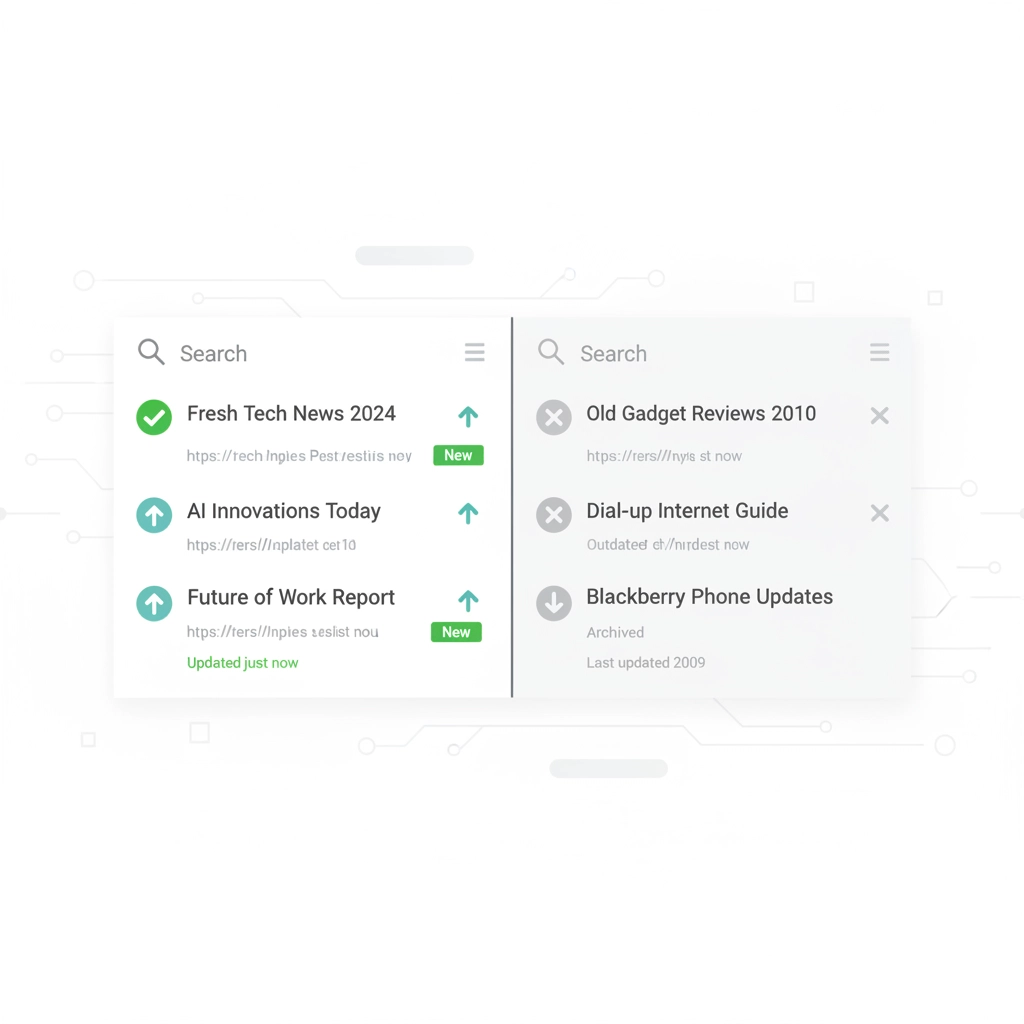
Users make snap judgments about content credibility within 50 milliseconds of viewing a page. Publication dates play a crucial role in this lightning-fast assessment. When readers see accurate publication dates paired with clear "last updated" labels for refreshed content, they're recognizing trust signals that competing content may not provide.
But this psychological mechanism creates a dangerous trap for publishers. The same 2024 case study that showed traffic drops from adding dates revealed something fascinating: 72% of keywords maintained stable rankings even as organic traffic plummeted. Google wasn't penalizing the content: users were simply choosing not to click on results that appeared outdated.
The problem isn't your content quality. It's user perception.
When someone searches for "best email marketing tools" and sees a publication date from three years ago, they're likely to skip your result entirely, even if your content remains perfectly accurate and comprehensive. That bounce behavior sends negative quality signals back to Google about your content's perceived value.
This creates a feedback loop where algorithmically sound content fails because of psychological factors, eventually leading to actual ranking decreases as Google interprets low engagement as a quality signal.
How Google Reads Your Date Signals in 2026
Google's approach to interpreting dates has become increasingly nuanced. The search engine no longer relies solely on visible dates or even structured data markup. Instead, it employs a complex hierarchy of trust signals:
Primary signals include:
- Structured data markup (Article, NewsArticle, BlogPosting schemas)
- Sitemap lastmod values
- HTTP headers indicating last modification
- Content change detection through crawling history
Secondary signals include:
- Visible dates in content
- URL date patterns
- Social media publication timestamps
- External citation dates
Here's where most publishers make critical errors: they assume updating a visible date will improve rankings. Google's John Mueller explicitly clarified in 2023 that simply modifying timestamps doesn't affect how content ranks in search results. The ranking benefit comes from substantive content improvements, not date manipulation.
Attempting to fake freshness backfires spectacularly. Google can penalize manipulative date practices by removing your ability to display dates in search results altogether: a penalty that's nearly impossible to reverse.

The SERP Display Mystery
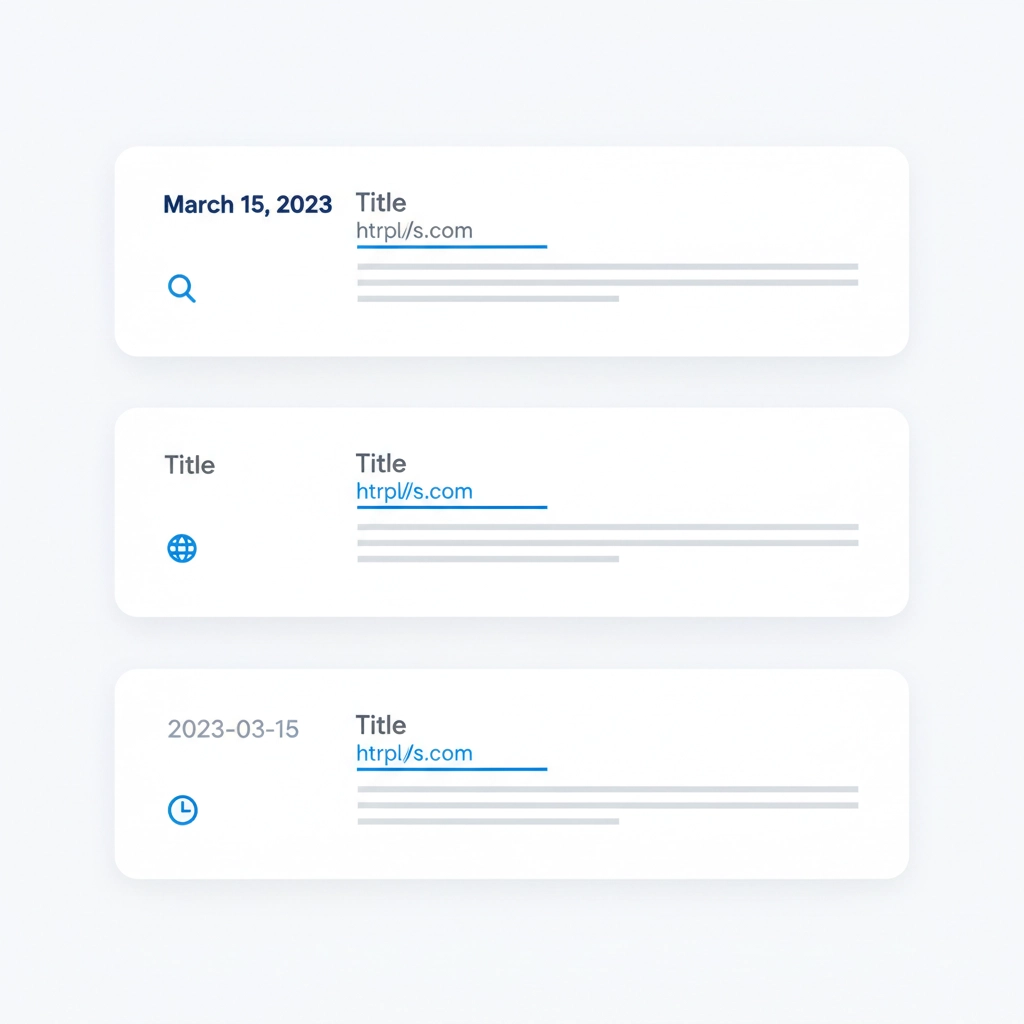
Whether Google displays your byline date in search results depends on factors largely outside your control. Even with perfect technical implementation, Google may choose not to show dates, show different dates than you intended, or display dates for some results but not others within the same search query.
This unpredictability means treating date display as a primary click-through rate strategy is fundamentally flawed. However, when dates do appear in SERPs, their impact on user behavior is significant:
- For freshness-dependent queries, recent dates can increase CTR by up to 25%
- For evergreen queries, visible dates showing age older than 12 months can decrease CTR by 15-30%
- Inconsistent date formatting across results can trigger user suspicion and reduce trust
The key insight: you can influence but cannot control how your dates appear in search results. Focus on authentic content freshness rather than date manipulation tactics.
Strategic Date Implementation for 2026
For Time-Sensitive Content:
Display visible publication dates prominently. Pair this with proper Article schema markup to help Google parse dates correctly. Update dates only when you've made substantive content improvements, not cosmetic changes.
For Evergreen Content:
Consider the psychological impact carefully. If your content provides lasting value that doesn't depend on timeliness: like fundamental tutorials or comprehensive guides: suppressing publication dates may improve performance. Instead, use "last updated" dates when you've genuinely refreshed and validated the material.
Technical Implementation:
- Use consistent ISO 8601 date formatting across your site
- Implement Article or BlogPosting schema markup on all content
- Ensure sitemap lastmod values reflect actual content changes
- Set up proper HTTP caching headers that align with your content freshness strategy
Content Strategy Alignment:
Match your date display strategy to your content's actual freshness needs. Expert SEO Consulting's AI Content Auditor can help identify which of your existing pages would benefit from date optimization versus date suppression.
Common Date Strategy Failures
The "Fake Freshness" Trap: Regularly updating dates without improving content destroys user trust and can trigger Google penalties. Users quickly notice when content hasn't actually changed despite new timestamps.
Inconsistent Schema Implementation: Using different date schemas across your site confuses Google's parsing algorithms and can result in incorrect date display in search results.
Ignoring User Intent: Applying the same date strategy to all content types ignores the fundamental differences between how users evaluate fresh versus evergreen information.
Technical Misalignment: Having visible dates, schema dates, and sitemap dates that contradict each other creates confusion that typically resolves in Google choosing none of your intended dates.
The Competitive Advantage
Most websites implement dates haphazardly: either showing them everywhere or nowhere, without strategic consideration of content type and user intent. This creates opportunities for sites that align their date strategy with both algorithmic factors and user psychology.
The most successful approach combines technical precision with psychological insight. Show dates when they add credibility and suppress them when they create doubt. Update dates only when content has genuinely improved. Use structured data consistently to help Google understand your freshness signals accurately.
This isn't about gaming the system: it's about aligning your technical implementation with user expectations and algorithmic preferences.
Sites that master this balance see measurable improvements in both search visibility and user engagement metrics. More importantly, they build the sustained credibility that survives algorithmic updates and competitive pressures.
Ready to audit your current date strategy and identify opportunities for improvement? Understanding how your content's timestamps are impacting both search performance and user behavior requires detailed analysis of your specific situation, content types, and competitive landscape.
Book a consultation with Expert SEO Consulting to discover how strategic date optimization can improve your search visibility and user engagement: without falling into the common traps that hurt most websites.