
Your best-performing blog post from 2023 is now bleeding traffic. That case study you spent weeks perfecting? It's slowly becoming invisible to AI search engines. This isn't speculation: it's the reality of content decay, and in 2026, it's accelerating faster than ever.
Here's the thing: 60% of content loses significant search visibility within 12 to 18 months of publication. For businesses relying on organic traffic, that's not just an inconvenience: it's a revenue leak that compounds over time. The solution isn't publishing more content. It's strategically refreshing what you already have.
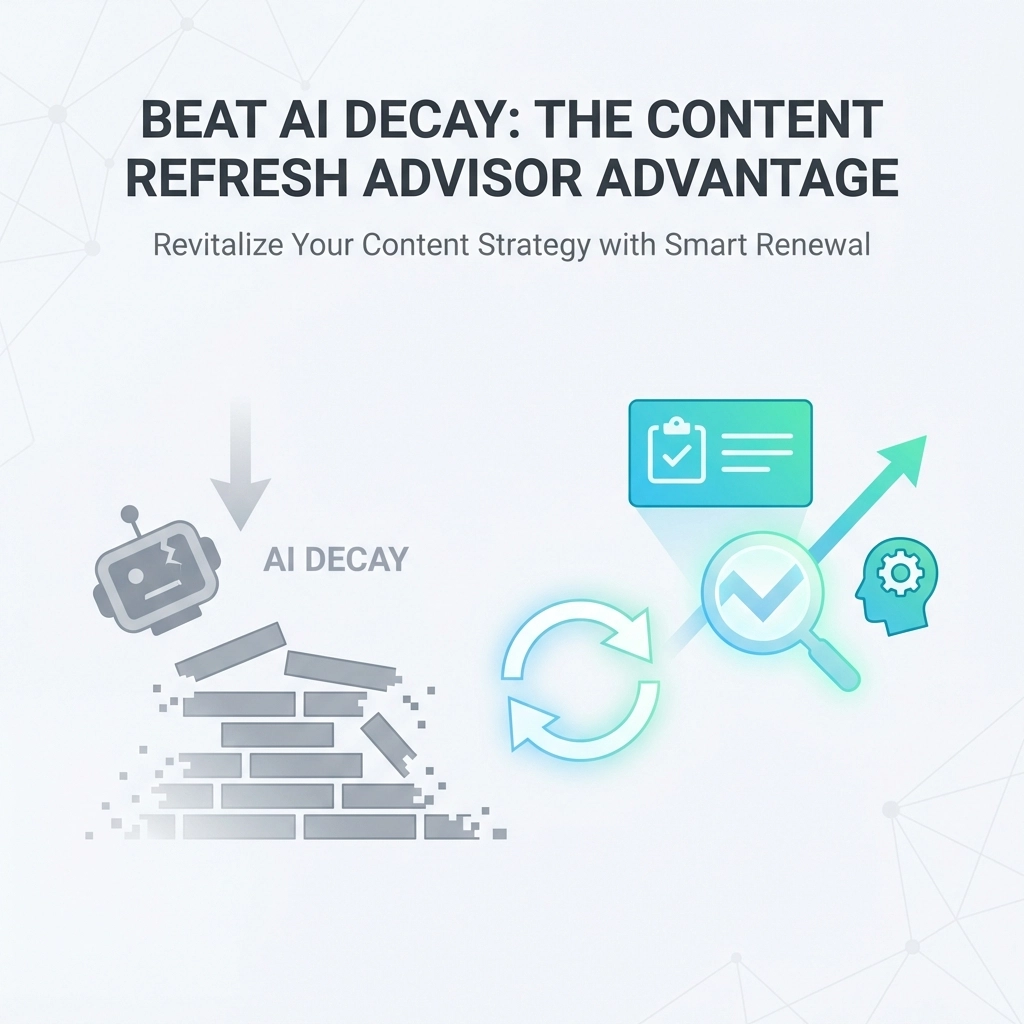
The Content Refresh Advisor changes the game by turning reactive content maintenance into a proactive growth strategy.
What Is AI Decay: And Why Should You Care?
Content decay occurs when your published pages gradually lose search visibility, traffic, and rankings. The causes are predictable: outdated statistics, shifting keyword trends, evolving user intent, and competitors publishing fresher, more comprehensive content on the same topics.
But AI decay adds a new layer of urgency.
AI-powered search engines like Google's AI Overviews, ChatGPT, and Perplexity don't just scan for keywords: they evaluate content freshness, factual accuracy, and topical completeness in real time. Stale content doesn't just rank lower in traditional search results. It gets excluded from AI-generated answers entirely.
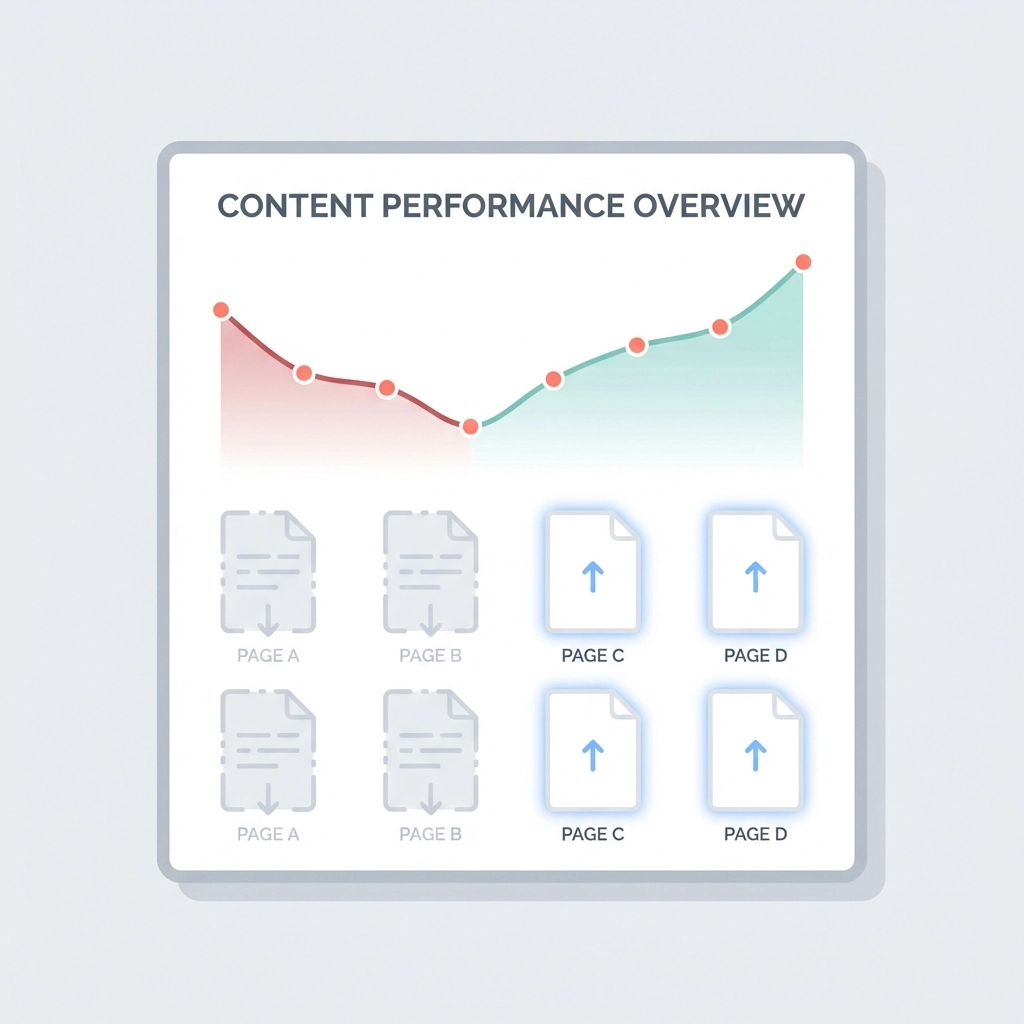
This means the stakes have fundamentally changed. Content that was "good enough" two years ago now actively hurts your visibility. AI systems prioritize sources that demonstrate ongoing authority and up-to-date expertise. If your content hasn't been touched since publication, AI search treats it as unreliable: regardless of how well it originally performed.
The Hidden Cost of Ignoring Content Decay
Most businesses focus their content budgets on creation. New blog posts, fresh landing pages, additional resources. But this approach ignores a critical reality: refreshing existing content delivers higher ROI than publishing new content in most cases.
Consider the math. A well-optimized refresh takes 2–4 hours. Creating equivalent new content from scratch takes 8–15 hours. Yet refreshed content often regains: and exceeds: its original traffic peaks within weeks, not months.
The businesses winning in AI search understand this. They're not just creating content; they're systematically maintaining and improving their existing content libraries. That's where the Content Refresh Advisor becomes essential.
How the Content Refresh Advisor Works
The Content Refresh Advisor, available through our optimization and analysis tools, automates the most time-consuming aspects of content maintenance. Instead of manually auditing hundreds of pages, you get intelligent recommendations prioritized by impact potential.
Here's what the tool delivers:
Automated Decay Detection
The advisor continuously monitors your content library, flagging pages experiencing traffic drops, ranking declines, or reduced AI citations before the damage becomes severe. Machine learning models predict which posts are likely to decay soon: allowing you to intervene proactively rather than reactively.
Actionable Refresh Recommendations
Each flagged piece receives specific, prioritized recommendations:
- Outdated statistics that need current data
- High-volume trending keywords to incorporate
- Semantic gaps: missing topics or questions your audience now cares about
- Competitor analysis showing what's outperforming your content
- Structural improvements for better readability and AI comprehension
AI Search Alignment Scoring
The tool evaluates how well your content aligns with current AI search requirements, including factual accuracy, source citation quality, and topical comprehensiveness. This score helps you understand exactly why AI systems might be deprioritizing your content: and what to fix.
Step-by-Step: The Proactive Content Refresh Process
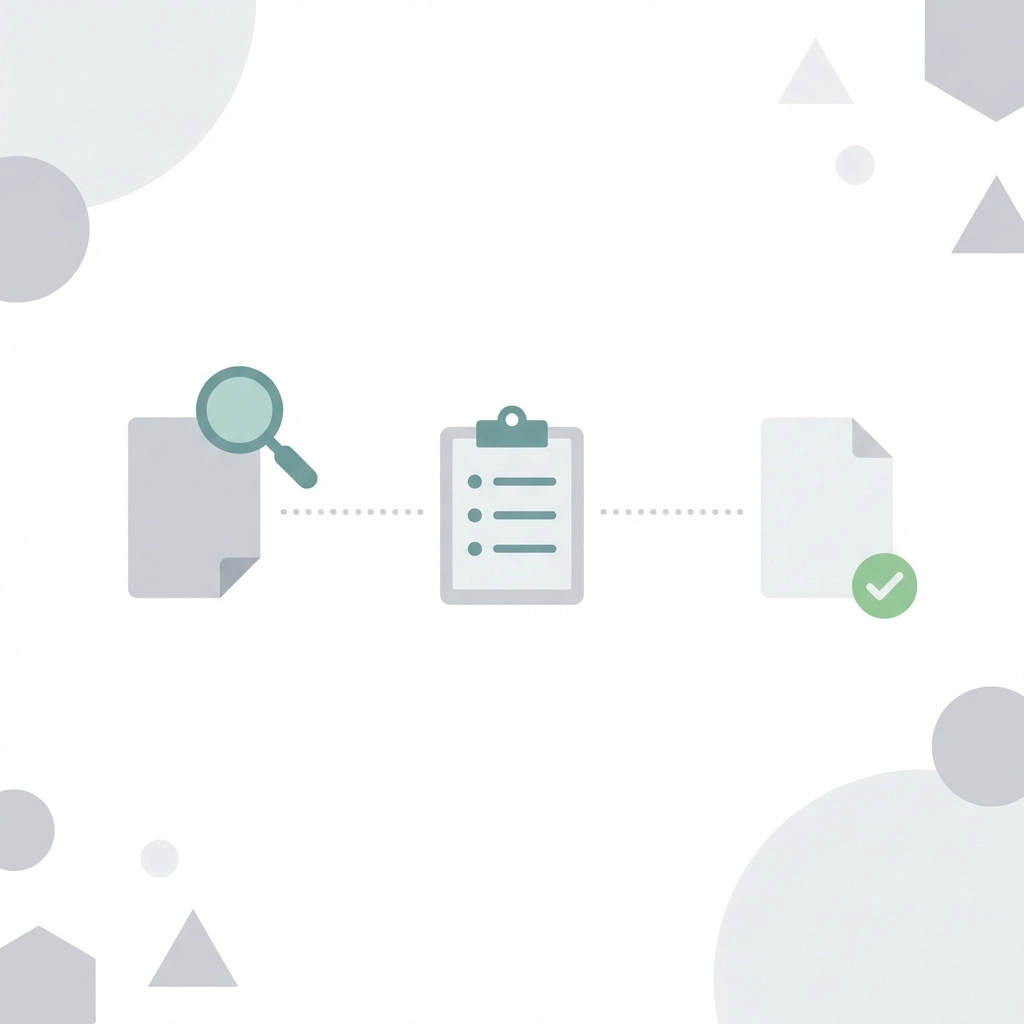
Beating AI decay requires a systematic approach. Here's the framework we recommend to clients at Expert SEO Consulting:
Step 1: Audit and Prioritize
Start by identifying which content deserves refresh attention. Not every page warrants investment. Focus on:
- Pages that previously drove significant traffic but have declined 20% or more
- Content targeting keywords with stable or growing search volume
- Pages that support your core service offerings and conversion goals
- Articles with strong backlink profiles that justify preservation
The Content Refresh Advisor automates this prioritization, scoring each page by refresh potential and business impact.
Step 2: Analyze Current Performance Gaps
For each prioritized piece, dig into the specifics. What's causing the decay?
Common culprits include:
- Statistics older than 18 months
- References to outdated tools, platforms, or best practices
- Missing coverage of subtopics that competitors now address
- Thin sections that lack the depth AI systems reward
- Headlines and meta descriptions that no longer match search intent
The advisor generates a detailed gap analysis for each piece, comparing your content against current top performers for the same keywords.
Step 3: Execute Strategic Updates
This is where most businesses stumble. They make superficial changes: updating a date here, swapping a statistic there: and expect meaningful results. That approach doesn't work anymore.
Effective refreshes require substantive improvements:
- Expand depth: Add new sections, case studies, or expert insights that weren't in the original
- Reposition intent: Convert outdated formats (like basic "How-To" posts) into comprehensive guides or actionable checklists
- Strengthen E-E-A-T signals: Include author credentials, cite authoritative sources, and add first-hand experience where possible
- Optimize for AI parsing: Use clear heading structures, direct answers to common questions, and well-organized information hierarchies
Our content optimization for AI search guide covers these techniques in detail.
Step 4: Republish and Monitor
After updating, republish with a current date and submit the URL for reindexing. Then monitor performance closely for 30–60 days. The Content Refresh Advisor tracks post-refresh metrics, showing you exactly how rankings, traffic, and AI citations respond to your changes.
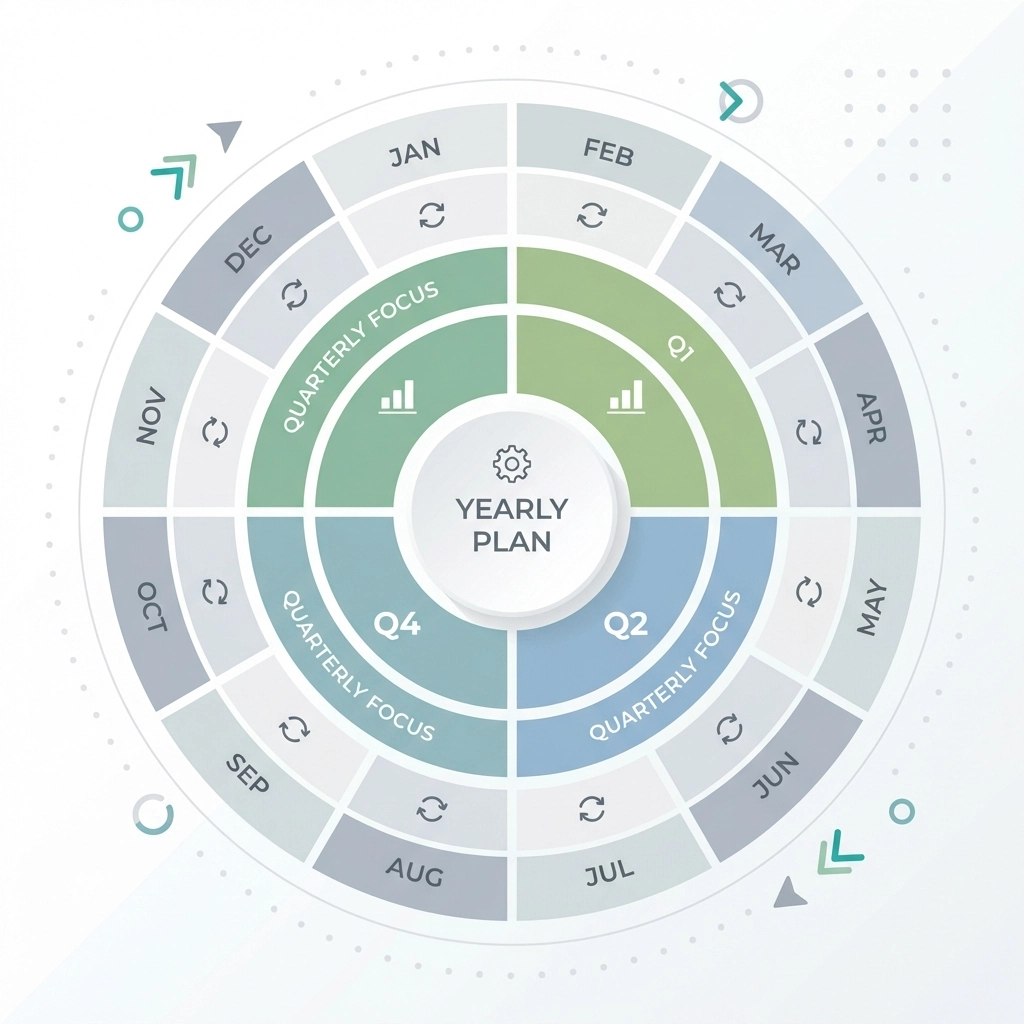
Building a Proactive Maintenance Schedule
One-time refreshes aren't enough. AI decay is continuous, which means your maintenance must be too.
Here's the cadence that delivers consistent results:
Monthly: Review traffic trends and keyword ranking changes. Flag any pages showing early decay signals for investigation.
Quarterly: Refresh data-heavy content. Update statistics, add recent case studies, and incorporate new industry developments.
Annually: Conduct comprehensive re-optimization of your highest-value pages. Revisit headlines, restructure content for current best practices, and ensure alignment with evolved search intent.
The Content Refresh Advisor supports this schedule with automated alerts and recommendation queues, ensuring nothing falls through the cracks.
Why This Matters More in 2026
AI search adoption is no longer gradual: it's exponential. Studies show that over 40% of search queries now trigger AI-generated responses, and that percentage climbs monthly. Users increasingly expect direct answers synthesized from multiple sources, not lists of blue links to click.
For your content to appear in those AI answers, it must meet a higher standard: current, comprehensive, and authoritative. The AI Content Auditor helps you evaluate readiness, but the Content Refresh Advisor ensures you maintain that readiness over time.
Businesses that treat content as a static asset will watch their visibility erode. Those that embrace systematic refresh strategies will compound their authority and expand their AI search presence.
Take Control of Your Content's Future
Content decay isn't a problem you solve once. It's a challenge you manage continuously: and the businesses that build proactive systems gain an insurmountable advantage.
The Content Refresh Advisor gives you the intelligence and workflow structure to stay ahead. Combined with our broader approach to optimizing content for AI, it transforms content maintenance from a reactive scramble into a predictable growth engine.
Ready to stop losing traffic to AI decay? Book a consultation and let's build a refresh strategy that keeps your content visible, authoritative, and working for your business.