
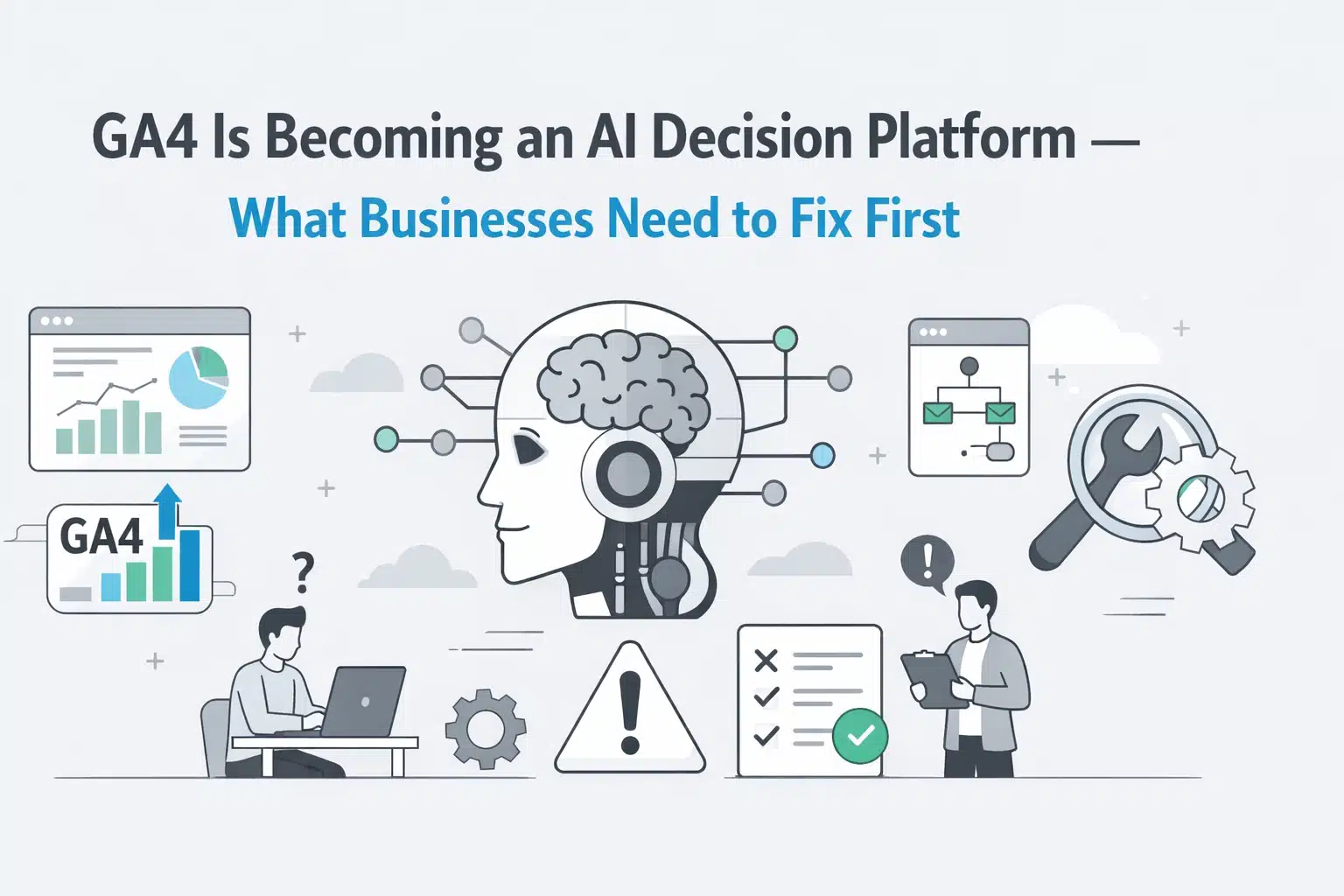
Google isn't just upgrading GA4: they're fundamentally repositioning it as an AI-powered business advisor that makes real-time optimization recommendations. The promise is compelling: predictive analytics that forecast customer churn, automated insights that explain revenue fluctuations, and eventually, autonomous campaign optimizations that require minimal human oversight.
Here's the problem: most businesses aren't anywhere close to ready for it.
If your conversion tracking is broken, your UTM parameters are inconsistent, and your CRM isn't talking to GA4, you're not getting AI-powered business intelligence. You're just getting AI-powered noise at scale.
What Google's Building (And Why It Matters)
GA4's roadmap for 2026 positions the platform as what Google calls "a world-class analyst available to every single person." That means AI that doesn't just report what happened: it explains why it happened, predicts what's likely to happen next, and recommends specific actions to improve outcomes.
The AI features rolling out include:
- Automated insights in natural language – The system detects anomalies (like a sudden spike in conversions) and automatically explains which audience segments, traffic sources, or product categories drove the change
- Predictive metrics – Churn probability, purchase likelihood, and revenue forecasting based on user behavior patterns
- Proactive optimization recommendations – AI that surfaces opportunities across millions of data points and suggests specific campaign adjustments
Eventually, Google envisions a system where optimizations happen automatically with human approval: marketing teams focus on strategy while AI handles tactical execution.

That's a massive shift from "analytics platform" to "decision platform." But there's a catch.
The AI Is Only As Good As Your Data
Google has been explicit about this: AI-powered features like predictive analytics and automated insights require high-quality data to function. Poor data quality doesn't just reduce accuracy: it fundamentally breaks the models.
If your event tracking is incomplete, your conversion definitions are inconsistent, or your data governance is nonexistent, the AI will absolutely generate insights and recommendations. They'll just be wrong.
And here's what I see constantly: businesses excited about GA4's AI capabilities who haven't done the foundational work to make any of it useful. They're running before they can walk.
What Actually Needs to Be Fixed First
Before you can leverage GA4 as an AI decision platform, you need to fix the infrastructure. Here's the prioritized list of what that looks like:
1. Clean Conversion and Event Tracking
GA4's flexibility is both its strength and its biggest trap. Unlike Universal Analytics, which had a rigid structure, GA4 lets you define custom events however you want. That means you must have a clear tracking plan.
What needs to be in place:
- Documented event taxonomy – What events you're tracking, what they mean, and when they fire
- Key events properly configured – GA4's replacement for "goals" that define business-critical actions
- Complete funnel visibility – Every step of the customer journey tracked, not just the endpoint
- Event parameter consistency – Standardized naming conventions and data structures across all events
If your setup is inconsistent: some pages tracking button clicks as "click_cta" and others as "button_click": the AI can't aggregate patterns or deliver meaningful insights.
2. UTM Parameter Governance
This sounds basic, but UTM chaos is one of the most common reasons GA4 data becomes unusable at scale. If your team (or worse, multiple agencies) is creating campaign tags with no standardization, your traffic source reporting is junk.
Establish and enforce:
- Naming conventions – utm_source, utm_medium, utm_campaign structured consistently
- Approved values – A master list of acceptable source/medium combinations
- Template enforcement – Use URL builders and document the taxonomy
- Regular audits – Catch drift before it compounds
Good UTM hygiene is what allows GA4's AI to correctly attribute conversions and identify which channels actually drive results.

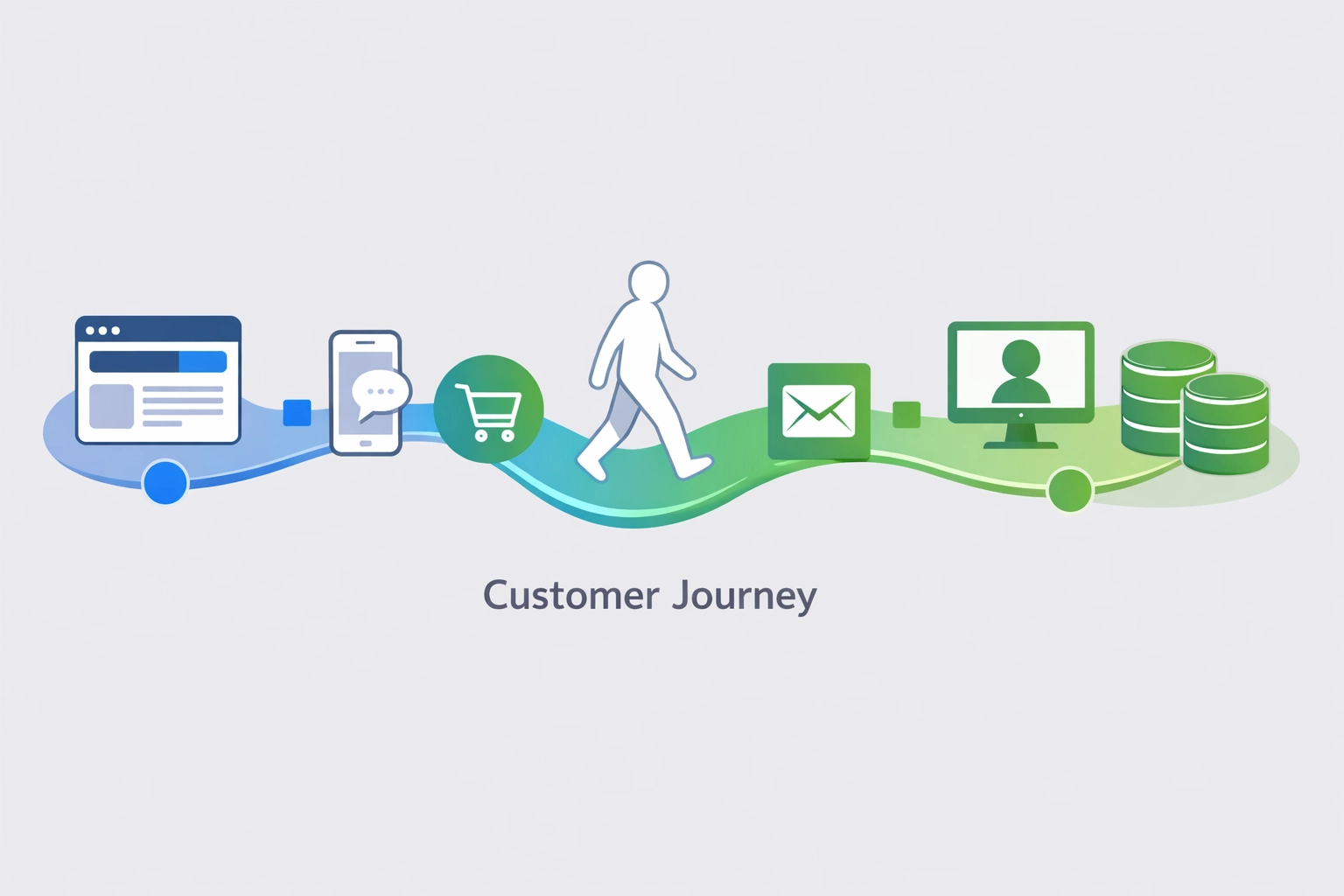
3. CRM Integration and Customer Journey Mapping
This is where the real business value lives: and where most implementations fall apart. GA4 can track website behavior all day, but if it doesn't connect to what happens after someone converts, you're missing the entire back half of the funnel.
What you need:
- CRM data flowing into GA4 – Use Google's Measurement Protocol or a middleware platform to send offline conversion data back to GA4
- User ID implementation – Track known users across devices and sessions to see the complete journey
- Revenue and LTV data – Connect closed deals, contract values, and customer lifetime value to acquisition sources
When GA4's AI has visibility into the full revenue cycle: not just form fills: its predictions and recommendations become exponentially more valuable. It can tell you which traffic sources generate high-LTV customers, not just which ones generate the most leads.
This is core to what we help clients build in our SEO-to-revenue alignment engagements: connecting organic search performance to actual business outcomes, not vanity metrics.
4. Data Quality Monitoring and Validation
AI recommendations are only as trustworthy as the data they're based on. You need systems to catch problems before they corrupt weeks or months of reporting.
Implement:
- Automated alerts – Notifications when event volumes drop unexpectedly or tracking breaks
- Regular data audits – Monthly reviews of conversion rates, traffic patterns, and anomaly detection
- Cross-validation – Compare GA4 data against CRM records, payment processors, and other sources of truth
- Tagging QA process – Test new implementations in a staging environment before deploying
Most businesses only discover tracking problems after they've already lost weeks of accurate data. By then, the AI has been learning from garbage.
5. Team Training and AI Literacy
Here's the thing about AI-powered insights: they're incredibly persuasive, even when they're wrong. The interface looks authoritative. The language is confident. But if the underlying data is flawed, those insights are worse than useless: they actively mislead decision-making.
Your team needs to understand:
- When to trust AI recommendations – What signals indicate the model has enough quality data
- How to validate insights – Cross-referencing AI conclusions with other data sources
- Where human judgment is essential – Strategic decisions that require context AI can't access
- How to investigate anomalies – Digging deeper when AI flags something unusual
AI should accelerate analysis and surface opportunities you might have missed. It shouldn't replace critical thinking.
The ROI of Getting This Right
When you fix the foundation first, GA4's AI capabilities become genuinely transformative. I've seen it work:
- A B2B client discovered through AI insights that "high-intent" keywords they'd been prioritizing had terrible conversion rates 60+ days out, while "informational" content produced higher-LTV customers: completely flipping their content strategy
- An e-commerce business used predictive churn modeling to identify at-risk segments and recover 23% more revenue through targeted retention campaigns
- A service business connected CRM revenue data to GA4 and found that organic traffic from one specific content cluster had 3x the LTV of their paid search leads
But every one of those wins required clean data, proper CRM integration, and teams who knew how to validate what the AI was telling them.
What to Do Next
If you're serious about using GA4 as an AI decision platform (and you should be: this is where analytics is headed), you need to audit your current setup against these five areas. Most businesses will find significant gaps.
The good news: these problems are fixable. The bad news: they don't fix themselves.
We run measurement audits specifically designed to identify data quality issues, tracking gaps, and integration problems that undermine AI-powered analytics. The output is a prioritized roadmap of what to fix first, how to fix it, and what business value you unlock at each stage.
If you're ready to stop guessing and start making data-informed decisions with confidence, let's talk about your measurement infrastructure. GA4's AI capabilities are powerful: but only if you build the foundation to support them.





1 Comment