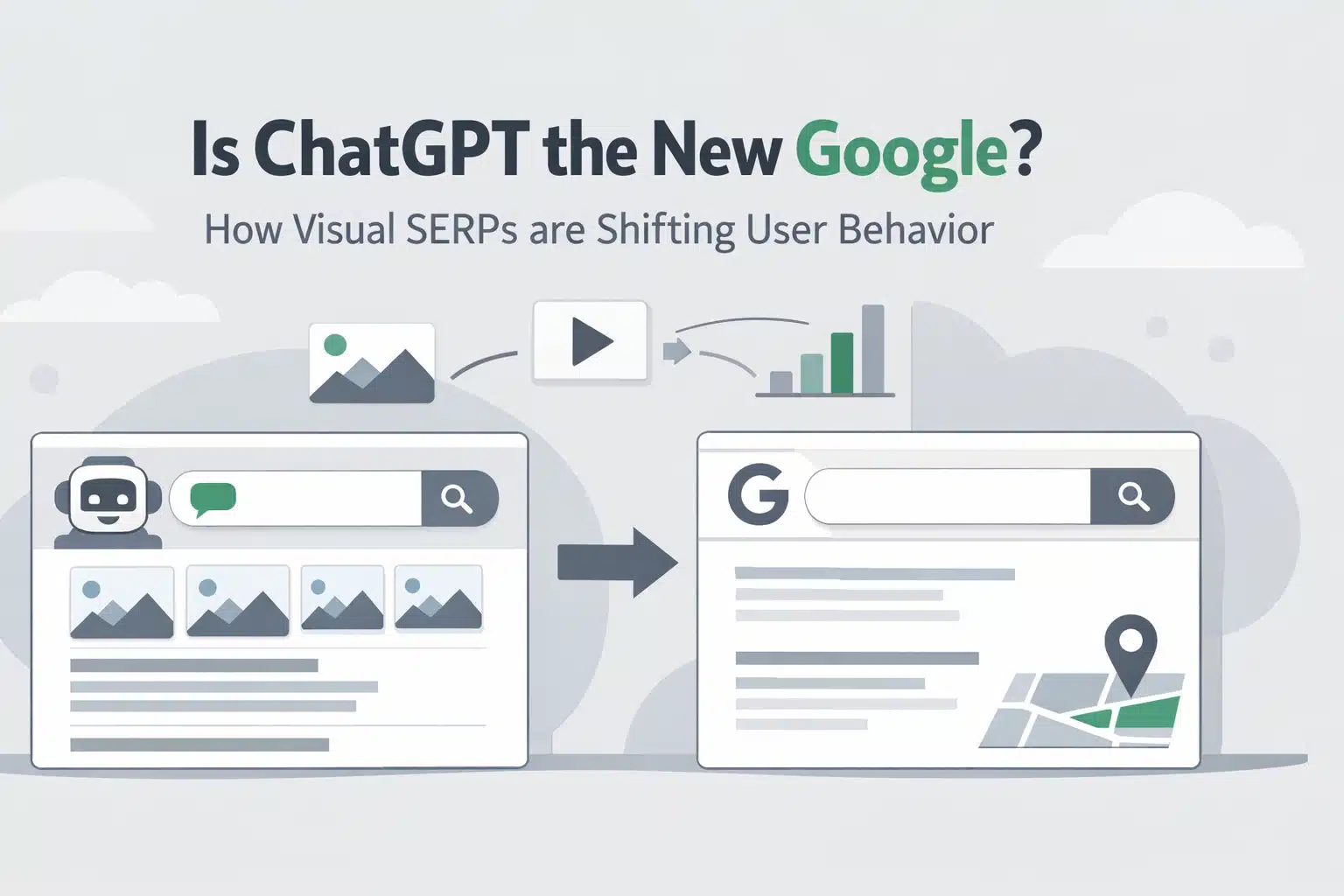
Here's the thing nobody's talking about: ChatGPT just got a lot more comfortable for the average user, and that should terrify anyone who's been relying on traditional search traffic.
OpenAI recently rolled out Top Stories and visual knowledge panels inside ChatGPT, making the interface look less like a blank conversation window and more like… well, a Google results page. And while 95% of ChatGPT users still use Google regularly, that stat's about to get messy: because the behavior that drives clicks is fundamentally changing.
The Visual Evolution Nobody Saw Coming
For years, ChatGPT was text-only: you asked a question, you got a wall of text back. Simple. Clean. But also intimidating for people who weren't already AI-native.
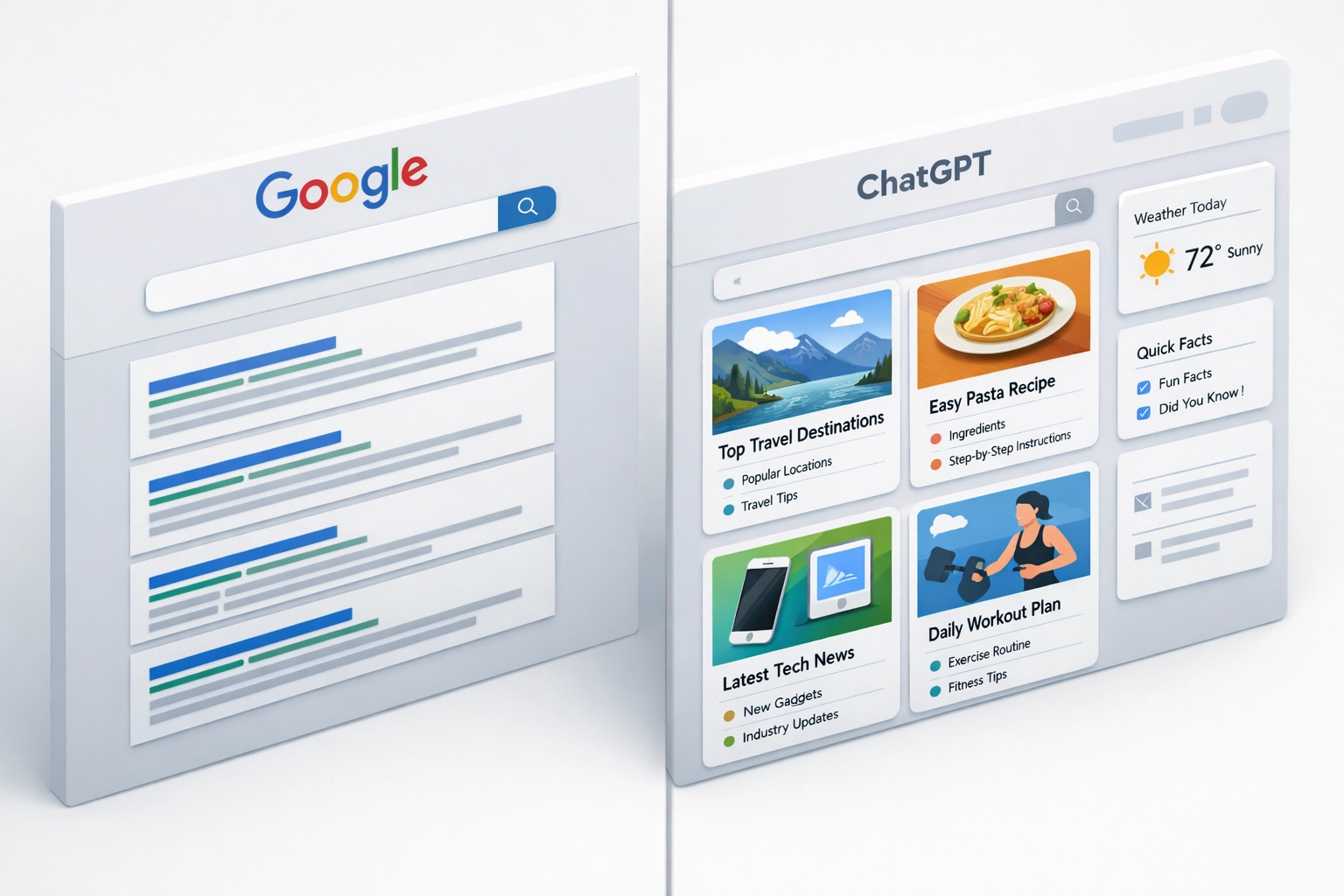
Now? ChatGPT is serving up Top Stories with headlines and thumbnails, visual knowledge cards with images, and structured answer formats that look suspiciously similar to Google's featured snippets and knowledge panels.
This isn't a coincidence. It's a calculated move to lower friction and increase trust. Visual cues signal credibility. Cards and panels create hierarchy. Images make complex information digestible at a glance.
Translation: ChatGPT just became the interface your mom would actually use to answer real questions: not just the tool developers and marketers geek out over.
Why This Changes Everything About Clicking Through
Let's talk about user behavior, because this is where the real shift happens.
Traditional Google SERP behavior looks like this:
- User searches "best project management tools"
- Google shows 10 blue links + ads + maybe a featured snippet
- User clicks 3-5 results to compare
- User bookmarks a few tabs, reads reviews, compares pricing
That model requires clicks. Google shows you doors; you have to open them to see what's inside.
ChatGPT's new visual interface fundamentally breaks that behavior loop:
- User asks "What are the best project management tools for remote teams?"
- ChatGPT shows a visual knowledge panel with 5 tools, logos, pricing tiers, and key features
- User asks a follow-up: "Which one integrates with Slack?"
- ChatGPT refines the answer with specific recommendations
- User never leaves ChatGPT
See the problem? There's no click-through. There's no comparison shopping across multiple tabs. The AI becomes the gatekeeper, the curator, and the final answer: all in one interface.
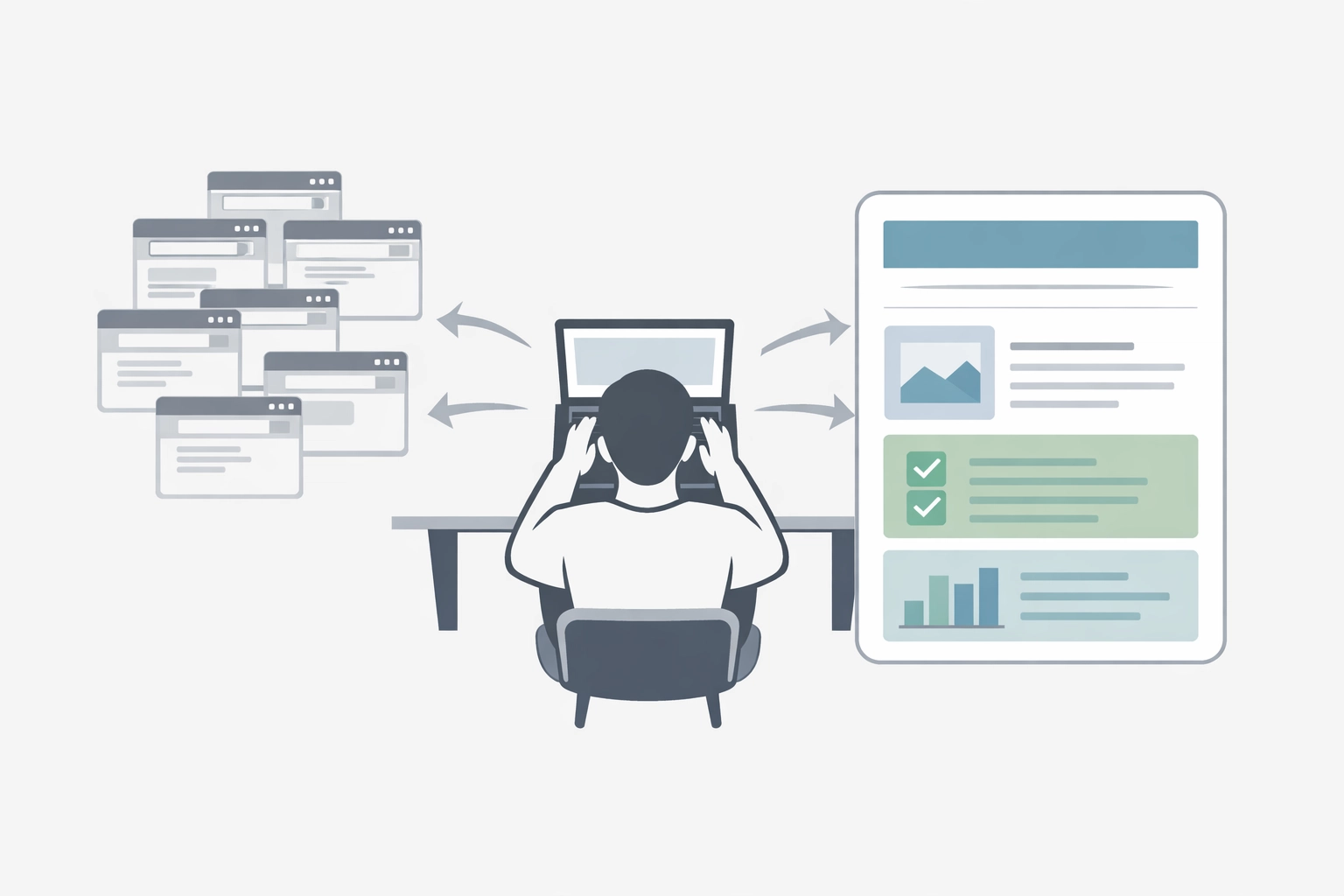
And here's the kicker: users will prefer it this way. Cognitive load is expensive. If ChatGPT can deliver the answer and the visual validation in one place, why would the average user bother opening six tabs?
The Zero-Click Search Problem Just Got Worse
Google's already been dealing with the zero-click search crisis: where users get their answer directly from the SERP and never visit a website. AI Overviews expanded from 18.55% of search results in Q3 2024 to 49.92% by December 2025, meaning nearly half of all searches now provide direct answers without requiring a click.
ChatGPT's visual SERPs accelerate this trend on steroids.
When ChatGPT shows a Top Stories panel with headlines, images, and summaries, it's not just answering the question: it's replacing the news website entirely. Users get the headline, the key takeaway, and the visual context. What's left to click for?
Full disclosure: this doesn't mean websites are dead. It means the reasons people click through are shifting: and if your content strategy hasn't adapted, you're bleeding traffic to AI-summarized oblivion.
What This Means for Your Business (Spoiler: It's Not Great)
If your SEO strategy still revolves around "rank #1 in Google and watch the clicks roll in," you're building on quicksand.
Here's why:
1. AI-first users don't browse: they consume summaries.
They're not comparison shopping across your site and three competitors. They're asking ChatGPT to do that work for them, and they're trusting the AI's synthesis.
2. Visual panels prioritize brand recognition over depth.
If ChatGPT pulls your brand into a visual knowledge card, great. If it doesn't: if you're not cited, not visually represented, not part of the curated answer: you're invisible.
3. The buyer journey is compressing.
Users used to start broad (Google search), go deep (read 5 blog posts), then convert. Now they're starting with ChatGPT to understand the problem, maybe hitting Google to find providers, and then going back to ChatGPT to validate their choice. If you're not present in both ecosystems, you've lost half the journey.
Google still commands 93.57% of global search market share with 14 billion searches per day. ChatGPT processes about 37.5 million search-like prompts daily: just 0.25% of the search market. But that 0.25% represents high-intent, conversational queries from users who are forming opinions and making decisions. And if those users never click through to your site, your traffic might look healthy while your influence quietly erodes.
So What Do You Actually Do About This?
This is where most blog posts wave their hands and say "create great content!" and leave you hanging. Not here.
First: Optimize for AI citability, not just rankability.
Your content needs to be structured so AI can extract clear, quotable insights. That means:
- Clear, declarative statements that answer specific questions
- Structured data markup that helps AI parse your expertise
- Brand consistency across platforms so ChatGPT recognizes you as an authoritative source
If you're not sure whether your content is AI-friendly, a Forensic SEO audit can identify exactly where your site's structure is failing to communicate with AI crawlers and summarization algorithms.
Second: Build for the visual layer.
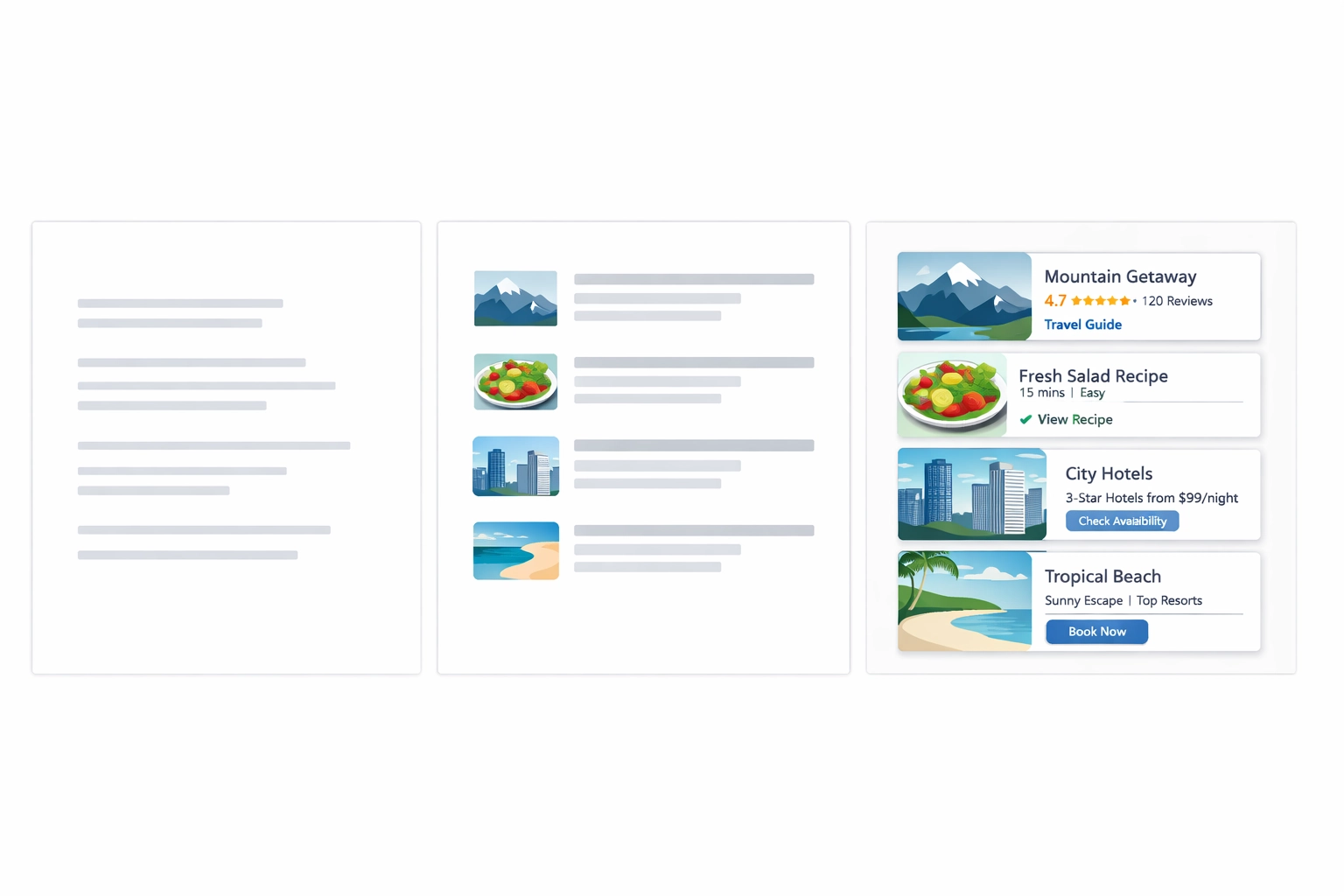
If ChatGPT is showing Top Stories and visual panels, your brand needs visual assets that travel well: logos, featured images, infographics that make sense at a glance. Text-heavy blog posts without visual hierarchy will get summarized and stripped of your branding.
Third: Accept that content strategy is no longer optional.
You can't brute-force your way into AI-generated answers with keyword stuffing. You need a coherent content strategy that positions your brand as the definitive voice in your space: across Google and ChatGPT.
That means publishing content that:
- Answers the conversational, exploratory questions users ask AI
- Provides depth that AI can't replicate (original data, case studies, proprietary frameworks)
- Establishes brand authority so when AI does summarize your work, it cites you by name
The Uncomfortable Truth About Search in 2026
ChatGPT isn't replacing Google: but it's stealing context and influence from the websites that used to benefit from Google clicks.
Users are now splitting their information-gathering across two ecosystems: Google for transactional, high-intent searches ("buy running shoes near me") and ChatGPT for exploratory, conversational discovery ("should I switch to minimalist running shoes?").
If your business only shows up in one of those ecosystems, you're losing half the conversation. And with ChatGPT's new visual SERPs making it easier than ever for users to stay inside the AI interface, the cost of being invisible is only going up.
The shift is happening now. Not in six months. Not "eventually." User behavior is already changing: right now, while you're reading this: because visual, summarized answers feel easier than clicking through five tabs.
What Happens Next
The businesses that win in this new reality are the ones that stop treating SEO and AI optimization as separate strategies. They're building brand visibility everywhere users ask questions: whether that's Google, ChatGPT, Perplexity, or whatever comes next.
They're not optimizing for rankings. They're optimizing for presence, authority, and citability across every interface where decisions get made.
If you're ready to stop losing ground to AI-summarized invisibility and start building a strategy that actually works in 2026, book a consultation. We'll walk through exactly where your brand is showing up (or not), how AI is interpreting your content, and what needs to change before your competitors figure this out.
Because here's the reality: most businesses are still optimizing for 2019 Google. The ones who adapt to visual, AI-native search behavior first? They're going to own the next decade.