
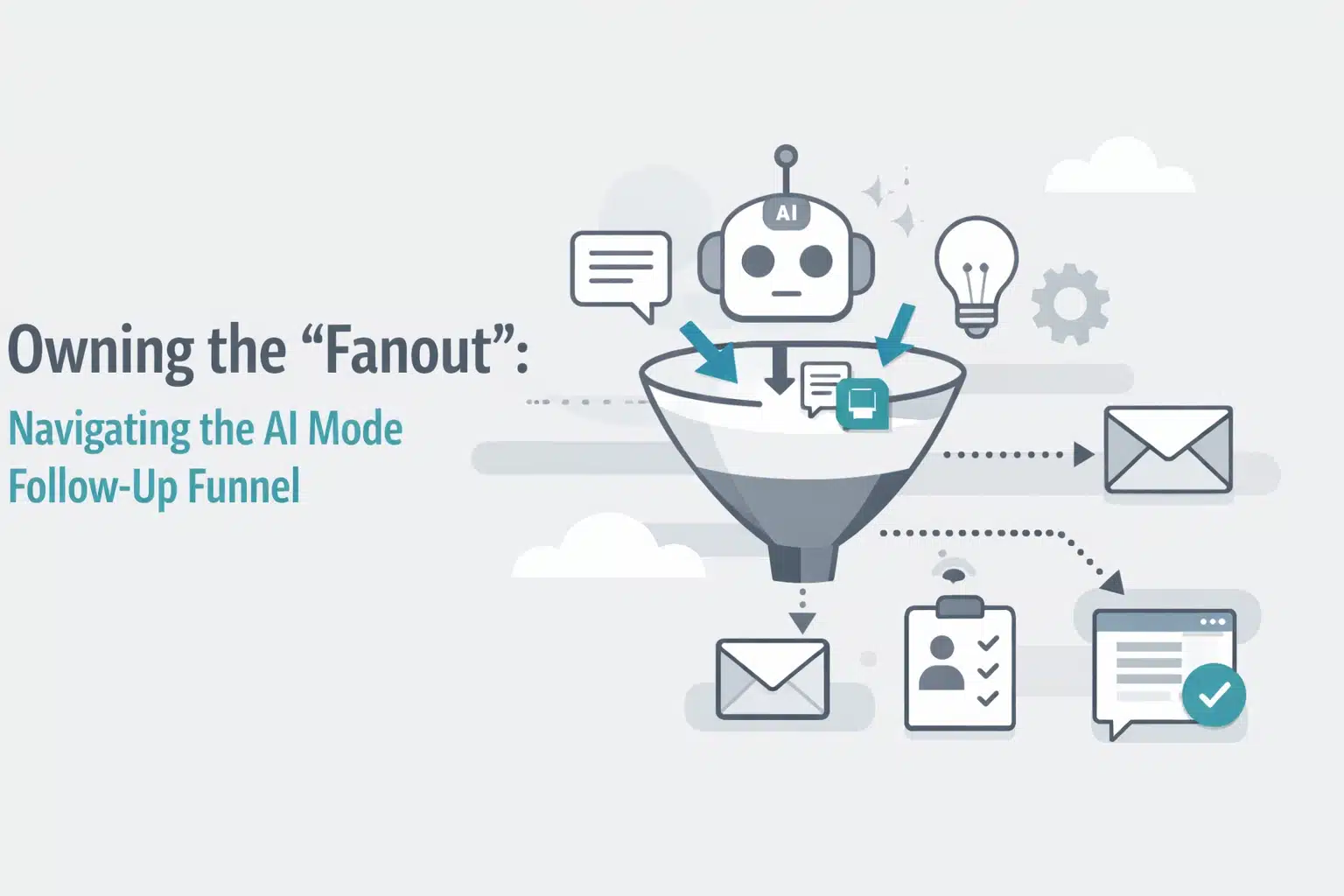
Search doesn't end with a single answer anymore. When users engage with Google's AI Mode, they're not clicking through a list of blue links: they're exploring branching conversation paths that spiral outward from their initial question. This is the fanout, and it's fundamentally reshaping how content gets discovered, evaluated, and cited by AI systems.
Here's what most businesses are missing: your best-performing page isn't enough. When AI Mode processes a complex query like "best project management software for remote teams," it doesn't just find one authoritative answer. It simultaneously researches pricing models, integration capabilities, security features, user reviews, implementation timelines, and competitive alternatives. The result? A single conversation that replaces what used to be a dozen separate searches.
If your content strategy still treats each page as a standalone destination, you're building for a search paradigm that no longer exists.
The Mechanics of Fanout Queries
Google's AI Mode fan-out technique breaks complex questions into multiple parallel research streams. Ask about electric cars for families, and the system instantly explores safety ratings, pricing, charging infrastructure, insurance costs, and reliability data: all at once. These aren't sequential searches; they're simultaneous investigation threads that synthesize dozens of information points into a coherent, conversational answer.
The interface actively encourages this exploration through suggested follow-up questions. Users can request specific examples, drill into particular features, or pivot to related considerations without starting over. What emerges is an extended engagement session where discovery happens dynamically within one conversation, not across multiple website visits.

Traditional analytics measure this as a single impression. But from the user's perspective: and the AI's: it's a comprehensive research journey that touches multiple topics, evaluates numerous sources, and builds a decision framework in real time.
This matters because AI Mode typically references only 5-7 source cards per response, far fewer than the 20+ inline citations in standard AI Overviews. Your visibility depends on covering not just the primary question, but the entire constellation of follow-up queries that naturally branch from it.
Why Traditional Content Funnels Are Collapsing
The classic SEO funnel: awareness, consideration, decision: assumed users would move linearly through your content ecosystem. Top-of-funnel blog posts attracted attention, middle-funnel guides built trust, bottom-funnel comparison pages drove conversions.
AI Mode compresses this entire journey into a single conversation. Informational queries that used to drive top-of-funnel traffic are now satisfied directly within AI summaries. Users get instant answers to "what is," "how does," and "why should" questions without ever seeing your carefully crafted awareness content.
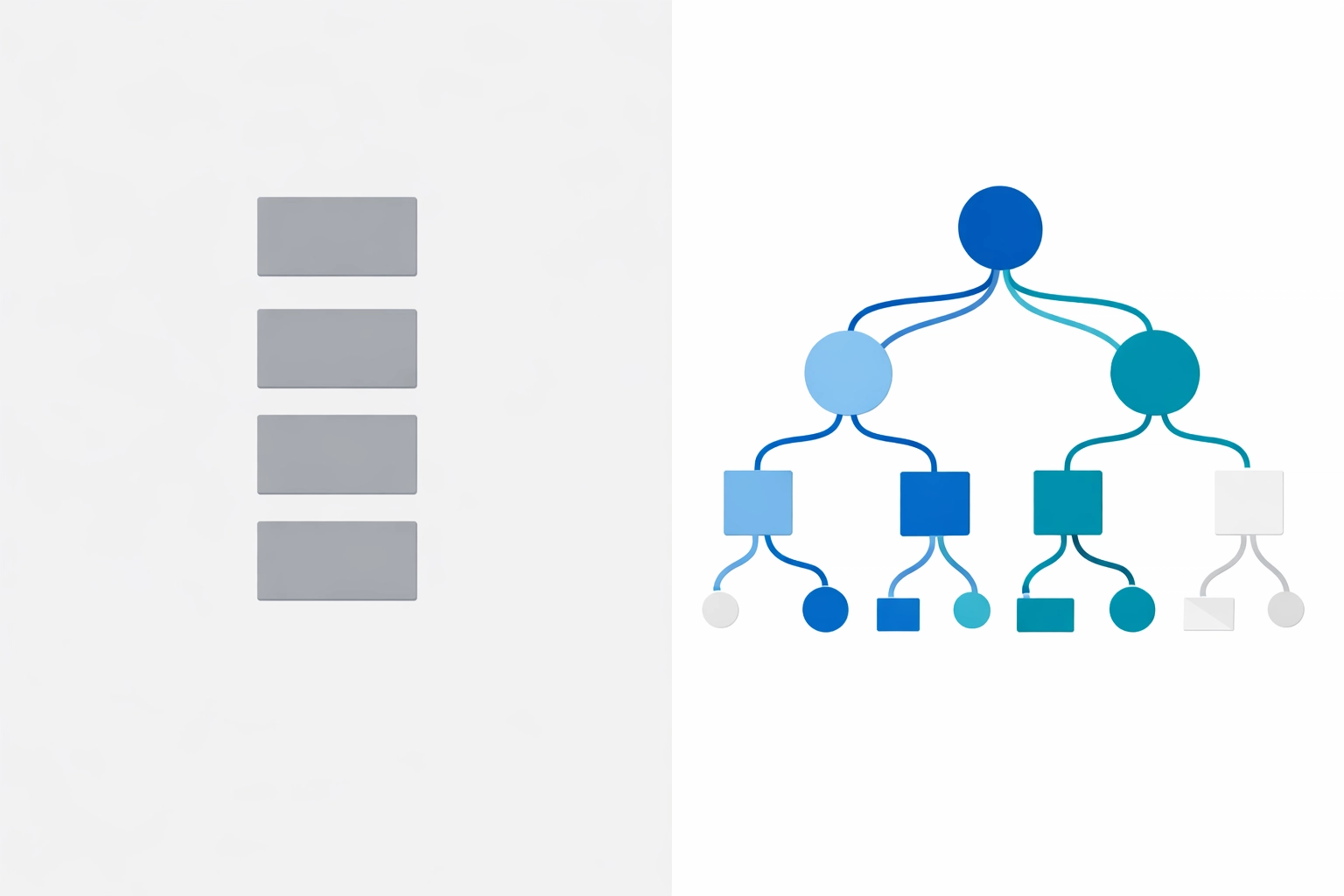
This isn't a temporary adjustment: it's a permanent shift in how search intent gets resolved. The businesses winning in AI Mode aren't the ones with the most pages. They're the ones mapping content to decision trees, not linear funnels.
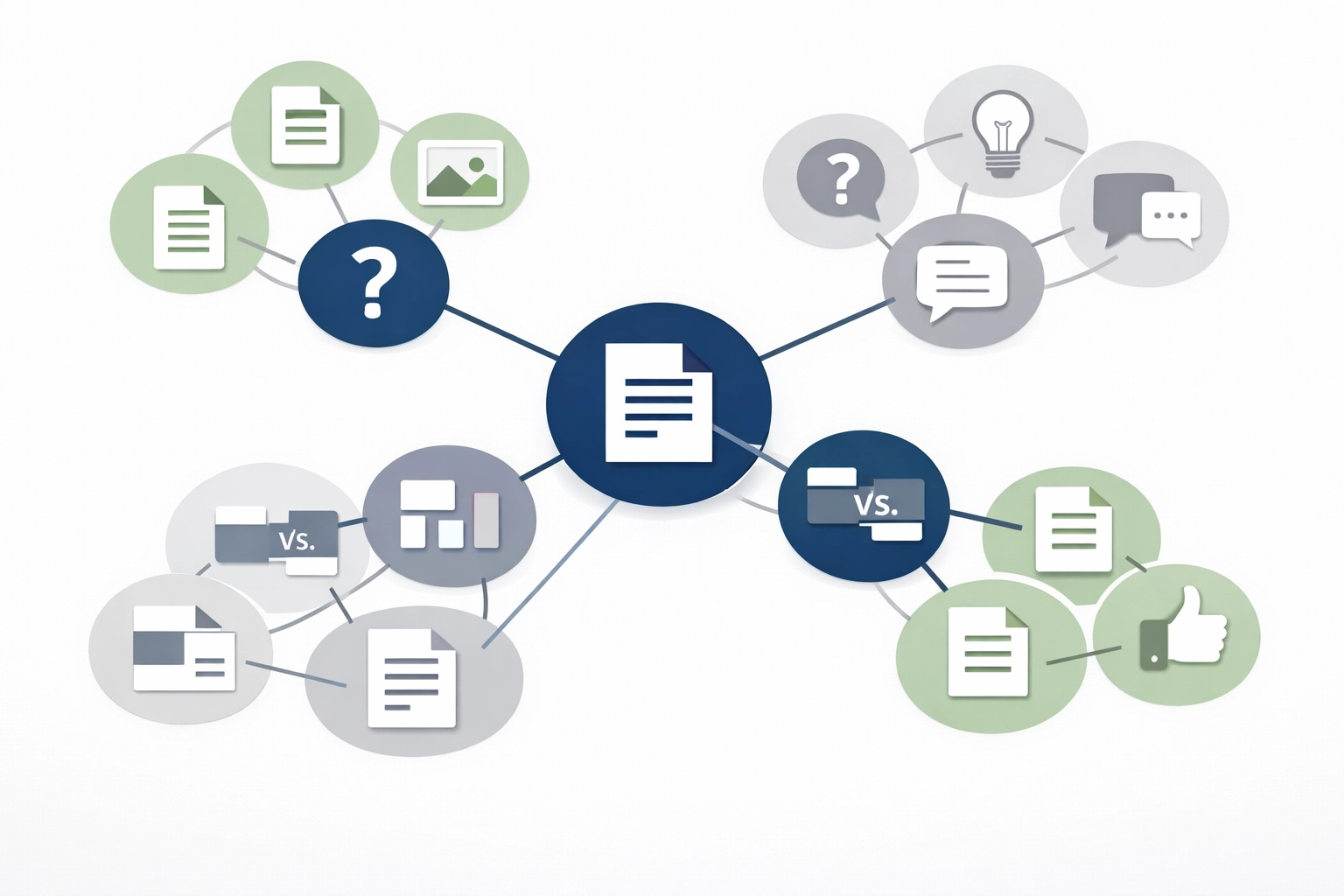
Here's what that means in practice: instead of creating isolated assets for each keyword, you need interconnected content clusters that anticipate and answer the natural progression of questions a user will ask as they explore a topic. Your content architecture should mirror the way AI Mode fans out from a core query into related subtopics.
Building for Decision-Tree Discovery
Decision-tree content strategy starts with understanding that every substantial query triggers a cascade of follow-up questions. Your job is to map those cascades and ensure you have comprehensive, structured answers at every node.
Start with the hub question. Identify the primary query your target audience asks. Then map the five to seven most common follow-up dimensions: cost, implementation, comparisons, use cases, prerequisites, risks, and alternatives. These aren't separate pieces of content: they're interconnected nodes in a decision tree that users will explore based on their specific priorities.
Structure each node for standalone clarity and contextual connection. Every section needs to work independently (in case AI Mode surfaces just that portion) while maintaining clear relationships to the broader topic. Use descriptive headings, concise definitions, and explicit transitions that signal how concepts connect.
Implement schema markup that mirrors decision logic. FAQ schema should capture common follow-up questions. HowTo schema should outline decision processes, not just procedures. Product and Service schema should highlight the specific attributes AI Mode uses to compare alternatives.
The strategic advantage here is anticipation. When you build content that addresses the predictable fanout pattern, you increase the likelihood that AI Mode will cite your site across multiple follow-up turns in the conversation: not just the initial query.
Measuring the Fanout with Citemetrix
You can't optimize what you don't measure, and traditional analytics weren't built for conversational search patterns. Click-through rate tells you when someone visited your site, but it's blind to the far more common scenario: AI Mode citing your content without sending traffic.
This is where Citemetrix becomes essential. It tracks when and how your brand appears across AI platforms: ChatGPT, Perplexity, Gemini, and AI Overviews. More importantly, it reveals which specific pages get cited in response to which types of queries.
Here's why that matters for fanout strategy: if your primary hub content gets cited for the initial query but you disappear from follow-up responses, you know you have coverage gaps in your decision tree. If competitor sites dominate specific branches of the conversation (pricing comparisons, implementation guidance, use case examples), you know exactly where to focus content development.
Citemetrix shows you the full citation pattern across conversational turns: not just whether you rank, but whether you maintain visibility as users explore related questions. This reveals your citation persistence rate: how often you stay relevant as queries fan out from the core topic.
Without this visibility, you're optimizing for traditional rankings while AI systems build entire decision frameworks that exclude your brand after the first turn of the conversation.
Mapping Fanout Coverage with AI SEO Audits
Most content audits inventory what you have. Our AI SEO Audits map what you're missing: specifically, the gaps in your decision-tree coverage that prevent you from owning the fanout.
We analyze your existing content through the lens of conversational search patterns, identifying:
Branch completeness: Where follow-up questions go unanswered or underdeveloped, creating dead ends in the decision tree that force users toward competitor content.
Structural retrieval blockers: Technical issues: poor passage formatting, unclear entity relationships, JavaScript rendering problems, weak schema implementation: that prevent AI systems from extracting and citing your content even when it's comprehensive.
Entity clarity and corroboration: Whether your brand claims, expertise signals, and factual assertions are corroborated by trusted third-party sources. AI systems increasingly require external validation before citing content, especially in YMYL topics.
Cross-page relationship signals: How well your internal linking, semantic connections, and topical clusters communicate the decision-tree structure to AI systems. Isolated pages: even excellent ones: underperform connected ecosystems.
The audit delivers a prioritized roadmap for building out your fanout coverage: which questions to answer, how to structure the answers, what schema to implement, and where to strengthen entity relationships that improve citation likelihood.
The Citation Authority Feedback Loop
Here's what we're seeing in client data: brands that systematically build decision-tree content and monitor citation patterns through Citemetrix create a reinforcing cycle. Comprehensive coverage leads to more citations. More citations strengthen entity authority signals. Stronger authority increases citation likelihood for new content.
This compounds over time. Early movers in a category establish themselves as the go-to source across multiple branches of the decision tree, making it progressively harder for competitors to displace them: even with superior individual pieces of content.
The businesses that delay: those still optimizing for traditional rankings while ignoring conversational search patterns: aren't just missing traffic. They're ceding category authority in the systems that will define discovery for the next decade.
What This Means for Your Content Investment
Shift budget from volume to coverage. Creating fifty isolated blog posts targeting fifty keywords is less valuable than building five comprehensive content ecosystems that map complete decision trees for your core topics.
Prioritize mid and bottom-funnel content. Top-of-funnel queries are increasingly satisfied within AI summaries. Decision-stage content: comparisons, implementation guides, use case analyses: drives actual conversions and maintains citation presence deeper in the fanout.
Invest in measurement infrastructure before content creation. Without Citemetrix tracking and proper AI SEO auditing, you're building blind. Know where you're cited, where competitors dominate, and which branches of the decision tree represent strategic opportunities.
The fanout isn't coming: it's here. The question is whether you're ready to compete for visibility in conversational search, or whether you're still optimizing for a linear journey that no longer reflects how people actually discover information.
Ready to map your fanout coverage and identify strategic gaps? Book a consultation to discuss how AI SEO Audits and Citemetrix tracking can transform your content strategy for the conversational search era.





4 Comments