As we head into 2026, two critical factors are determining which websites thrive and which disappear from search visibility: understanding how audiences actually search in the AI era, and maintaining technical excellence through proper link management. These aren’t nice-to-have optimizations anymore: they’re essential for survival.
The rise of AI-powered search has completely transformed user behavior. People no longer type fragmented keywords; they ask complete questions and expect comprehensive answers. Meanwhile, broken links continue to devastate user experience and search rankings, yet most websites still operate with outdated auditing processes that miss critical issues.
Here’s what you need to know to adapt your strategy for the new search reality.
Understanding Proxies for Prompts: Getting Inside Your Audience’s Mind
The concept of “proxies for prompts” represents the most significant shift in search behavior since Google’s inception. Your audience isn’t searching the way they used to, and if you’re still optimizing for traditional keywords, you’re already behind.
The Death of Keyword-First Thinking
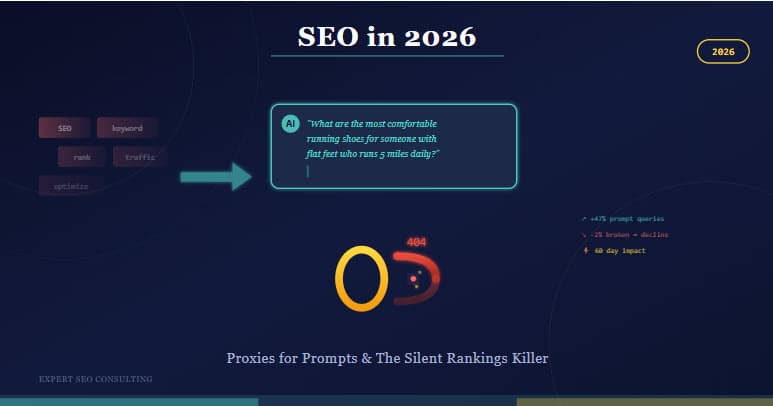
Search behavior has moved from short, choppy queries to conversational prompts that mirror how people naturally communicate. Instead of typing “best running shoes,” users now ask “What are the most comfortable running shoes for someone with flat feet who runs 5 miles daily?” This fundamental change means your content strategy must evolve from targeting individual keywords to addressing complete user intentions.
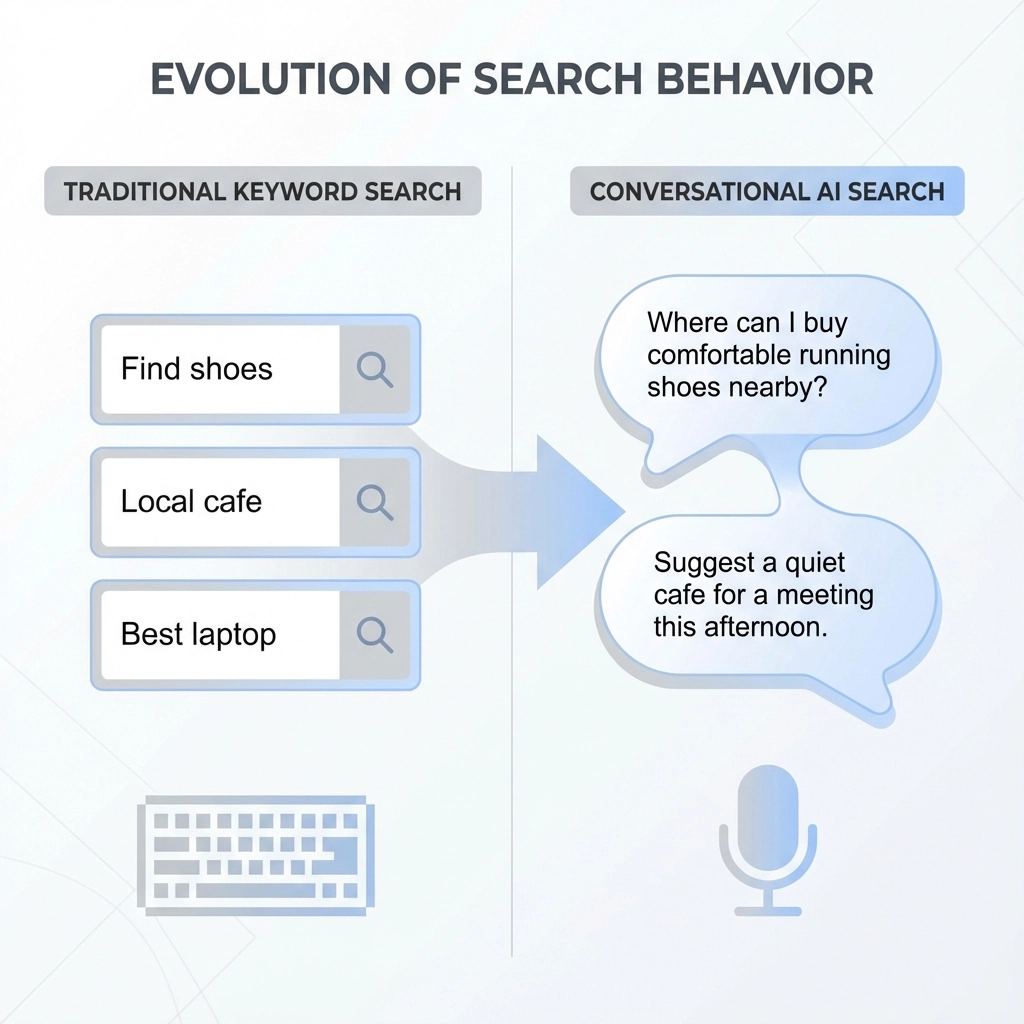
The data is clear: prompt-style queries are growing exponentially, while traditional keyword searches plateau. Users expect AI-quality responses that provide complete, actionable information rather than forcing them to piece together answers from multiple sources.
Practical Methods for Prompt Proxy Research
People Also Ask (PAA) Deep Dive
The People Also Ask feature has become your secret weapon for understanding conversational search patterns. These questions reveal exactly how your audience thinks about problems and formulates queries. Start by analyzing PAA results for your core topics, then expand each question to reveal additional variations.
For example, if you’re in the fitness industry, a search for “weight loss” might reveal PAAs like “How much weight can I lose in a month?” and “What’s the fastest way to lose weight safely?” Each of these represents a different user intent and content opportunity.
Search Console Query Pattern Analysis
Your Google Search Console data contains hidden gems when filtered correctly. Use advanced regex patterns to isolate conversational queries containing phrases like:
- “can you help me”
- “how do I”
- “what’s the best way to”
- “show me how”
These queries indicate users are searching more like they would interact with AI, providing insight into the prompts they might use in ChatGPT, Claude, or other AI platforms.
Competitive Prompt Intelligence
Your competitors’ content that ranks well for prompt-style queries reveals audience search patterns you can capitalize on. Analyze the questions their content answers, the language they use, and the depth of information they provide. This intelligence helps you understand what prompts users are actually using to find solutions in your industry.
Topic-Based Tracking Over Individual Prompts
Rather than trying to track every possible prompt variation: which quickly becomes unmanageable: smart SEO professionals are organizing prompts into topic clusters. This approach allows you to:
- Measure overall topic performance across AI platforms
- Identify content gaps where your audience seeks information you don’t provide
- Understand which topics require “grounding” (cited sources) in AI responses
The key insight: if an AI platform already has comprehensive information about a topic in its training data, your pages may not appear as sources. Focus on areas where fresh, specific, or localized information provides value AI can’t generate independently.
Broken Links: The Silent Rankings Killer
While you’re adapting to AI search behavior, broken links are quietly destroying your hard-earned SEO progress. These technical issues create cascading problems that impact every aspect of your website’s performance.
The True Cost of Broken Links in 2026
Broken links don’t just frustrate users: they signal to search engines that your website lacks maintenance and quality control. The impact compounds over time:
- Crawl Budget Waste: Search engines spend valuable crawl budget hitting dead pages instead of indexing your quality content
- Link Equity Loss: Broken internal links prevent the flow of PageRank throughout your site
- User Experience Degradation: Every broken link represents a failed user journey and potential lost conversion
- Trust Signal Damage: Search engines use site quality as a ranking factor, and broken links directly undermine this metric
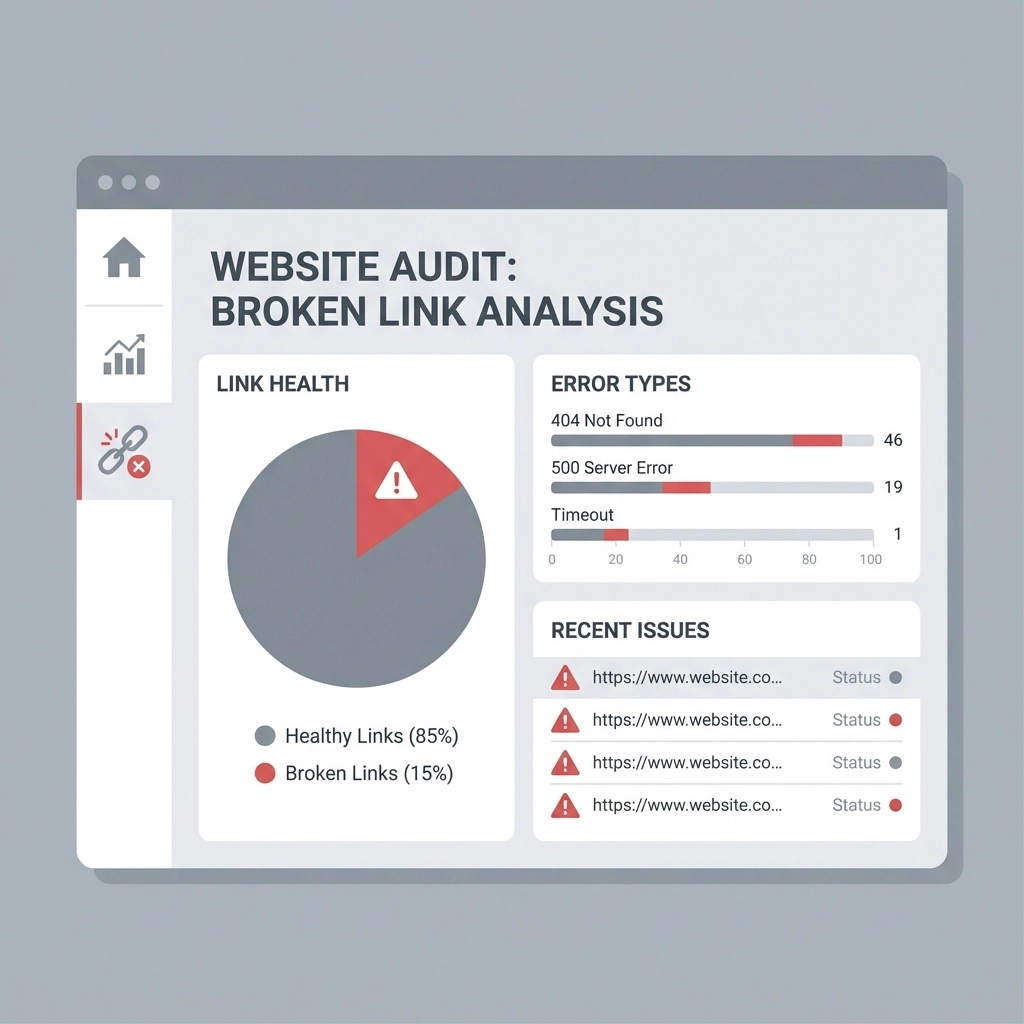
Recent studies show websites with more than 2% broken links experience measurable ranking declines within 60 days. Given the competitive nature of modern SEO, this technical debt is no longer sustainable.
Common Causes and Systematic Solutions
URL Structure Changes Without Redirects
The most devastating broken link scenarios occur during website redesigns or URL structure updates. When pages move without proper 301 redirects, you lose both link equity and user accessibility.
Solution: Implement a comprehensive redirect mapping process before any structural changes. Document every URL change and create 301 redirects that preserve link equity flow.
Deleted Pages and Content Pruning Mistakes
Content audits often result in page deletions without considering internal linking implications. When you remove a page that other content links to, you create broken internal links throughout your site.
Solution: Before deleting any page, use tools like Screaming Frog or Sitebulb to identify all internal links pointing to that page. Either redirect the deleted page to relevant content or update the linking pages with new, appropriate URLs.
External Link Rot
External websites change URLs, delete content, or go offline entirely, breaking your outbound links. While you can’t control external sites, broken outbound links still impact user experience and may influence how search engines perceive your site’s quality.
Solution: Quarterly external link audits using tools like Ahrefs or SEMrush. When external links break, either update them with working alternatives or remove the references entirely.
Building a Systematic Broken Link Workflow
Monthly Technical Audits
Implement automated monthly crawls using tools like Screaming Frog, Sitebulb, or DeepCrawl. Set up alerts for new broken links so you can address issues before they impact rankings.
Prioritization Framework
Not all broken links require immediate attention. Prioritize fixes based on:
- High-traffic pages with broken links
- Important conversion pages affected
- Pages that receive significant backlinks
- Navigation and footer links used site-wide
Documentation and Prevention
Create a broken link log that tracks issues, solutions, and prevention measures. This documentation helps prevent recurring problems and builds institutional knowledge for your team.
Taking Action in the New SEO Reality
The convergence of AI search behavior and technical excellence isn’t optional anymore: it’s the baseline for competitive SEO performance. Websites that master both prompt optimization and technical maintenance will dominate search visibility in 2026 and beyond.
Your immediate action plan should include:
- Prompt Proxy Audit: Analyze your current content against conversational search patterns your audience actually uses
- Broken Link Elimination: Implement systematic crawling and fixing processes to maintain technical excellence
- Topic Cluster Development: Organize your content strategy around comprehensive topic coverage rather than individual keywords
- Ongoing Monitoring: Set up automated systems that catch issues before they impact performance
The websites winning in search aren’t just creating great content: they’re creating great content that matches how people actually search, delivered through technically excellent platforms that provide seamless user experiences.
Don’t let outdated SEO practices hold your website back from reaching its full potential. The fundamentals of search have changed, and your strategy must evolve accordingly.
Ready to audit your website’s readiness for the new search reality? Schedule a comprehensive SEO consultation with Expert SEO Consulting to identify your prompt optimization opportunities and eliminate technical issues that are quietly hurting your rankings.