
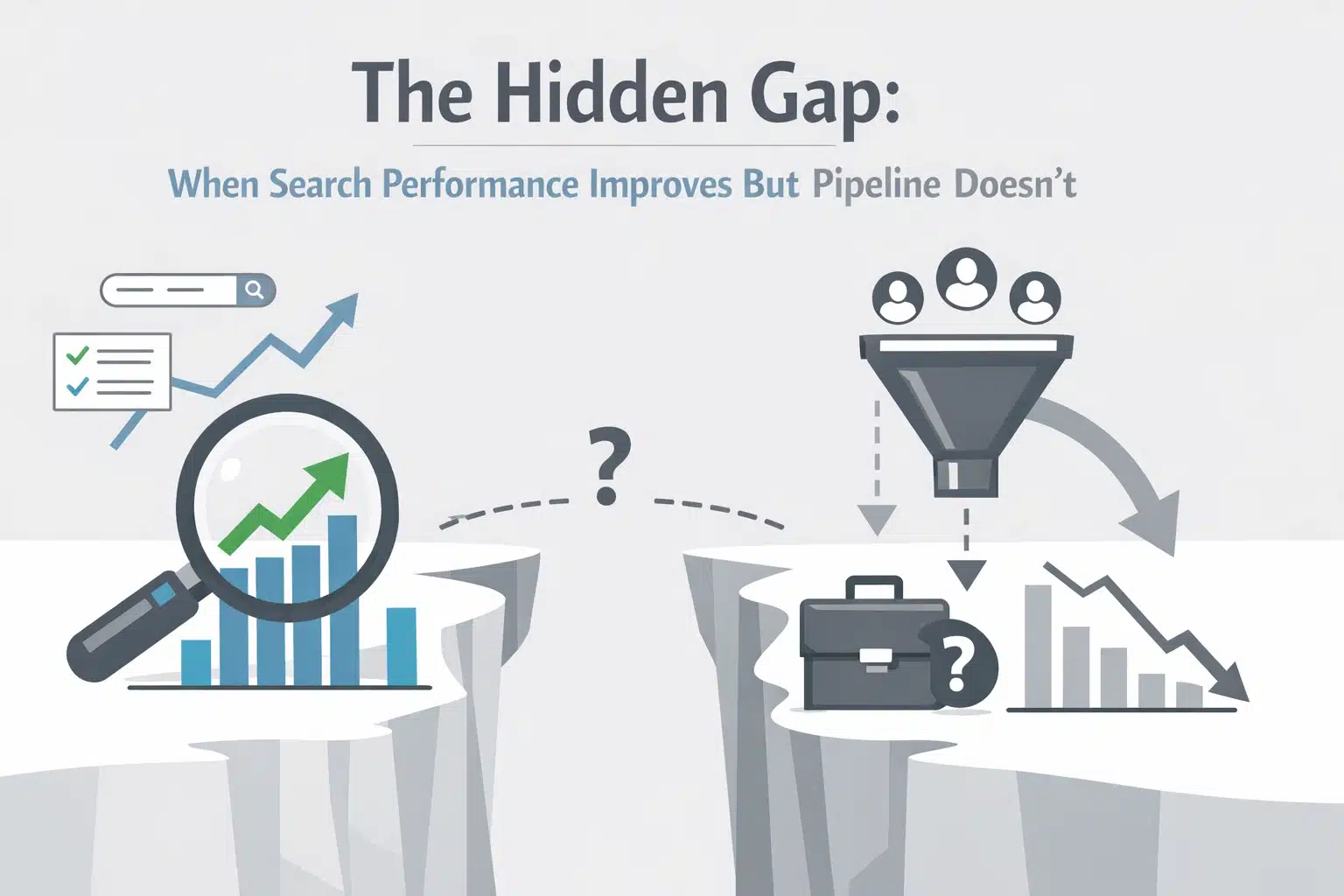
Here’s the uncomfortable truth: 67% of businesses report improving search visibility while simultaneously experiencing flat or declining sales pipeline. Your rankings are climbing, your traffic dashboard looks impressive, and your impressions are through the roof: but your sales team is asking where the qualified leads are.
This isn’t a measurement error. It’s a fundamental disconnect between what we measure in SEO and what actually drives revenue.
The Vanity Metrics Trap: When Numbers Lie to You
Traffic is seductive. It’s easy to measure, it trends nicely in reports, and it makes stakeholders happy: until someone asks about actual revenue contribution.
The vanity metrics trap works like this: You optimize content, earn rankings, drive thousands of visitors to your site, and everyone celebrates the “SEO win.” Three months later, the CFO asks why marketing costs are up but qualified pipeline remains flat. The celebration ends quickly.
Here’s what actually happened: You measured the wrong things. Clicks and sessions are activity metrics, not outcome metrics. They tell you people showed up, not whether they were the right people or whether they took meaningful action.
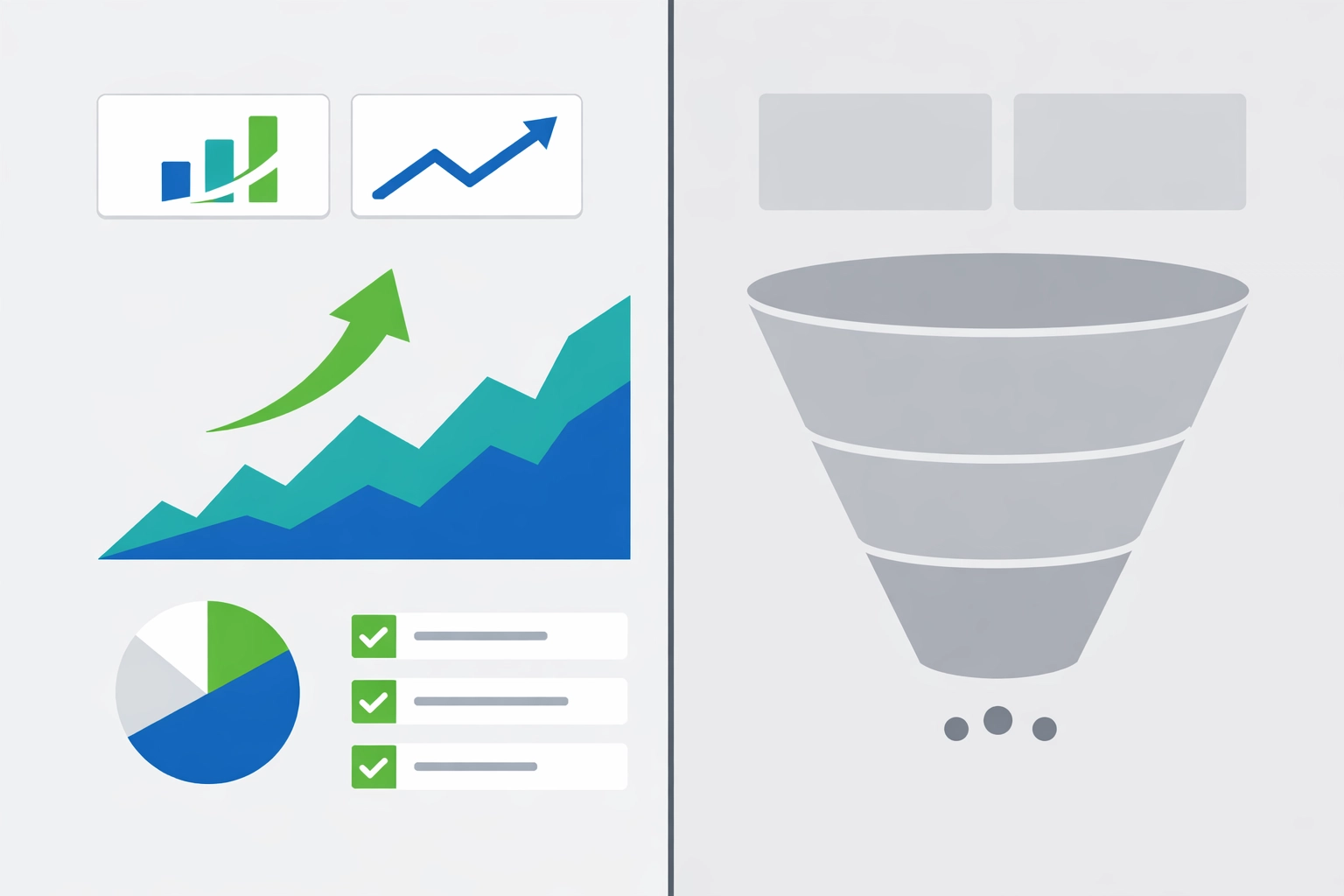
The brutal reality is that high-traffic pages often generate the lowest conversion rates. Why? Because informational intent attracts curious researchers, not qualified buyers. Someone searching “what is B2B marketing automation” is months away from purchasing your marketing automation platform: but they’ll happily consume your content, inflate your traffic numbers, and never convert.
The Intent Mismatch: Ranking for Information, Not Transaction
Most businesses unconsciously optimize for the wrong stage of the buyer journey. They create exceptional educational content, rank beautifully for informational queries, and wonder why pipeline stays empty.
Intent mismatch happens in predictable patterns:
You rank for: “How to improve customer retention”
You want to attract: Companies ready to hire retention optimization consultants
You actually attract: Entry-level marketers researching retention strategies for a college paper
You rank for: “What is enterprise resource planning”
You want to attract: Mid-market companies evaluating ERP vendors
You actually attract: Business students and career changers exploring the field
The search intent spectrum runs from informational (early research) to transactional (ready to buy). Most organic traffic lands in the informational zone: great for brand awareness, terrible for immediate pipeline generation.
This doesn’t mean informational content is worthless. It means you can’t treat rankings for “how-to” queries the same as rankings for “best [solution] for [specific use case]” or “Company A vs Company B” comparison searches.
Your Content Gap Analysis should identify not just missing topics, but missing intent stages. If you’re ranking exclusively for top-of-funnel queries, your search performance will improve while pipeline stays flat: every single time.
The Zero-Click Problem: When Visibility Doesn’t Equal Traffic
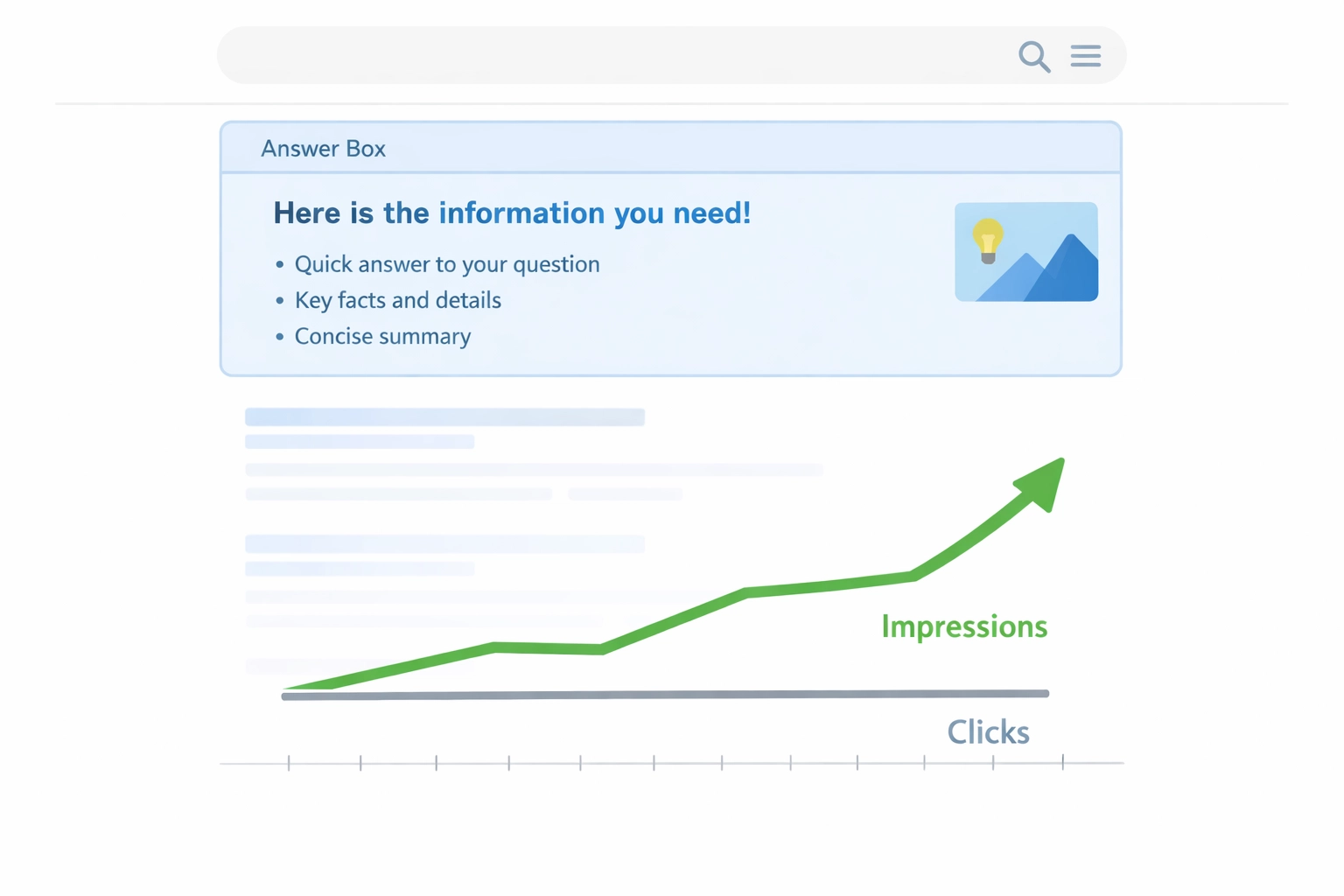
Now add another layer of complexity: the zero-click search ecosystem. Google AI Overviews, featured snippets, and knowledge panels are answering questions directly in search results. ChatGPT, Perplexity, and other AI search tools are synthesizing information without sending users to source websites.
You’re showing up in AI-generated answers. Your content is being cited. Your brand appears in AI Mode and ChatGPT responses. Your impressions are climbing steadily.
But clicks? Flat or declining.
This is the new normal. Searchers are getting their answers without leaving the search results page. Your visibility metrics look phenomenal while your actual site traffic: and therefore your pipeline: remains stagnant.

The traditional SEO playbook assumed this funnel: Visibility → Clicks → Engagement → Conversion. That funnel is breaking. The new reality is: Visibility → Answer Delivered → (Maybe) Brand Recall Later.
This means search performance metrics and pipeline metrics are diverging at an accelerating rate. You’re influencing buyers, building authority, and establishing presence: but you’re not capturing contact information or generating immediate leads.
Understanding how to optimize content for AI becomes essential when zero-click visibility is your primary search outcome. But optimization alone doesn’t solve the pipeline problem: it just ensures you’re present in the conversation.
The Conversion Reality: Traffic Without Transformation
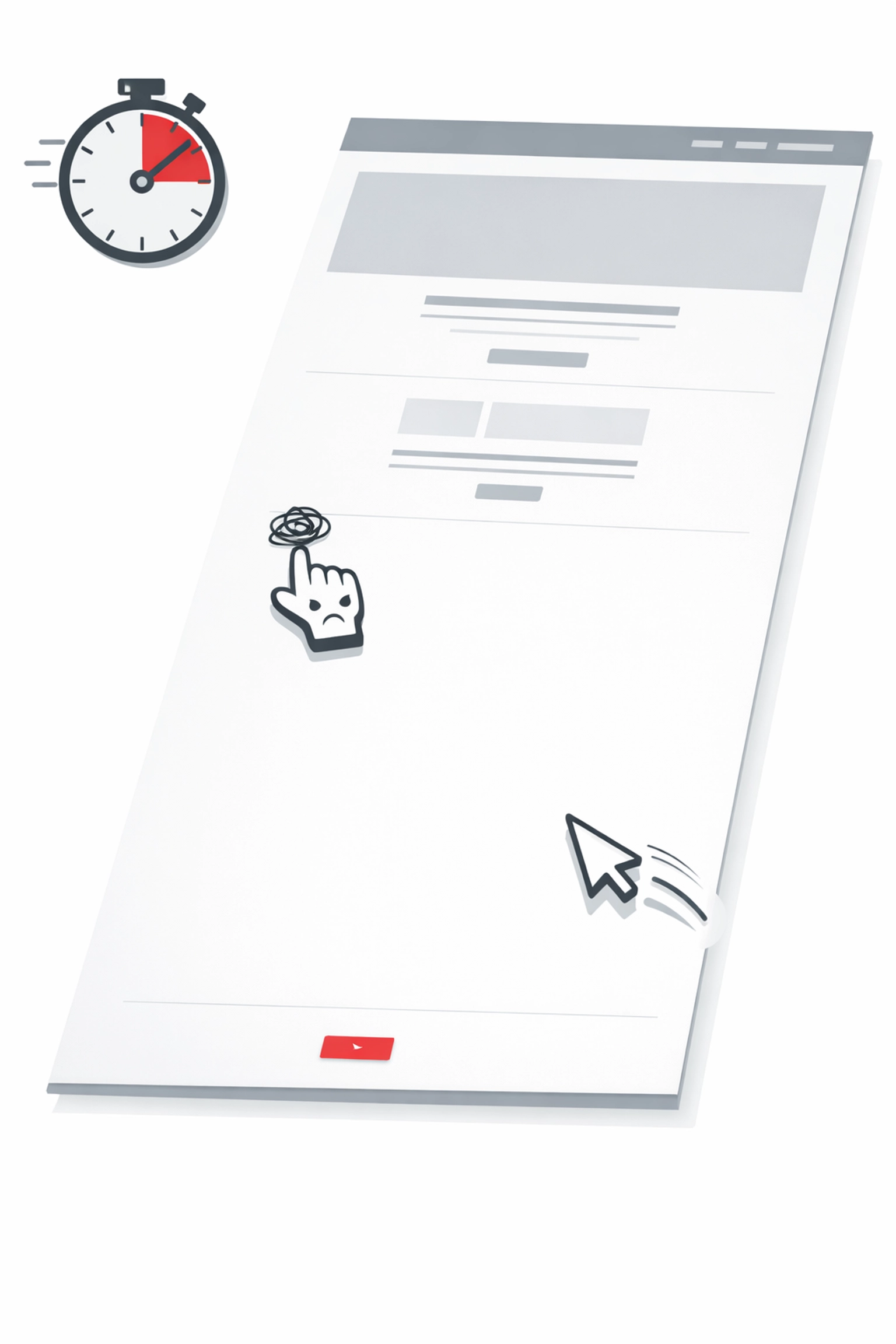
Even when you do generate clicks, landing page performance often destroys any pipeline potential. This is where the “search performance vs. pipeline performance” gap becomes glaringly obvious.
You’re sending thousands of visitors to pages that:
- Take 8+ seconds to load on mobile
- Present unclear value propositions
- Bury calls-to-action below three scrolls
- Demand excessive information in lead forms
- Offer no clear next step for different buyer stages
- Fail to differentiate from competitor offerings
Your SEO team delivered their part of the bargain: they got people to your site. But conversion rate optimization (CRO) hasn’t kept pace with traffic growth, so more visitors simply means more people who view your page and leave without taking action.
The math is unforgiving: If your conversion rate is 1.5% and you increase traffic from 10,000 to 25,000 monthly visitors, you’ve added 225 leads. But if your lead-to-opportunity rate is 8% and close rate is 15%, that traffic surge generated exactly 2.7 new customers. Meanwhile, your CAC increased because you invested in content production, technical SEO improvements, and link building.
Landing page quality and conversion architecture aren’t “nice-to-haves”: they’re the mechanism that transforms search visibility into actual pipeline. Without this piece, improving search performance is like upgrading your store’s billboard while leaving the store itself broken and uninviting.
The Attribution Blackhole: When SEO Gets No Credit for Revenue
Here’s where the disconnect becomes systemic: attribution models that don’t account for the full buyer journey systematically undervalue SEO’s pipeline contribution.
Most CRM systems use last-touch attribution by default. A prospect researches your solution through organic search across 4-6 sessions over three weeks, bookmarks several pages, shares your content internally, then eventually requests a demo by clicking a paid ad. The paid ad gets 100% of the credit. SEO gets zero.
This creates a vicious cycle:
- SEO drives awareness and research phase engagement
- Other channels get credit for conversions
- Leadership sees poor SEO attribution and questions investment
- SEO budget gets cut or reallocated
- Long-term pipeline development suffers while short-term conversion tactics get over-funded
The “missing link” in SEO reporting is CRM integration with proper multi-touch attribution. When you can track that a closed deal engaged with 12 pieces of organic content before converting through a direct visit, you understand SEO’s actual pipeline contribution.
Without this visibility, you’re flying blind. Your search performance metrics say one thing (success), your pipeline reports say another (underwhelming), and leadership loses confidence in organic search as a growth channel.
A comprehensive Forensic SEO approach examines not just rankings and technical performance, but the full funnel from impression to closed revenue. This reveals where the disconnect actually lives: and what to fix.
Bridging the Gap: What Actually Drives Pipeline from Search
Closing the gap between search performance and pipeline performance requires recalibrating what you measure and what you optimize:
Measure intent-qualified traffic, not total traffic. Track visitors from bottom-of-funnel keywords separately from informational queries. Report on conversion rates by intent stage, not aggregate conversion rates.
Build content for every stage, but weight toward transaction intent. Your content mix should reflect your business goals. If you need pipeline now, prioritize comparison content, solution-specific pages, and use case studies over general education.
Implement multi-touch attribution. Track the full customer journey from first organic touch through closed-won. Assign fractional credit to every meaningful interaction, not just the last click.
Optimize for assisted conversions, not just last-click conversions. Understand SEO’s role in introducing prospects, nurturing interest, and building credibility: even when other channels close the deal.
Connect GA4 to your CRM. Actually track which organic landing pages, topics, and keywords correlate with closed revenue, not just form fills. This transforms SEO from a traffic game into a revenue function.
Audit the conversion path, not just the content. Use session recordings and heatmaps to identify where high-intent organic visitors drop off. Fix the broken experiences that destroy pipeline potential.
Test landing pages specifically for organic traffic. Paid traffic and organic traffic have different expectations and contexts. Create dedicated conversion experiences for organic visitors at different journey stages.
Regular SEO audits should evaluate not just technical health and content quality, but conversion architecture and attribution accuracy. If your audit doesn’t include pipeline analysis, it’s incomplete.
The Bottom Line: Search Success Means Nothing Without Business Success
Rankings that don’t drive qualified pipeline are participation trophies. Impressive traffic numbers that don’t generate revenue are expensive vanity projects. Visibility without conversion is brand building without business building.
The gap between search performance and pipeline performance isn’t mysterious: it’s systematic. You’re measuring the wrong things, optimizing for the wrong intent, losing attribution visibility, and failing to convert the traffic you do generate.
Closing this gap doesn’t require abandoning SEO. It requires redefining SEO success around business outcomes, not search engine outcomes. It means building content and conversion systems that align with actual buyer journeys, not just keyword opportunities. It means connecting search visibility to CRM data so you can prove: and improve: SEO’s revenue contribution.
Because here’s the thing: your CEO doesn’t care about your domain authority score or your featured snippet count. They care about qualified pipeline, sales velocity, and customer acquisition cost. If your search performance isn’t contributing to those metrics, it’s not actually performing: no matter what your ranking reports claim.
The businesses that win aren’t those with the best traffic numbers. They’re the ones who built complete systems that transform search visibility into qualified conversations and closed deals. That’s the real measure of search success: and everything else is just noise.
Ready to connect your search performance to actual pipeline growth? Book a consultation to audit where your visibility-to-revenue gaps actually exist: and how to fix them.





2 Comments