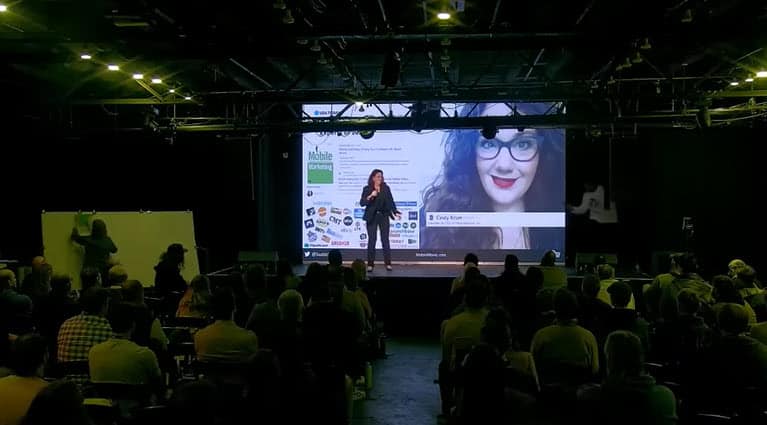
Cindy Krum has a track record of being right before everyone else. She was talking about mobile SEO when people laughed at her. She predicted fraggles before Google announced passages. So when she says video SEO is the next big thing for AI visibility, it’s worth paying attention.
Her thesis at Tech SEO Connect: everyone’s talking about branding as the answer to AI visibility, but nobody’s explaining what that actually means. Krum’s answer is video. “The shortcut to AI visibility is effective branding, but the shortcut to effective branding is video.”
Why Video, Why Now
Krum started with how internet consumption is changing. People have shifted to dopamine-focused, quick-hit content. Attention spans are shrinking—we’re approaching goldfish territory, she joked (or maybe not). Whether that’s concerning or just efficiency, the reality is we need shortcuts.
Beyond attention spans, we’re in what she called a “loneliness crisis.” People crave connection. If all we’re doing is pumping out AI-automated text, we’re not creating that connection. Video does.
Think about the best brands in the SEO industry—many of them have been doing video actively for years. Video makes people remember you, feel connected, feel like they can reach out and ask questions. It’s not just true in our industry; more and more CEOs are becoming the face of their brands online so people can connect to more than just a logo.
Video Gives You Multiple Bites at the Apple
Krum outlined how video marketing creates opportunities beyond traditional SEO:
Direct conversion from feeds. Users scrolling TikTok or YouTube Shorts are already primed for related content. You can convert directly without waiting for SEO to kick in.
Platform-specific SEO. You don’t have to rank in Google. YouTube, TikTok, and Instagram have their own algorithms—sometimes easier to work with.
Direct list building. Engage people on social platforms, then use tools like ManyChat to move them into your funnel.
Brand building that spills into AI. This is the key point: AI systems don’t go to your website to find out if you’re the best—you’re going to say you’re the best. They go to other sources. Video platforms are where you look like the best, act like the best, and get engagement that makes AI think you’re the best.
YouTube Is Already Dominating AI Citations
YouTube is one of the most cited sources across all AI platforms, especially Google’s. Krum showed examples of AI Mode responses where product evaluations in the carousel were being pulled directly from YouTube videos comparing those exact products.
In some cases, AI Overviews display two videos directly in the response. The text shown alongside them comes from video transcripts. This is huge: your video doesn’t get summarized away. It plays directly in the AI Overview. You get to say exactly what you mean.
“It’s kind of like skipping the line,” Krum said, “because Google wants to show videos. If there’s not strong video competition, you get in faster than pushing a blog post.”
She also noted that Google recently added a tab for short-form videos at the top of search results, aggregating YouTube Shorts, Instagram Reels, and TikToks. Every time Google has added a tab, it’s eventually become deeply integrated into main search results. She expects short-form videos will start appearing in AI Overviews soon—because it keeps people on Google longer, which means more data collection and more ad revenue.
How AI Processes Video
AI has gotten dramatically better at processing video in real time. But even when full video processing isn’t happening, audio processing is—think about how many things now have automatic transcripts.
So even if your video isn’t being AI-processed frame by frame, the systems are processing titles, comments, and transcripts. Videos can rank based on that text layer alone.
There’s also a pre-filtering effect: videos that get good engagement on their native platforms (Instagram, TikTok, YouTube) float to the top there first. Then Google uses that ranking as a primary filter before applying its own factors. The platforms do the initial quality sorting for Google.
One interesting note: Google is protecting its video inventory. By default, YouTube blocks other AIs from learning from your videos. Great for Google—they can still learn from your content while competitors can’t.
The Non-Linear Funnel
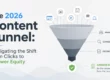
Krum referenced research from Boston Consulting Group that Google has been promoting heavily: the conversion funnel is no longer linear. The modern consumer journey includes streaming, scrolling, searching, and shopping—the four S’s.
Google wants marketers to map where awareness, consideration, and conversion happen across these modes. Are people discovering your brand from scrolling? From streaming? What percentage comes from where?
This connects to Google’s MUM (Multitask Unified Model), which linked images, videos, and maps with language to map and predict user journeys. Google is trying to show the right content type at the right time—sometimes that’s a short-form video, sometimes an image, sometimes text.
For smaller brands, this is actually good news. Long-tail SEO is struggling right now—Google web traffic is dominated by big brands. But video platforms offer a way to break through that blockade by ranking in other places first, then letting that visibility spill back into search.
Video SEO Basics
Krum gave a crash course on what actually matters for video ranking:
Engagement signals beat metadata. Titles and hashtags are table stakes. What really matters is micro-engagement: comments, responses, likes, rewatches, rewinds.
Audio is being processed. TikTok especially cares about trending words. If certain phrases are going viral, using them gets your content surfaced more. The algorithm is listening.
The first three seconds are everything. Instagram actually shows you statistics on how many people watch past three seconds. You need a hook: “You’ve been doing this wrong your whole life,” “What nobody realized about X.” Keep people past that three-second mark.
Keep it short and cut frequently. Short-form videos can be as short as 15-20 seconds. Use lots of cuts, different camera positions, varying zoom levels. Keep attention moving.
Keep it personal, not polished. People want connection. Overly produced, overly salesy content often underperforms. Casual, walking-to-camera content can work better for branding.
Ask questions. “Which one do you prefer?” “What did you think?” Get people commenting, and they’ll create a community in your comments section.
Post when your audience is awake. TikTok especially pushes new videos hard right when you publish. If it hits and gets engagement, it keeps going. If it flops, they stop. Timing matters.
Tools and Tactics
Krum recommended several tools for video SEO:
- VidIQ and MetroCool for YouTube keyword research, trending videos, and common questions to answer.
- YouTube Autocomplete for keyword research. Type “[keyword] a_” to see what phrases with that pattern get the most search volume. It fills in the blank with popular searches.
- Opus Clips for AI-powered video editing. Put in one YouTube URL and it clips it into 10-20 short videos at reasonable points, adds titles and transcripts, and has a scheduler for publishing to all platforms.
- ManyChat for engagement automation. When someone comments a keyword on your video, it automatically DMs them with whatever you’ve set up. Certified by Meta, and it’s how you build lists directly from video engagement.
- Waff.com for what Krum called “clip farming”—a bounty model where you pay people to get views on your videos through stitches, responses, or shares. It’s essentially paid virality.
She also noted that YouTube just announced auto-creation of vertical versions of landscape videos, and Google Merchant Center can automatically create product videos from your listings.
The Platform Risk Warning
Krum closed with a warning: don’t put all your eggs in one basket. About three weeks before the conference, YouTube started deleting channels seemingly at random. One creator sued, won—the government ruled YouTube acted unfairly—but YouTube still didn’t restore his channel.
“This is like the helpful content update of YouTube,” she said. “People are losing their lifetime businesses.”
The solution: put your content everywhere. YouTube, Instagram, Facebook, TikTok, LinkedIn, Twitter—they all take video. You’re maximizing your investment and protecting against platform risk. Sometimes you need separate strategies if audiences differ wildly, but often you can repurpose the same content across platforms.
My Takeaways
Krum’s talk filled a gap I’ve been noticing in AI optimization conversations. Everyone says “do branding” but nobody explains how. Video is the how.
What I’m implementing:
1. YouTube is an AI visibility channel now. It’s one of the most cited sources in AI responses. If you’re not creating video content, you’re missing a major retrieval pathway.
2. Short-form video is coming to AI Overviews. Google added the tab, they’re aggregating across platforms, and they want to keep users engaged. Expect integration soon.
3. AI judges you by what others say. Your website is your self-assessment. AI looks at third-party sources to determine authority. Video platforms are where you build that external validation.
4. Engagement signals matter more than metadata. Titles and descriptions are table stakes. What drives ranking is micro-engagement: comments, shares, watch time, rewatches.
5. Hook them in three seconds. That’s the make-or-break moment for short-form video. If you don’t capture attention immediately, the algorithm stops pushing your content.
6. Diversify across platforms. Platform risk is real. YouTube can delete your channel and ignore court orders. Put content everywhere your audience might be.
Video SEO isn’t replacing what we do—it’s becoming part of what we do. In an AI-first world where your website is increasingly a transaction layer, video is how you build the brand authority that AI systems are looking for.