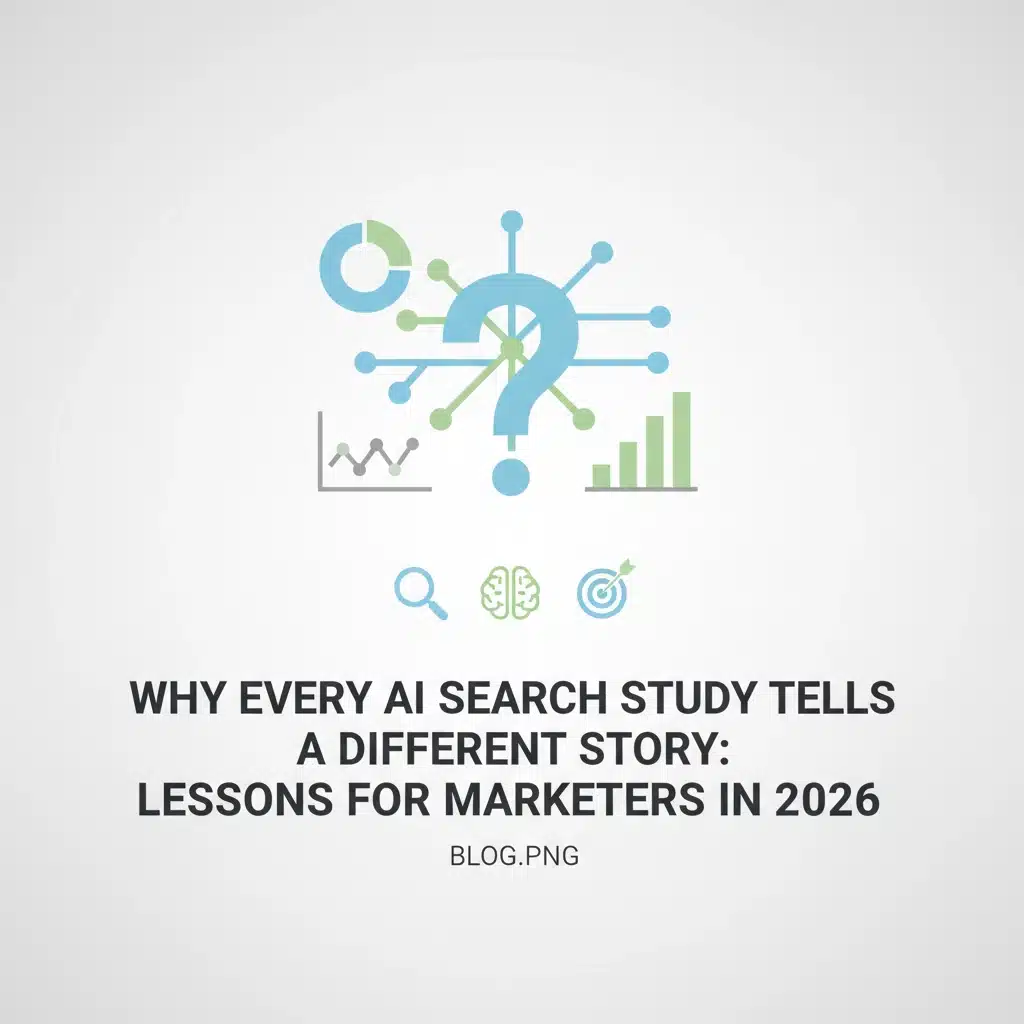
The AI search landscape has produced a bewildering maze of contradictory statistics that's leaving marketers scratching their heads. One study claims only 25% of #1 rankings appear in AI Overviews, while another reports a 33.07% chance of AI citation for top positions, and yet another suggests 87.6% of AI Overviews feature Position 1 results.
Here's the uncomfortable truth: these aren't measurement errors. They're symptoms of an industry measuring fundamentally different things while the technology evolves at breakneck speed. For marketers planning 2026 strategies, understanding why these studies contradict each other has become essential for making informed decisions.
The Core Problem: Everyone's Measuring Different Things
Platform Confusion Creates False Comparisons
The biggest source of contradiction stems from researchers examining entirely different search ecosystems. Some studies focus exclusively on Google AI Overviews: the feature appearing within traditional Google search results: while others analyze AI citations across ChatGPT, Perplexity, Claude, and Gemini combined.
This distinction fundamentally changes outcomes. Research showing that "AI search engines are abysmal at citing news sources" typically examines standalone AI platforms, while studies reporting high citation rates often focus on Google's integrated AI features, which operate under different algorithms and content policies.
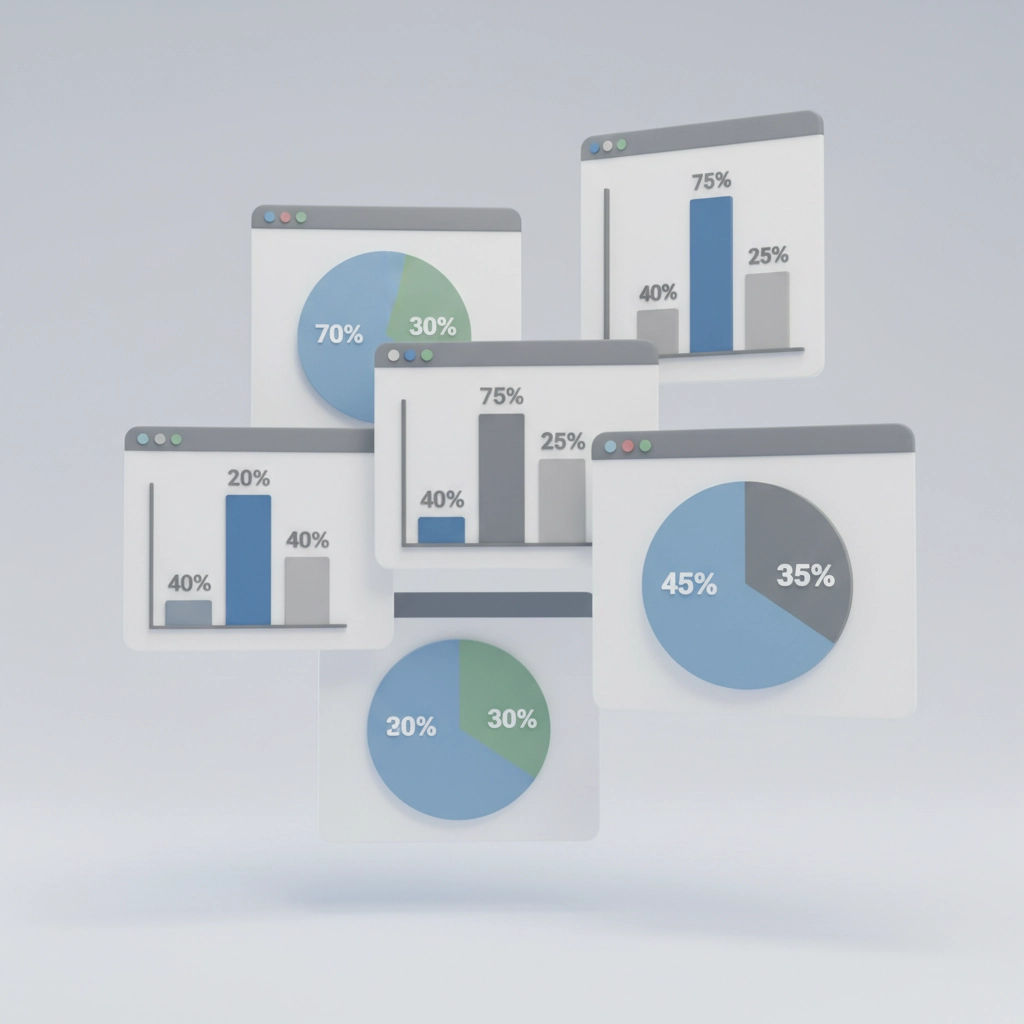
Query Selection Bias Skews Results
The choice of test queries dramatically shapes study outcomes. Research using simple factual questions ("What's the capital of France?") produces vastly different results than studies employing complex, ambiguous queries ("How should I structure my retirement portfolio?").
Some researchers deliberately use adversarial prompts designed to trip up AI models, while others focus on commercially relevant searches that actual users perform. A Columbia Journalism Review investigation using challenging news-related queries found error rates exceeding expectations, whereas Nielsen Norman Group studies using typical user behavior patterns showed more favorable results.
Temporal Snapshots Miss Rapid Evolution
AI search features evolved dramatically throughout 2025, making studies conducted in different months incomparable. AI Overviews expanded their presence significantly between January and October 2025, meaning early-year research captures a fundamentally different reality than recent studies.
This temporal dimension explains why some studies report AI Overviews appearing in 50%+ of searches while others cite rates as low as 10.4% of keywords: both may be accurate for their specific time periods.
The Numbers Don't Add Up (And That's the Point)
The range of contradictory statistics demonstrates how fragmented our understanding remains:
AI Overview Frequency:
- Study A: 50%+ of searches trigger AI Overviews
- Study B: Only 18% of searches show the feature
- Study C: 13.14% of queries (March 2025 data)
- Study D: 10.4% of keywords display AI content
Citation Rates from Top 10 Results:
- Research showing 99% citation rate from top positions
- Alternative findings suggesting only 40.58% citation rate
- Conservative studies reporting just 12% citation frequency
These aren't academic inconsistencies: they fundamentally shape how marketers interpret AI as either an existential threat or manageable evolution. A marketer reading that half of all searches show AI Overviews faces a completely different strategic reality than one reading that only 1 in 10 keywords trigger them.
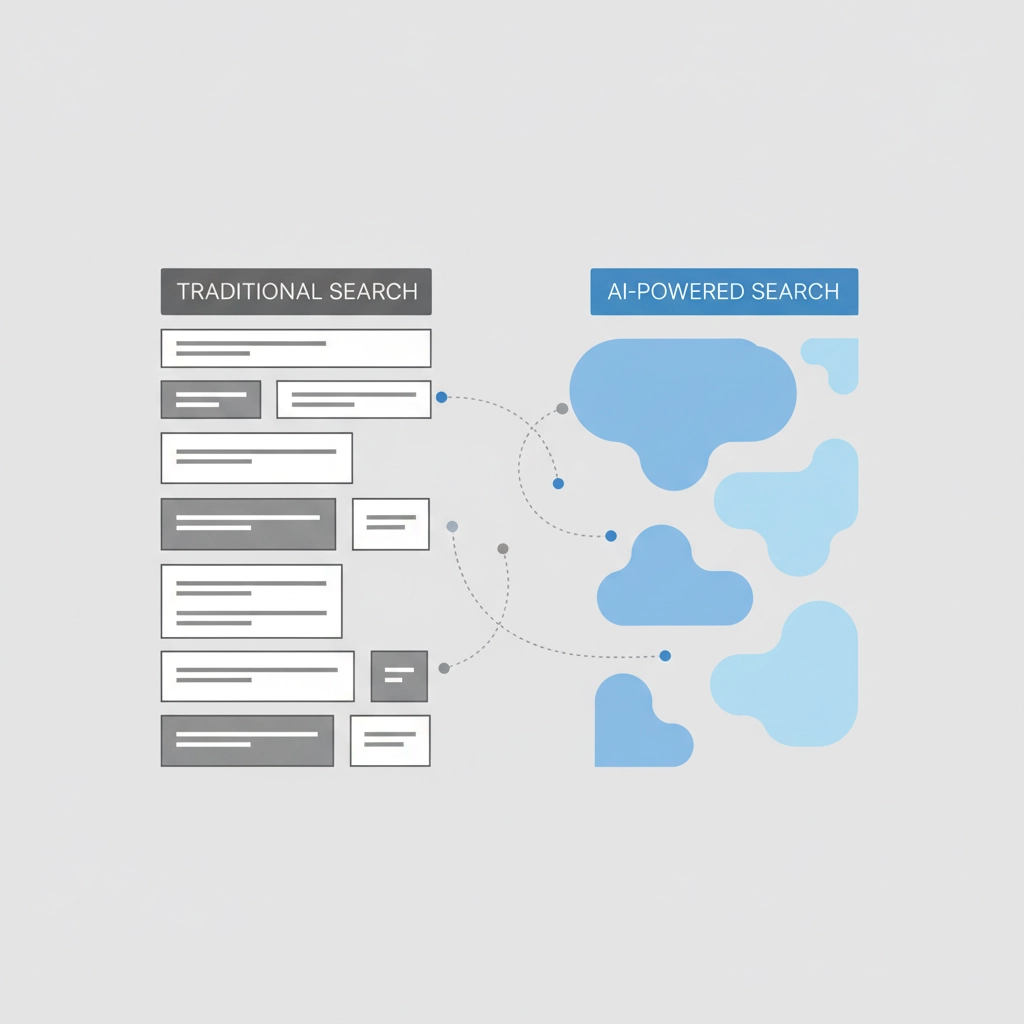
What The Contradictions Actually Tell Us
Accuracy Concerns Remain Legitimate
Multiple analyses highlight that AI models deliver incorrect answers more than 60% of the time in certain contexts, particularly for medical queries and factual information. Yet McKinsey's 2025 survey shows generative AI driving measurable value through improved personalization and complex query handling.
The disconnect reveals that accuracy varies dramatically by query type, industry vertical, and information complexity. AI performs well for straightforward commercial queries but struggles with nuanced, high-stakes information where precision matters most.
User Behavior Defies Simple Categories
Search Influence's higher education study revealed that prospects blend AI tools with traditional resources like YouTube and Google Images, but most evaluations fail to capture this hybrid behavior. Users don't exclusively use AI search or traditional search: they combine both based on specific needs and contexts.
This hybrid reality means marketers cannot abandon traditional SEO strategies for AI-focused approaches, but must develop integrated optimization strategies that account for multiple search behaviors simultaneously.

Critical Lessons for 2026 Marketing Strategy
Establish Your Own Baseline Metrics
Industry averages mean nothing for your specific situation. What matters isn't whether 18% or 50% of searches nationally show AI Overviews, but what percentage of your target queries trigger these features for your audience in your industry vertical.
Track how AI search features specifically impact your business through direct measurement rather than relying on conflicting industry studies. Our AI Content Auditor can help establish these baseline metrics for your specific keyword portfolio.
Focus on Trends Over Absolute Numbers
The rapidly evolving AI search landscape makes consistent measurement methodology more valuable than absolute percentages. Establish baseline measurements now and track month-over-month changes rather than trying to decode what any single study's numbers mean for your business.
Interpret Data Within Context
A study reporting AI search decimating organic traffic may have examined e-commerce queries while your business operates in B2B services. Conversely, research showing minimal AI impact might have focused on local service businesses while you're competing in national SaaS markets.
Always consider study scope, timeframe, industry focus, and methodology before applying findings to your situation. The methodology behind the research often matters more than the headline statistics.
Prepare for Continued Uncertainty
The contradictory nature of current research underscores that AI search impact remains in flux. Rather than betting everything on current trends, develop strategies flexible enough to adapt as AI features, algorithms, and user behavior continue evolving.

Your 2026 Action Plan
Combine Multiple Data Sources
Make decisions based on multiple studies rather than cherry-picking favorable statistics. If one study shows 50% AI Overview impact while another shows 10%, neither may be wrong: they might simply measure different aspects of the same phenomenon.
Cross-reference findings across multiple methodologies to identify consistent patterns rather than relying on specific percentages.
Track Segment-Specific Performance
Monitor how AI features impact different segments of your business separately. Brand searches, informational queries, transactional keywords, and local searches each interact differently with AI features.
Create separate measurement frameworks for each query type rather than assuming uniform impact across your entire keyword portfolio.
Invest in Adaptable Optimization
The conflicting research proves that no one has definitive answers about AI search impact. Success belongs to marketers who understand this reality, establish their own metrics, and remain flexible as the landscape shifts.
Focus on optimization strategies that perform well regardless of specific AI search percentages: comprehensive content that answers user intent, technical excellence that ensures visibility across platforms, and expertise demonstration that builds authority whether users find you through traditional search or AI citations.

The Bottom Line
The uncomfortable truth is that no single study currently provides the definitive answer about AI search impact. The numbers can be manipulated to support almost any narrative about the threat or opportunity AI represents.
Rather than waiting for industry consensus that may never come, successful marketers are establishing their own measurement frameworks, tracking trends specific to their businesses, and developing strategies robust enough to succeed regardless of which contradictory study proves most accurate.
The fragmented research landscape isn't a bug: it's a feature that reveals how complex and varied AI search impact actually is. Your success in 2026 depends on embracing this complexity rather than seeking oversimplified answers that don't exist.
Ready to establish baseline AI search metrics for your business and develop strategies that work regardless of which studies prove accurate? Schedule a consultation to discuss how Expert SEO Consulting can help you navigate the evolving AI search landscape with data-driven approaches tailored to your specific situation.