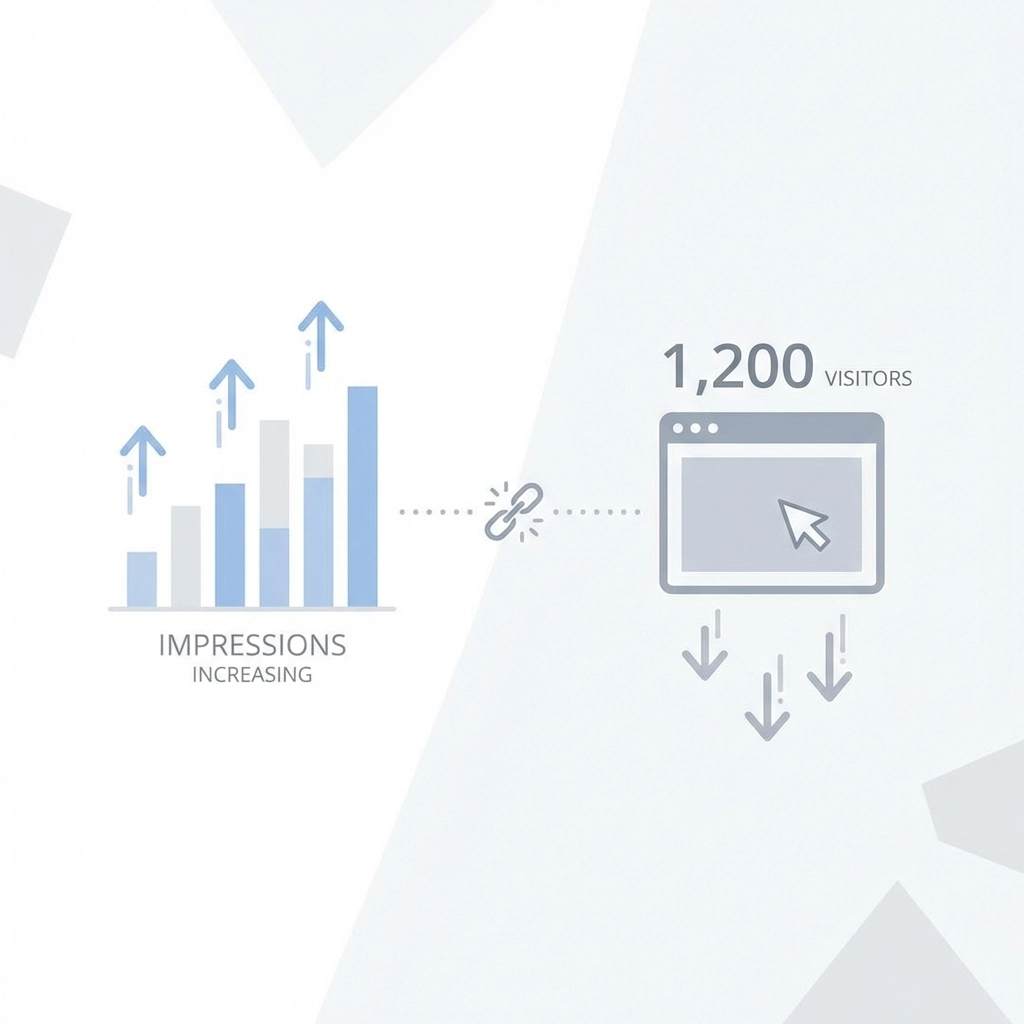
Picture this: You're doing everything right on your website. Your content is optimized. Your rankings are solid. The number of impressions your content gets on Google is going up: steadily, impressively even. But the number of people actually visiting your website? It's going down.
Your first instinct is panic. Something must be broken. Maybe Google penalized you. Maybe your competitors finally figured something out. Maybe SEO is just dead.
Here's the thing: There isn't a problem. Welcome to the world of AI search, and this is a feature, not a bug.
It's a phenomenon known in the SEO world as "zero-click" impressions, and it's fundamentally reshaping how we measure digital success. If you're not adapting your strategy around this shift, you're measuring the wrong things: and probably stressing over the wrong metrics.
What Are Zero-Click Impressions, Exactly?
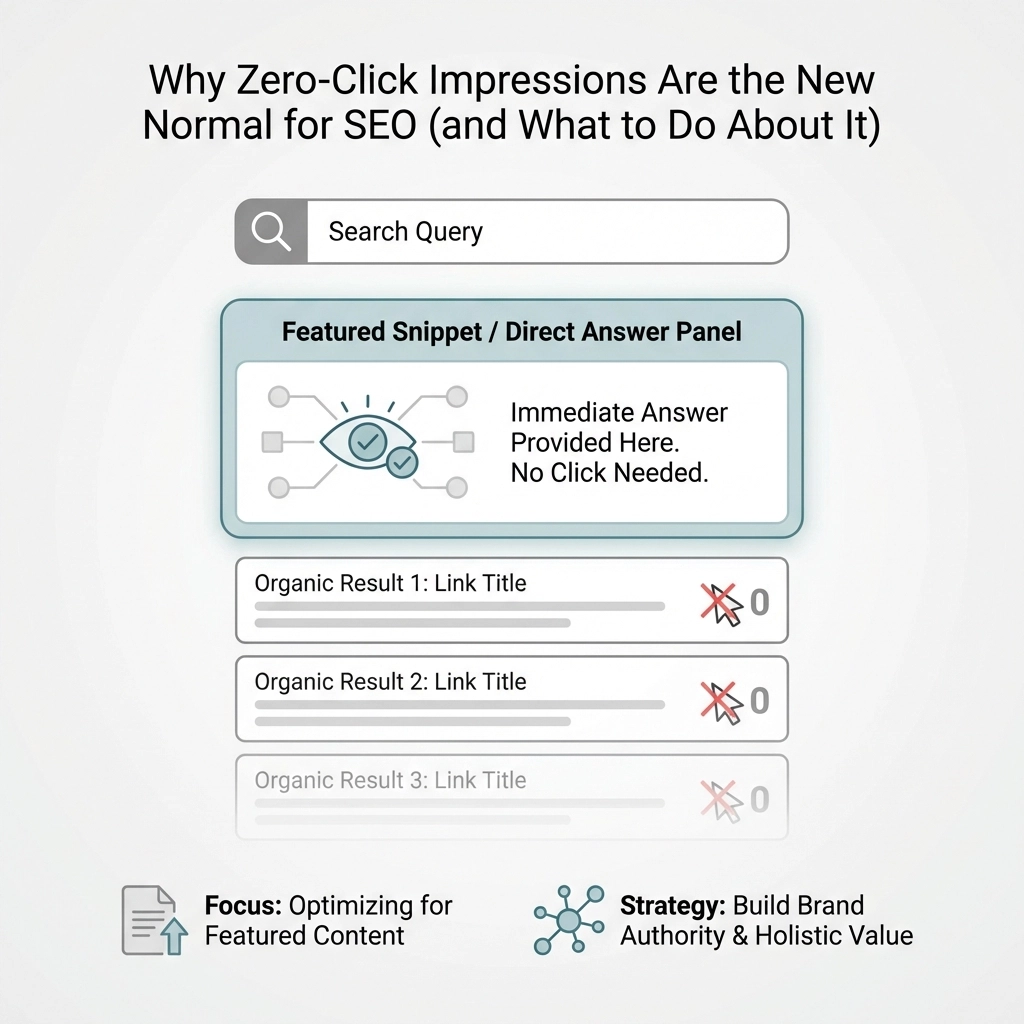
Zero-click impressions occur when a user sees your content in search results but never actually clicks through to your website. They got what they needed directly from the search engine results page (SERP) itself.
Think about the last time you Googled something simple: the weather, a celebrity's age, a quick definition. Did you click through to a website? Probably not. Google gave you the answer right there. Featured snippets, knowledge panels, AI Overviews, People Also Ask boxes, local map packs: all of these provide answers without requiring a single click.
And here's the kicker: nearly 65% of Google searches now end without a click-through. On mobile devices, that number hovers around 60%. This isn't a glitch in the matrix. This is the new normal.
Why This Shift Is Accelerating
The numbers tell a stark story. Click-through rates are declining by 60-70% year-over-year in many industries, even as impressions increase. Meanwhile, 80% of consumers rely on zero-click results in at least 40% of their searches.
What's driving this? AI-powered search results.
Google's AI Overviews now synthesize information from multiple sources and present comprehensive answers directly on the SERP. When searchers get complete, accurate responses without clicking anywhere, they don't click anywhere. It's that simple.
This creates what industry experts call "the great separation between impressions and clicks." Your content is being seen: Google is absolutely showing it to people. But those people are getting what they need without ever landing on your site.
For businesses still measuring success purely through website traffic, this feels catastrophic. But here's where we need to reframe the conversation entirely.
Why Zero-Click Isn't Actually Bad News
Full disclosure: I understand why this freaks people out. For years, the SEO playbook was straightforward: rank higher, get more clicks, convert those visitors. Traffic was the metric everyone tracked because traffic (theoretically) meant opportunity.
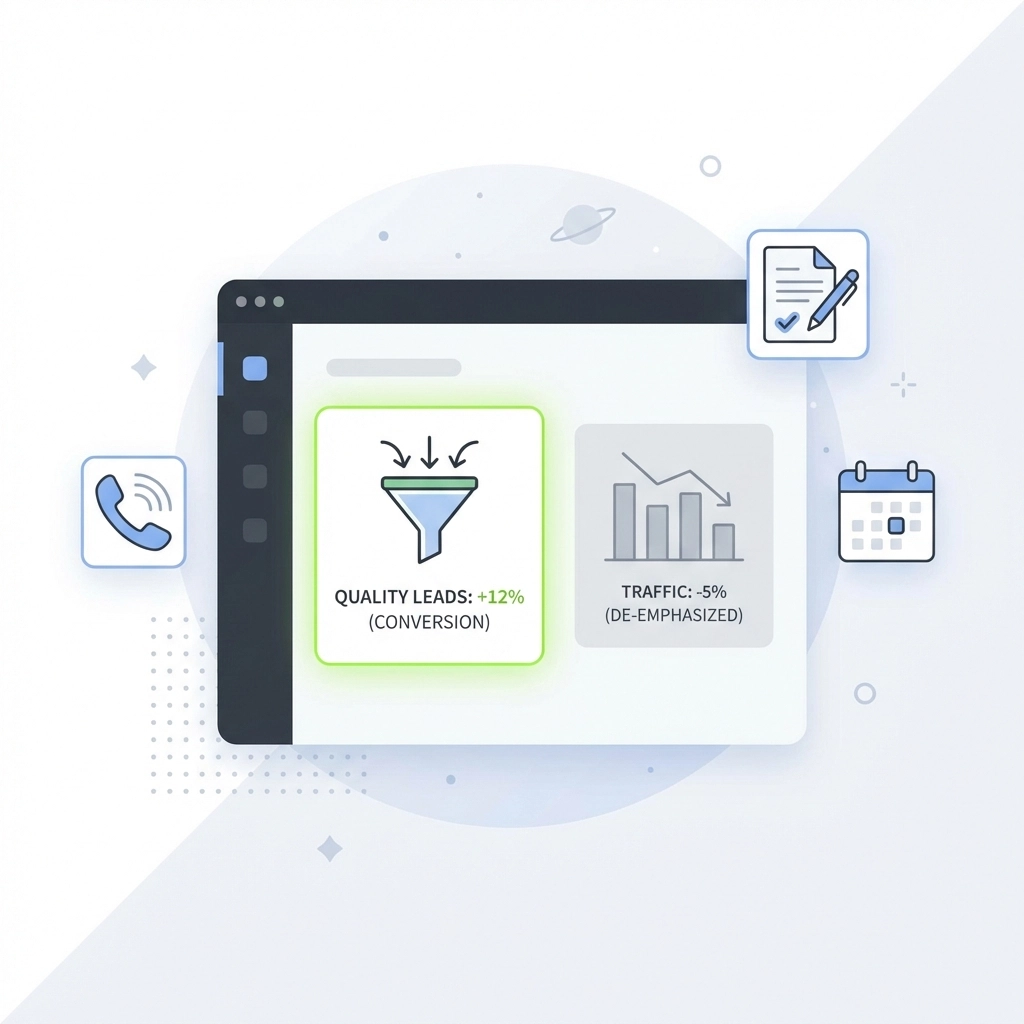
But here's what the data actually shows: the traffic you do receive is now more qualified, with conversion rates actually increasing across many industries.
Why? Because zero-click results mostly replace low-intent, research-phase searches. Someone Googling "what is SEO" isn't ready to hire an SEO consultant. They're just curious. That search ending without a click to your website doesn't cost you a client: it was never going to convert anyway.
The searches that matter: people ready to hire, buy, or book: still click through. Your Google Analytics might show fewer total visitors, but those visitors are more engaged. They're calling. They're filling out forms. They're becoming actual leads.
Visibility and conversions are both increasing. The middle metric: traffic volume: matters less than it used to.
What You Should Actually Be Measuring Now
If raw traffic is no longer the gold standard, what replaces it? Here's how modern SEO measurement needs to evolve:
Organic impressions and search visibility. Your content appearing in search results still has value: massive value, actually. Brand exposure happens whether someone clicks or not. Track how often you're showing up, not just how often people are clicking.
Brand demand indicators. Are branded searches for your company increasing? Is direct traffic growing? These signals indicate that your visibility efforts are building recognition, even if they're not driving immediate clicks.
Conversion rates and lead quality. Stop counting visitors and start counting qualified opportunities. Phone calls, form submissions, consultation bookings: these are the metrics that actually impact revenue.
Feature placement. Are you appearing in featured snippets? AI Overviews? People Also Ask sections? Position zero is now arguably more valuable than position one because it captures attention before traditional organic results.
If you're still reporting success purely through organic traffic numbers, you're telling an incomplete story. The AI Content Auditor can help you understand how your content performs in this new AI-driven search landscape.
How to Thrive in the Zero-Click Era
Adapting to zero-click search isn't about fighting the tide: it's about riding it strategically. Here's what actually works:
Optimize for Featured Placement
Content that earns featured snippets, knowledge panels, and AI Overview citations gets seen first. This means structuring your content with clear, direct answers to common questions. Use headers that match search queries. Format information in ways that Google can easily extract and display.
Our guide on how to optimize content for AI breaks down exactly what AI systems look for when selecting content to feature.
Target Question-Based Keywords Strategically
People searching questions often trigger zero-click features. But that doesn't mean you should avoid these keywords: quite the opposite. Appearing in the answer builds authority and brand recognition. When that same person is ready to take action, they'll remember who educated them.
Maximize Your Local Presence
For local businesses, the local three-pack has become the most valuable real estate in local SEO. Many local searches: directions, hours, phone numbers: resolve entirely within the map pack. An optimized Google Business Profile with strong ratings and reviews captures business without traditional website visits.
Create Content That Demands the Click
Some content inherently drives clicks regardless of SERP features. In-depth analysis, original research, comparison guides, and interactive tools can't be fully consumed from a snippet. Position your most valuable, conversion-focused content around topics that require deeper exploration.
Our content optimization for AI search service helps businesses restructure their content strategy around these new realities.
Track Citations, Not Just Clicks
In an AI search world, being cited as a source matters even when users don't visit your site. Monitoring where and how your brand appears in AI-generated answers is becoming essential for understanding true visibility. The optimization and analysis tools we've developed are specifically designed for this new measurement landscape.
The Bottom Line
Zero-click impressions aren't killing SEO: they're just changing what SEO success looks like. The businesses that adapt will thrive. The ones clinging to outdated traffic metrics will keep panicking over problems that don't actually exist.
Your content is still being seen. Your brand is still building recognition. The people who need what you offer are still finding you. What's changed is the path they take to get there: and the way we measure that journey.
If your impressions are climbing while your clicks are dropping, don't panic. Dig deeper. Look at your actual conversions. Examine your lead quality. Check your brand search volume.
You might find that things are working exactly as they should.
Ready to adapt your SEO strategy for the AI search era? Book a consultation with Expert SEO Consulting and let's build a measurement framework that actually reflects your business impact.