
Here's a number that should make every SEO professional pause: 73% of websites have critical technical issues that silently sabotage their search visibility. The problem isn't awareness: most marketers know audits matter. The problem is time. Manual site audits consume hours, sometimes days, leaving teams reactive instead of strategic.
In 2026, that excuse no longer holds. Batch site auditing has fundamentally changed how agencies and in-house teams evaluate website health, turning what once required a full workweek into a task measured in minutes.
This walkthrough shows you exactly how to leverage batch auditing to grade your entire site rapidly: and why this capability is no longer optional for competitive SEO operations.
Why Traditional Audits Fall Short in 2026
Manual audits worked when websites had 50 pages. They became strained at 500. At 5,000+ pages: now common for e-commerce sites and content-heavy businesses: they're simply unsustainable.
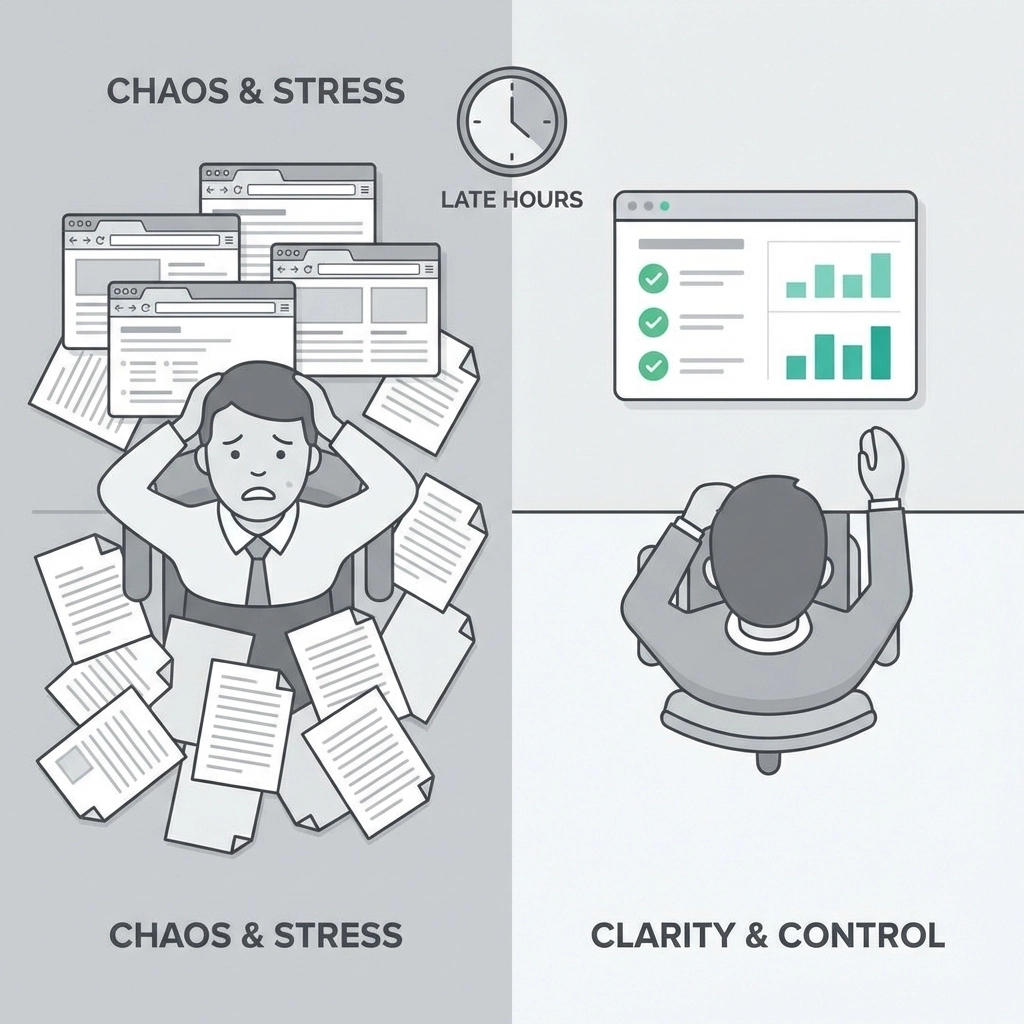
The math is brutal: auditing 100 pages manually takes approximately 8-10 hours when checking technical elements, content quality, and AI search readiness. Multiply that across client portfolios or enterprise subdomains, and you're looking at weeks of labor before delivering a single actionable insight.
Meanwhile, search algorithms evolve weekly. AI-powered search engines now prioritize different signals than they did six months ago. By the time a manual audit concludes, portions of it are already outdated.
Batch auditing solves this by evaluating hundreds: even thousands: of URLs simultaneously, returning prioritized recommendations within minutes rather than days.
What Sets Batch Site Audit Apart in 2026
Traditional crawling tools like Screaming Frog handle up to 500 URLs in their free versions, which works for basic technical assessments. But 2026 SEO demands more than crawl data.
Modern batch auditing integrates multiple evaluation layers:
- Technical health scoring (broken links, redirect chains, crawlability issues)
- AI search readiness (structured data, content clarity, citation potential)
- Content quality metrics (depth, relevance, freshness indicators)
- Competitive positioning (how your pages stack against ranking competitors)
The Batch Site Audit tool available through our optimization and analysis tools combines these layers into a unified scoring system. Instead of exporting data from five different platforms and cross-referencing in spreadsheets, you get consolidated grades and action priorities in one view.
For agencies managing multiple clients and in-house teams overseeing large domains, this consolidation isn't a convenience: it's a requirement for staying competitive.
Step-by-Step: Running Your First Batch Audit
Let's walk through the complete process from setup to actionable output.
Step 1: Prepare Your URL List
Before launching any audit, gather the URLs you want to evaluate. You have three options:
- Full domain crawl: Enter your root domain to audit every discoverable page
- Specific URL list: Upload a CSV containing priority pages (top traffic generators, conversion pages, new content)
- Sitemap import: Pull directly from your XML sitemap for comprehensive coverage
For most use cases, starting with a sitemap import provides the cleanest baseline. It ensures you're auditing pages you actually want indexed while excluding utility pages, staging URLs, or deprecated content.
Step 2: Configure Audit Parameters
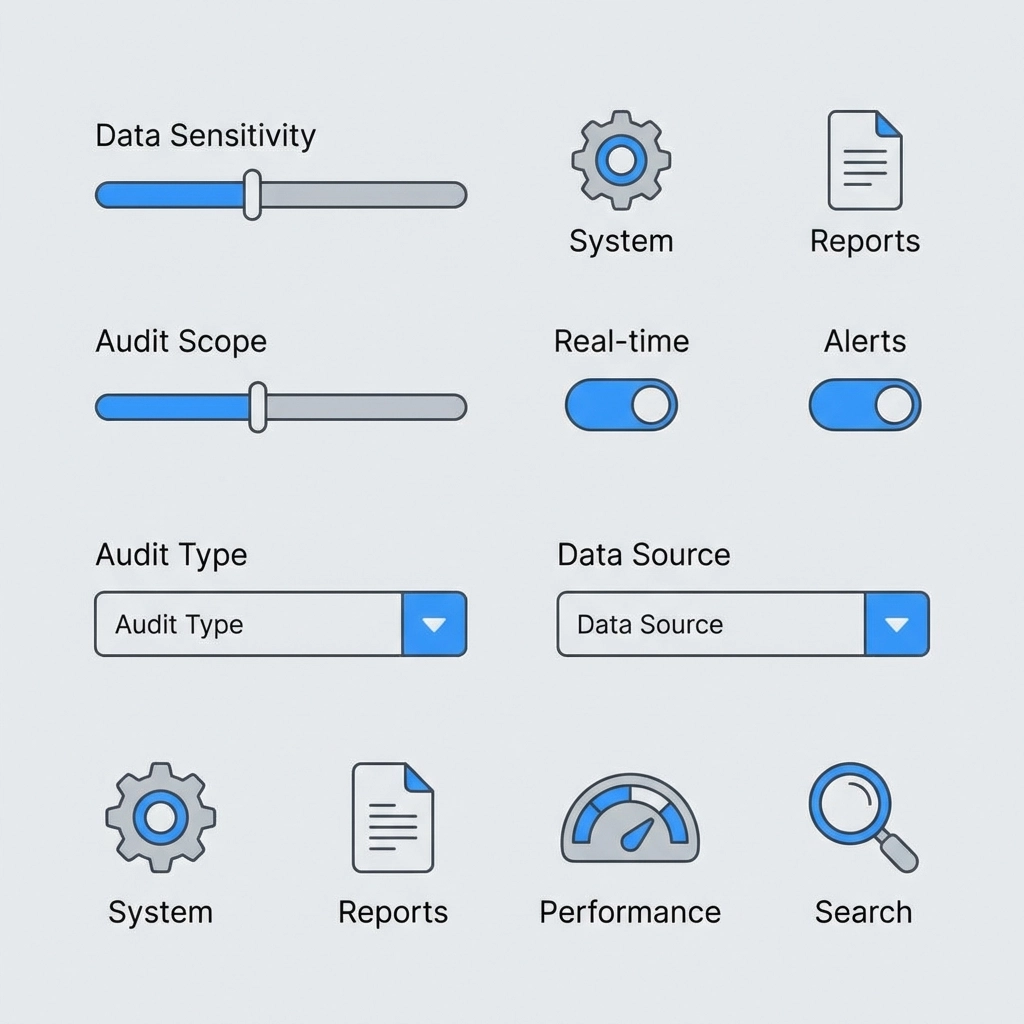
Not every audit needs identical depth. Configure your parameters based on objectives:
Quick health check : Technical issues only, fastest processing
Standard audit : Technical plus content quality scoring
Comprehensive audit : Full evaluation including AI readiness, competitive benchmarks, and content depth analysis
For routine monthly check-ins, standard audits suffice. Quarterly strategic reviews or pre-launch evaluations warrant comprehensive settings.
Step 3: Launch and Monitor Progress
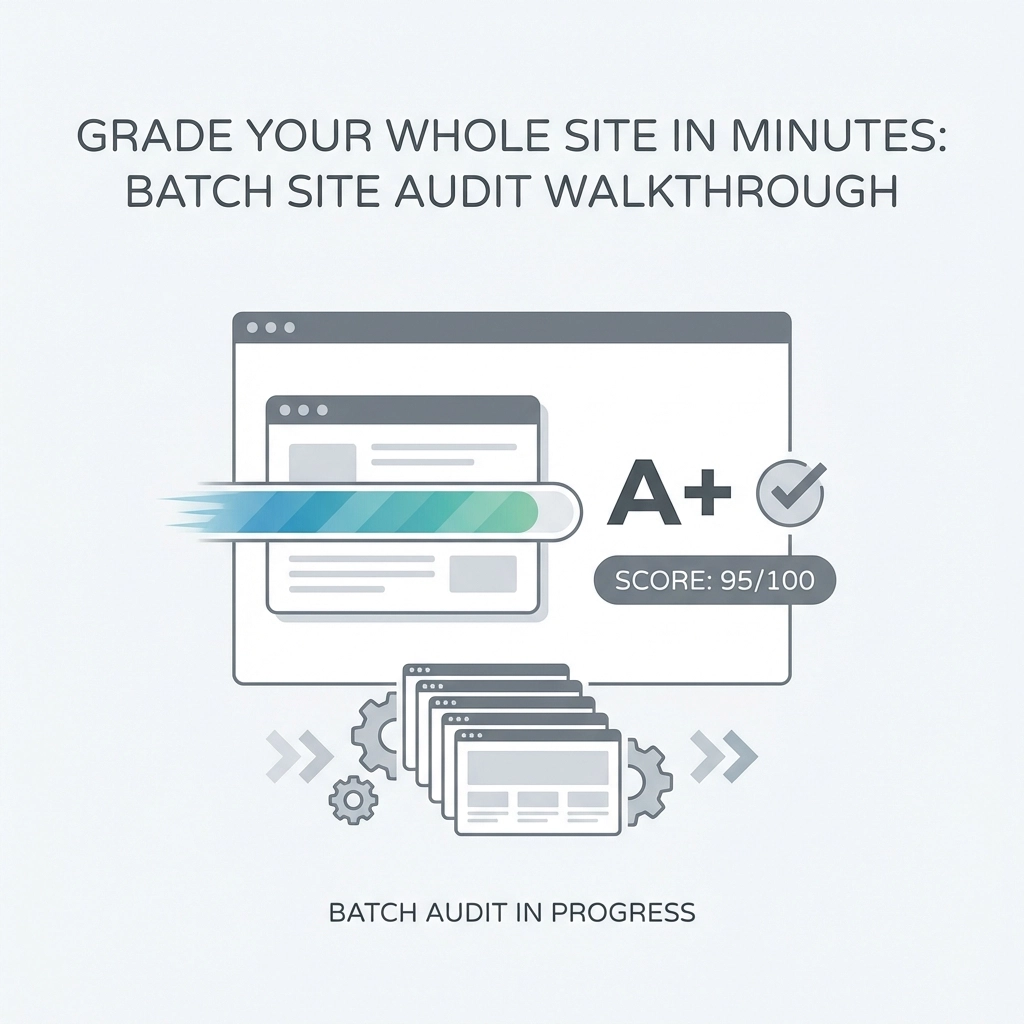
Hit the analyze button and watch the progress indicator. Processing time scales with URL count and audit depth:
- 100 URLs (standard): ~2-3 minutes
- 500 URLs (standard): ~8-10 minutes
- 1,000+ URLs (comprehensive): ~15-20 minutes
During processing, the tool crawls each URL, evaluates against 40+ ranking factors, cross-references competitive data, and calculates weighted scores.
Step 4: Review Your Site Grade Report
Once complete, you'll receive a dashboard displaying:
- Overall site grade (A through F scale with numerical score)
- Category breakdowns (Technical, Content, AI Readiness, User Experience)
- Critical issues count (items requiring immediate attention)
- Opportunity flags (high-impact improvements with estimated effort)
The grade isn't just vanity metric. It correlates directly with search performance potential. Sites scoring B or higher consistently outperform C-grade competitors in head-to-head SERP battles.
Step 5: Export and Prioritize Actions
Raw data means nothing without execution pathways. Export your results to a spreadsheet organized by:
- Priority tier (Critical, High, Medium, Low)
- Category (Technical, On-Page, Content, Structure)
- Estimated impact (Traffic potential if resolved)
- Implementation difficulty (Quick fix vs. development required)
This structured export transforms audit data into a project roadmap your team can immediately action.
Agency Advantages: Client Reporting That Scales
For agencies, batch auditing revolutionizes client management. Consider the traditional model: each client audit consumed 6-8 hours minimum, limiting how many accounts one specialist could handle.
With batch processing, agencies now:
✅ Audit entire client portfolios weekly without adding headcount
✅ Deliver consistent reporting formats across all accounts
✅ Identify cross-client trends revealing common issues or opportunities
✅ Respond to algorithm updates rapidly by re-auditing affected properties same-day
One agency workflow gaining traction: run automated batch audits every Monday morning, review flagged critical issues by noon, and have client-ready reports distributed before end of day. What previously required a dedicated audit team now happens as a background process.

In-House Advantages: Enterprise-Scale Visibility
Enterprise SEO teams face different challenges: primarily internal complexity. Large organizations often manage dozens of subdomains, regional variations, and legacy properties with unclear ownership.
Batch auditing provides:
✅ Unified visibility across all digital properties in one dashboard
✅ Department-level reporting showing which teams own which issues
✅ Historical trending tracking site health over quarters and years
✅ Pre-launch validation ensuring new sections meet standards before going live
For organizations practicing content optimization for AI search, batch auditing quickly identifies which legacy pages need updating for AI citation potential versus which already perform well.
Combining Batch Audits With AI Content Tools
The real power emerges when batch auditing feeds into other optimization workflows. After identifying underperforming pages, route them directly to:
- AI Content Auditor for AI search readiness scoring
- Content refresh tools for updating outdated material
- Gap analysis for identifying missing topics across your site
This integrated approach means batch audits don't just identify problems: they initiate solutions automatically.

Common Batch Audit Mistakes to Avoid
Even with powerful tools, execution matters. Watch for these pitfalls:
Auditing too infrequently : Monthly minimum for active sites; weekly for high-velocity publishers
Ignoring low-traffic pages : Long-tail content often contains quick-win opportunities
Skipping competitive benchmarks : Your grade means nothing without context against competitors
Treating all issues equally : Always prioritize by impact, not by how easy something is to fix
Your Next Move
Site auditing in 2026 is no longer a periodic project: it's continuous monitoring. The teams winning search visibility treat batch auditing as infrastructure, not initiative.
If your current process involves manual spreadsheets, multiple tool exports, or audit cycles measured in weeks rather than minutes, you're operating at a disadvantage that compounds monthly.
Ready to see how your site actually grades? Book a consultation and we'll run a comprehensive batch audit together: walking through exactly what the data reveals and which priorities will move the needle fastest for your specific situation.