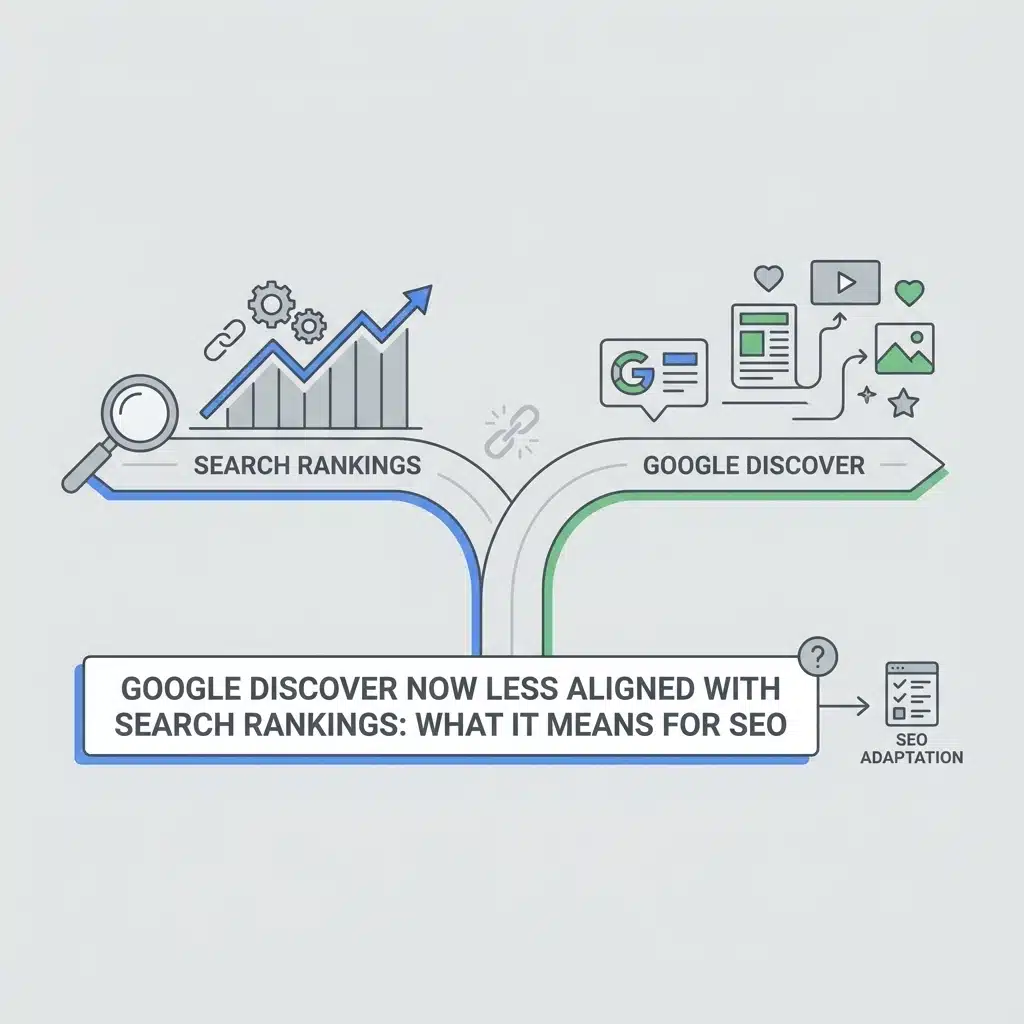
Google just fundamentally changed how content gets discovered: and 87% of SEO professionals are still operating under outdated assumptions. At Google Search Central Live in Zurich, Google’s Trust and Safety team dropped a bombshell that’s reshaping the entire digital marketing landscape: Google Discover now operates with “minimal alignment to search ranking.”
This isn’t a minor algorithm tweak. This is a complete decoupling of two platforms that marketers have treated as interconnected for years. If your content strategy still assumes strong search rankings guarantee Discover visibility, you’re already behind.
The Death of the Search-Discover Connection
For years, the relationship seemed straightforward: rank well in Google Search, perform well in Google Discover. Google even confirmed in 2019 that their core ranking systems directly impacted Discover, making search optimization a reliable proxy for discovery feed performance.
That era is officially over.
Andy Almeida from Google’s Trust and Safety team made it clear that Google Discover now intentionally surfaces “lesser-known, less-established, and smaller publishers” regardless of their search rankings. The platforms have divorced, and they’re not getting back together.
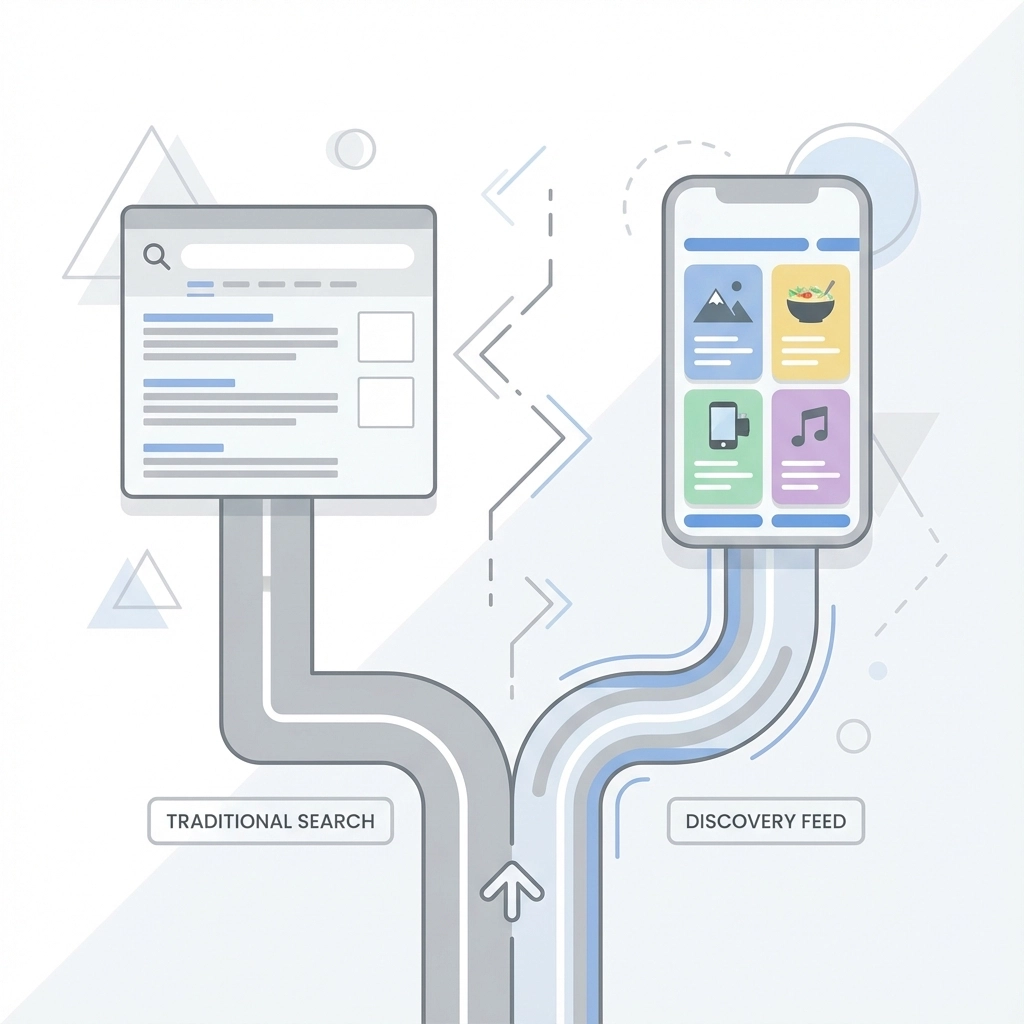
Here’s what this means in practical terms: A brand new blog with zero domain authority can now outperform established industry leaders in Google Discover, even while ranking on page 47 for the same keywords in search results. The metrics that drove your Discover strategy yesterday are irrelevant today.
Why Google Pulled the Plug on Rankings
Google didn’t make this change to be disruptive: they made it to survive. The Discover feed has been plagued by a spam epidemic that traditional search ranking signals couldn’t solve.
The Spam Problem is Real
Unlike Google Search, where spam is relatively contained, Google Discover became a playground for bad actors exploiting expired domains and throwaway sites. These operations would game the system by creating content specifically designed to trigger Discover’s algorithms while completely bypassing the quality controls that keep search results clean.
The solution? Remove the connection entirely. By decoupling Discover from search rankings, Google can deploy platform-specific anti-spam measures without compromising search quality. It’s surgical precision instead of carpet bombing.
Leveling the Playing Field
But spam prevention is only half the story. Google also wants to democratize content discovery. When Discover relied heavily on search authority, the same high-domain-authority sites dominated both platforms. Smaller publishers covering niche topics had virtually no chance of breaking through, regardless of content quality.
Now they do.
This shift creates opportunities for independent creators, specialized publications, and emerging voices that were previously locked out by the authority-based ranking system. Google is essentially saying: “We’ll judge your content on its own merits within Discover, not on your search engine clout.”
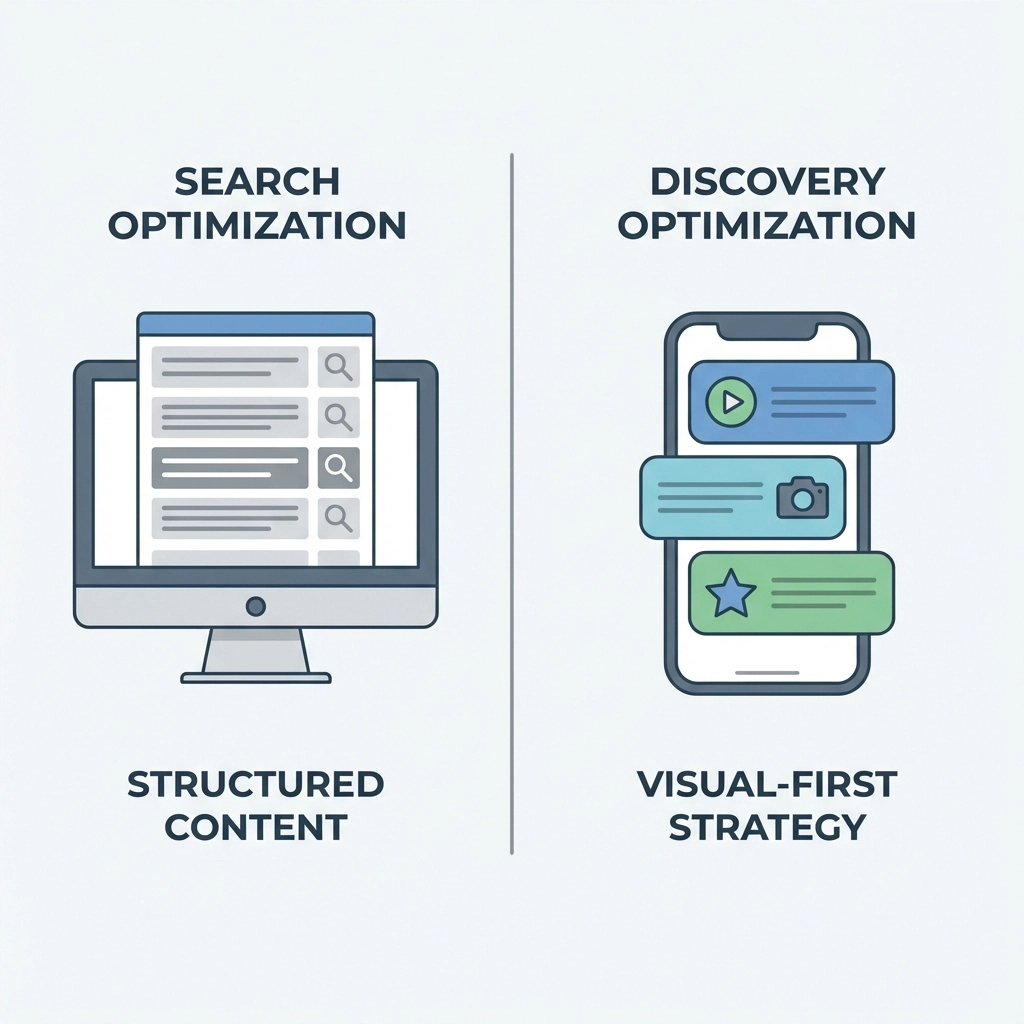
The New SEO Reality: Two Platforms, Two Strategies
The implications are staggering. SEO professionals can no longer treat Google Discover as a byproduct of search optimization. These platforms now require completely separate strategic approaches.
For Established Brands: The Predictability Problem
High-authority sites that dominated both search and Discover now face uncertainty. Strong search rankings no longer guarantee prominent Discover placement, making content performance less predictable and harder to forecast.
Legacy brands must now compete on user engagement metrics specific to Discover rather than relying on inherited authority. This means understanding discovery browsing behavior, which differs fundamentally from search intent.
For Smaller Publishers: The Golden Opportunity
New and emerging sites just received the biggest gift in SEO history. They can now compete for Discover visibility without spending years building domain authority or earning thousands of backlinks.
The playing field isn’t level: it’s tilted in favor of fresh, engaging content that resonates with Discover users. Sites that previously couldn’t crack the first page of search results can now reach millions through the discovery feed.
Strategic Adjustments You Must Make Now
The old playbook is dead. Here’s what works in the new paradigm:
Rethink Content Creation
Search-optimized content targets specific queries and user intent. Discover-optimized content targets emotions, curiosity, and browsing behavior. These are fundamentally different beasts.
For Discover, focus on:
- Visual storytelling that stops the scroll
- Headlines that create curiosity gaps
- Content that sparks emotional responses
- Topics that feel fresh and conversation-worthy
Optimize for Discovery Behavior
People don’t “search” in Discover: they browse, scroll, and react. Your content needs to accommodate this passive consumption pattern rather than active information seeking.
This means prioritizing:
- Compelling images that work in mobile feed formats
- Headlines that work without context
- Content that delivers immediate value in the first few sentences
- Topics with broad appeal rather than hyper-specific niches

Measure Different Metrics
Traditional SEO metrics like keyword rankings and organic traffic tell you nothing about Discover performance. You need platform-specific KPIs:
- Discover impressions and click-through rates
- Time spent on Discover-referred pages
- Social sharing rates from Discover traffic
- Return visitor rates from discovery sessions
Build Direct Engagement Authority
Without search rankings as a proxy for quality, Google Discover relies more heavily on direct user engagement signals. This means focusing on:
- Comments, shares, and meaningful interactions
- Time-on-page metrics specific to Discover traffic
- Return visitor behavior and session depth
- Content completion rates and scroll depth
Platform-Specific Optimization Tactics
Success in the new landscape requires platform-native approaches:
Content Planning
Instead of starting with keyword research, start with trend analysis and emotional triggers. What topics are generating buzz? What stories are people sharing? What images are stopping the scroll?
Visual Strategy
Discover is a visual-first platform. Your images aren’t just supplementary: they’re primary engagement drivers. Invest in high-quality, emotionally compelling visuals that work in mobile feed formats.
Publishing Timing
Discover operates on different timing principles than search. Fresh, timely content performs better, but “timely” means culturally relevant, not just recently published.
Quality Control
With reduced reliance on authority signals, content quality becomes even more critical. Google’s Discover-specific spam detection systems will judge your content by different standards than search algorithms.
The Opportunity Window is Open Now
This fundamental shift creates a temporary competitive advantage for teams that adapt quickly. While competitors cling to outdated strategies, forward-thinking brands can capture disproportionate Discover visibility.
But this window won’t stay open forever. As more professionals understand the new landscape, competition will intensify. The brands that establish Discover authority now will maintain advantages as the platform matures.
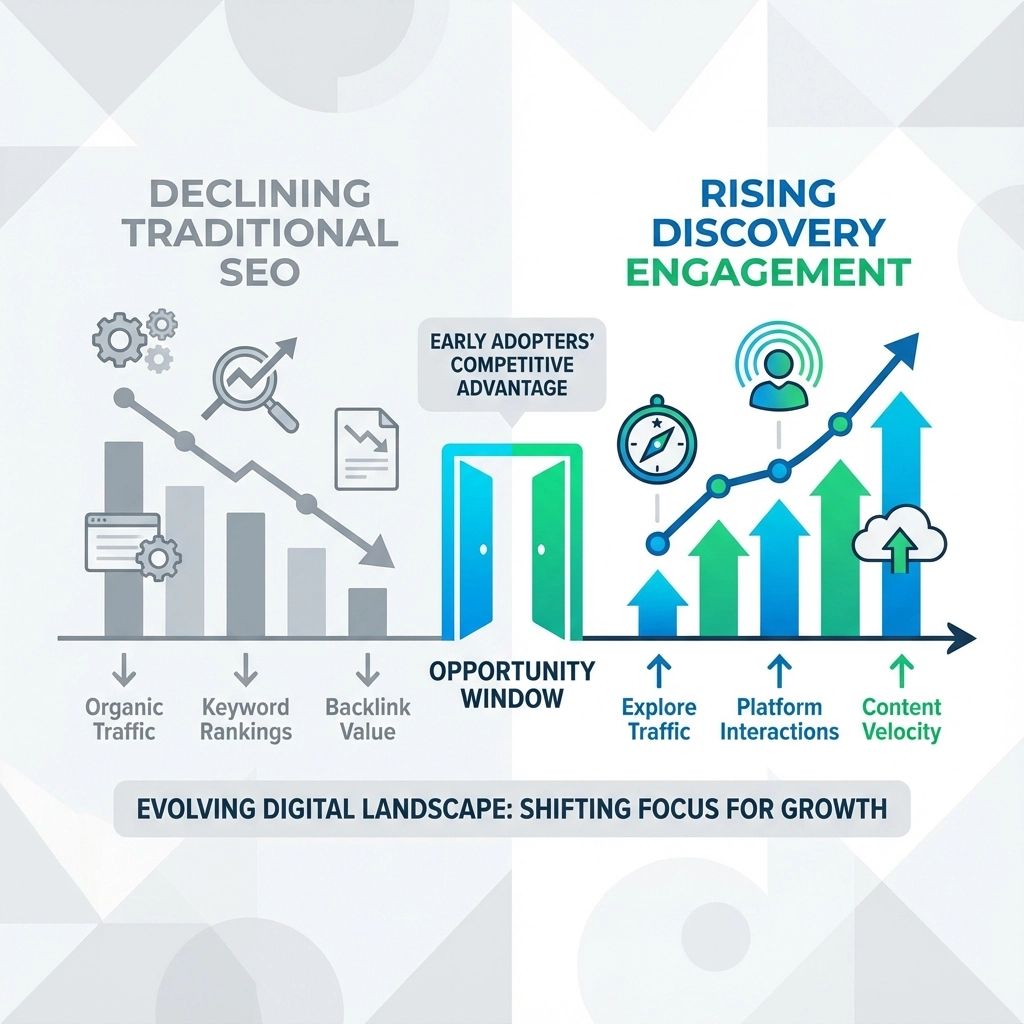
The decoupling of Google Discover from search rankings isn’t just an algorithm update: it’s a complete platform evolution that requires new expertise, different metrics, and separate optimization strategies.
At Expert SEO Consulting, we’re already helping clients navigate this transition and capitalize on the opportunities it creates. While your competitors scramble to understand what changed, we’re building Discover-specific strategies that drive real results.
The question isn’t whether this change will impact your content performance: it already has. The question is whether you’ll adapt quickly enough to benefit from the new opportunities, or get left behind by teams that recognized the shift first.
Ready to build a Discover strategy that works in 2025? Book a consultation and let’s discuss how this fundamental change affects your specific situation and goals.