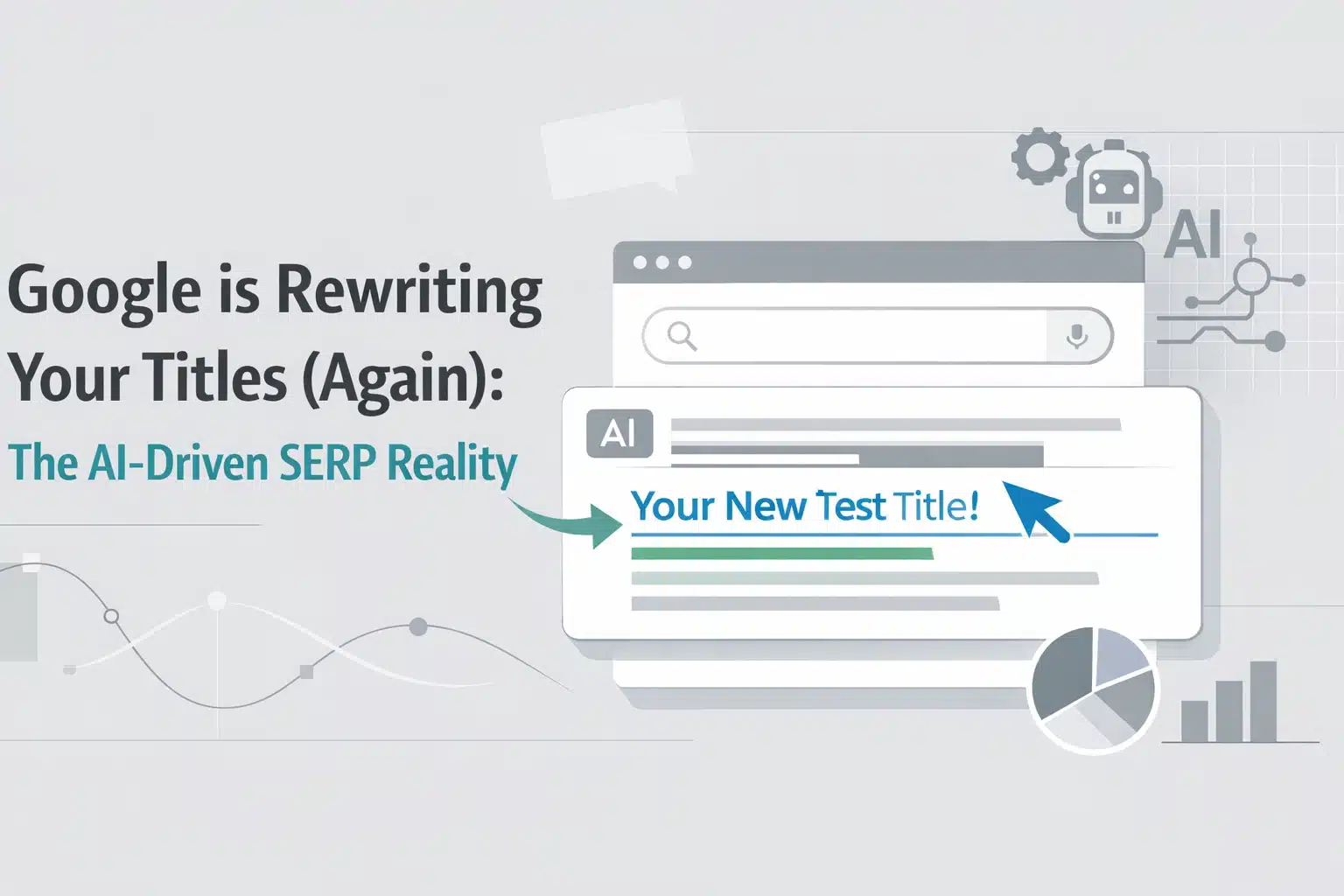
You spend hours crafting the perfect title tag, balancing primary keywords with brand voice and character counts, only to have Google toss it aside in favor of a machine-generated alternative. This isn't a hypothetical scenario for 2026: it is the current reality of the Search Engine Results Page (SERP). Google is no longer just "tweaking" your titles; it is actively rewriting them using generative AI to better align with what it perceives to be the user's intent.
The shift from manual metadata to AI-driven display is no longer a fringe experiment. Recent data from industry leaders like Search Engine Land and SERoundtable indicates that Google is modifying displayed titles on 20% to 61% of all search results. If you’ve noticed a sudden fluctuation in your click-through rates (CTR) or a dip in organic traffic despite stable rankings, your headlines have likely been caught in the AI crosshairs.
The End of Publisher Sovereignty Over Metadata
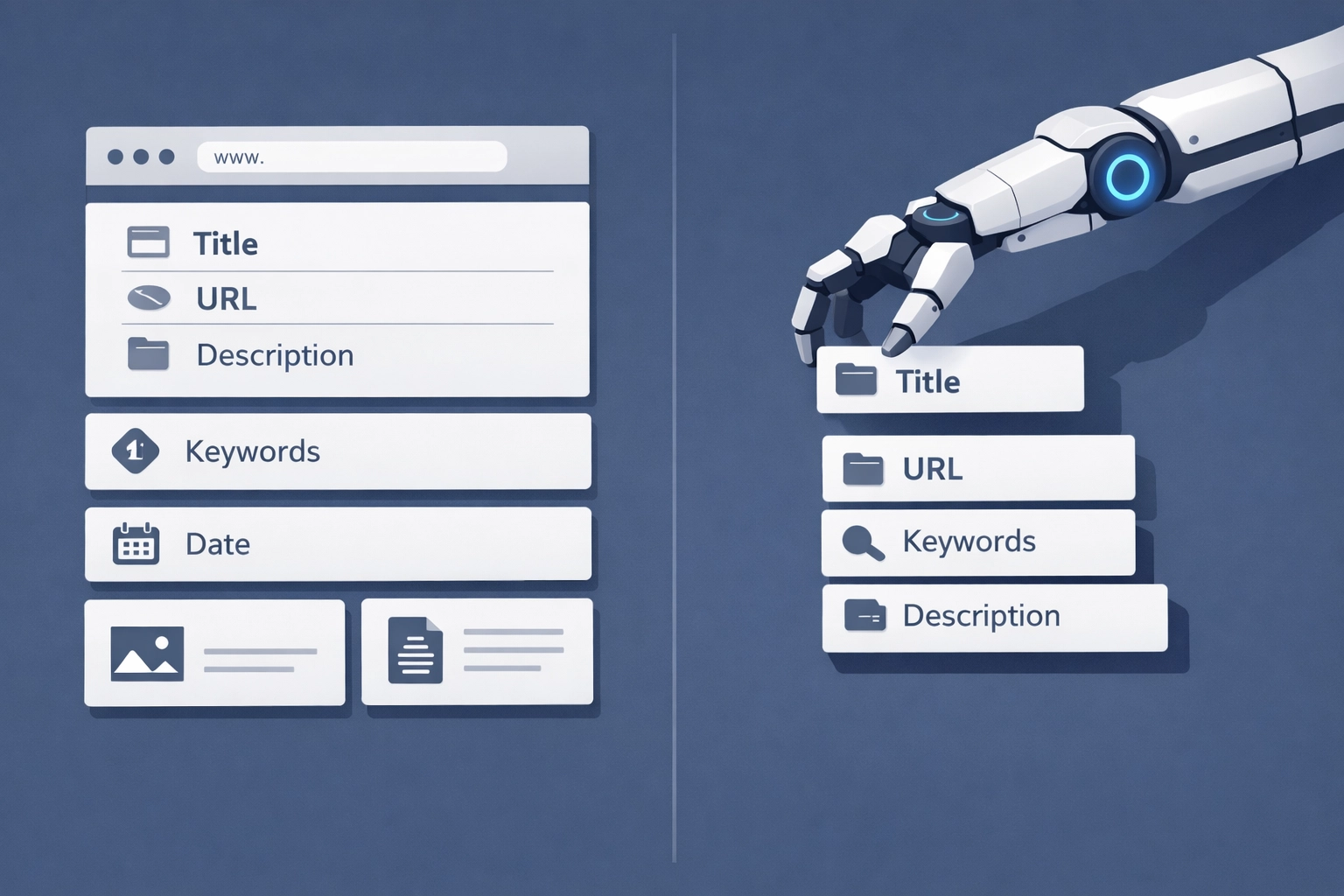
For decades, the <title> tag was the holy grail of on-page SEO. It was the one lever publishers could pull to guarantee how their brand appeared to the world. That sovereignty is officially over. Google’s current testing of AI-generated title links represents a fundamental shift in how search results are constructed.
Previously, if Google didn't like your title, it might swap it for your H1 or a snippet of text from your page. Now, the AI evaluates the entire body of content, looks at the specific user query, and generates entirely new copy. In some cases, the AI is even changing the tone and intent of the headline. This isn't just a minor technical update; it’s an overhaul of the user experience that prioritizes the search engine's interpretation over the publisher's original vision.
By the Numbers: The Scale of AI Title Rewrites
The scale of this "test": as Google officially describes it: is staggering. While Google maintains the experiment is "small and narrow," forensic analysis of millions of SERPs shows that the impact is anything but. Depending on your niche, the probability of your title being rewritten is higher than the probability of it staying the same.
- 20% to 61%: The percentage of pages currently experiencing title modifications in the SERP.
- 55–60 Characters: The threshold where rewrites become nearly inevitable.
- 10 Blue Links: The AI is not just affecting the AI Overviews (SGE); it is fundamentally changing the standard organic listings.
This volatility makes traditional SEO reporting difficult. You might see your rankings hold steady at position #2, but if Google replaces your high-converting, brand-heavy title with a generic AI summary, your traffic will crater. Understanding the why behind these rewrites is essential for survival in this new AI-driven landscape.
Feature-Focused vs. Benefit-Oriented: The AI’s Logic
Why is the AI rewriting your headlines? The answer lies in how Google’s algorithms now prioritize "benefit-oriented" framing over "feature-focused" descriptions.
Traditional SEO wisdom often leads publishers to create titles that list features: "Professional SEO Services: Audits, Content Strategy, and Link Building." Google’s AI, however, is increasingly leaning toward the result the user wants. It might rewrite that title to: "Improve Your Search Rankings with Expert SEO Audits."
The AI is looking for the "so what?" behind your content. If your title is too focused on the what (the features) and not the why (the benefits), the AI will step in to bridge that gap for the user. While this might improve relevance for a specific query, it often comes at the cost of brand identity and nuanced messaging.

The Branding Crisis: When Your Identity Gets Truncated
The most significant risk of AI title rewrites is the loss of branding control. Many companies use their title tags to establish a specific voice: be it authoritative, witty, or luxury-focused. AI, by its nature, tends to move toward the "mean." It aims for clarity and utility, often stripping away the personality that makes a brand stand out in a sea of search results.
We have seen instances where a punchy, provocative headline is watered down into a dry, descriptive sentence. For example, a tech blog’s headline like "Microsoft is rebranding Copilot in the most Microsoft way possible" was rewritten by Google’s AI to "Copilot Changes: Marketing Teams at it Again." While the rewrite is "accurate," it loses the editorial voice and the "clickability" of the original.
For businesses, this means your brand name might be moved to the end of the title, truncated entirely, or replaced with a generic category descriptor. This loss of visibility is a major hurdle for companies relying on search to build brand awareness.
How to Reclaim Control: Signal Alignment
You cannot "opt-out" of Google’s AI rewrites, but you can influence them. The key to maintaining control is Signal Alignment. Google’s AI triggers a rewrite when it detects a mismatch between the title tag and the actual content on the page. To minimize the chances of your titles being hijacked, your on-page signals must be perfectly synced.
1. The H1-Title Sync
Your H1 header and your <title> tag should be close siblings, if not twins. If your title tag says one thing and your H1 says another, Google’s AI views this as a lack of clarity and will generate its own "truth."
2. Trimming the Fat
Keyword stuffing is the fastest way to trigger a rewrite. If your title is a string of keywords separated by pipes (e.g., SEO Consulting | SEO Audits | Digital Marketing Agency), the AI will almost certainly replace it with a natural language sentence. Keep your titles under 60 characters and focus on one primary message.
3. Content Strategy Over Metadata Tweaks
In the AI era, why Google’s AI search still rewards the SEO basics becomes more relevant than ever. Your content strategy must ensure that the "benefit" of your page is clearly stated in the first 200 words. If the AI can easily identify the core value of your content, it is more likely to use a headline that reflects your intent rather than inventing its own.

Identifying the Damage: Forensic SEO Audits
How do you know if Google is rewriting your titles? And more importantly, how do you know if those rewrites are hurting you?
Standard rank tracking tools won't always show you the displayed title. You need a Forensic SEO Audit to diagnose the source of traffic drops. At Expert SEO Consulting, we use advanced scraping and comparison tools to look at the "delta" between your intended metadata and the SERP reality.
If we find that 40% of your top-performing pages are being rewritten with lower-performing AI titles, we don't just "fix the tags." We analyze the page structure to understand why the AI is rejecting your original copy. Is it because the title is too long? Is it because the H1 is irrelevant? Or is the content failing to deliver on the title's promise?
A Forensic SEO Audit is no longer a "luxury" service: it is essential for survival. Without it, you are flying blind, wondering why your "perfectly optimized" site is losing ground to competitors.

The Path Forward: Partnering with Expertise
The SERP is no longer a static list of links; it is a dynamic, AI-generated environment. To succeed in 2026, you need a content strategy that anticipates AI behavior and a technical foundation that provides clear, unambiguous signals to search engines.
Google’s AI is looking for clarity, utility, and benefit-oriented messaging. If you provide that through a cohesive content strategy and rigorous on-page optimization, you can turn these rewrites into an advantage rather than a liability. However, doing this at scale requires professional oversight and a deep understanding of the evolving search landscape.
Don't let an algorithm rewrite your brand's story. It is time to take a proactive approach to your search presence. If you have noticed volatility in your traffic or want to ensure your site is optimized for the AI-driven SERP reality, let's talk.
Ready to reclaim your search results?
Book a consultation with Expert SEO Consulting today to schedule your Forensic SEO Audit and align your content strategy for the AI era.