The era of the "one-size-fits-all" search result is officially dead. As of March 2026, Google has completed its global rollout of Gemini 3 as the default engine for AI Overviews, but the real earthquake in the digital marketing landscape is the expansion of "Personal Intelligence" to free users worldwide. What began as a limited beta for US-based Pro subscribers has now become the standard operating environment for billions of users.
For brands, this isn't just another algorithm update, it is a fundamental shift in how information is synthesized and delivered. Search has moved from being a library of public documents to a hyper-personalized digital assistant that knows your schedule, your emails, your photos, and your purchase history. If your brand isn't optimized for this level of personal relevance, you aren't just losing ranking; you are becoming invisible.
The Rise of the 'Uniquely Yours' Search Experience
When we talk about Personal Intelligence, we are referring to the deep integration of Google’s AI Mode with the Google Workspace ecosystem. This means when a user asks a question, the AI doesn't just pull from the open web; it pulls from their Gmail, Google Calendar, Google Drive, and Google Photos to provide a response that is "uniquely yours."
Imagine a user asking, "When is my next flight, and what should I wear based on the weather there?" The AI scans their flight confirmation in Gmail, checks the destination weather via Search, and suggests packing a raincoat because their Google Photos history shows they usually prefer outdoor walking tours.
This level of integration creates a massive barrier for brands that rely on traditional, generic SEO tactics. If your content doesn't align with the deep, personalized intent of the user, the AI will bypass you in favor of a response that fits the user's specific life context. The "Personal Intelligence" layer acts as a filter, and only the most relevant, intent-aligned brands will make it through.

Agentic Commerce: The New Frontier of Shopping
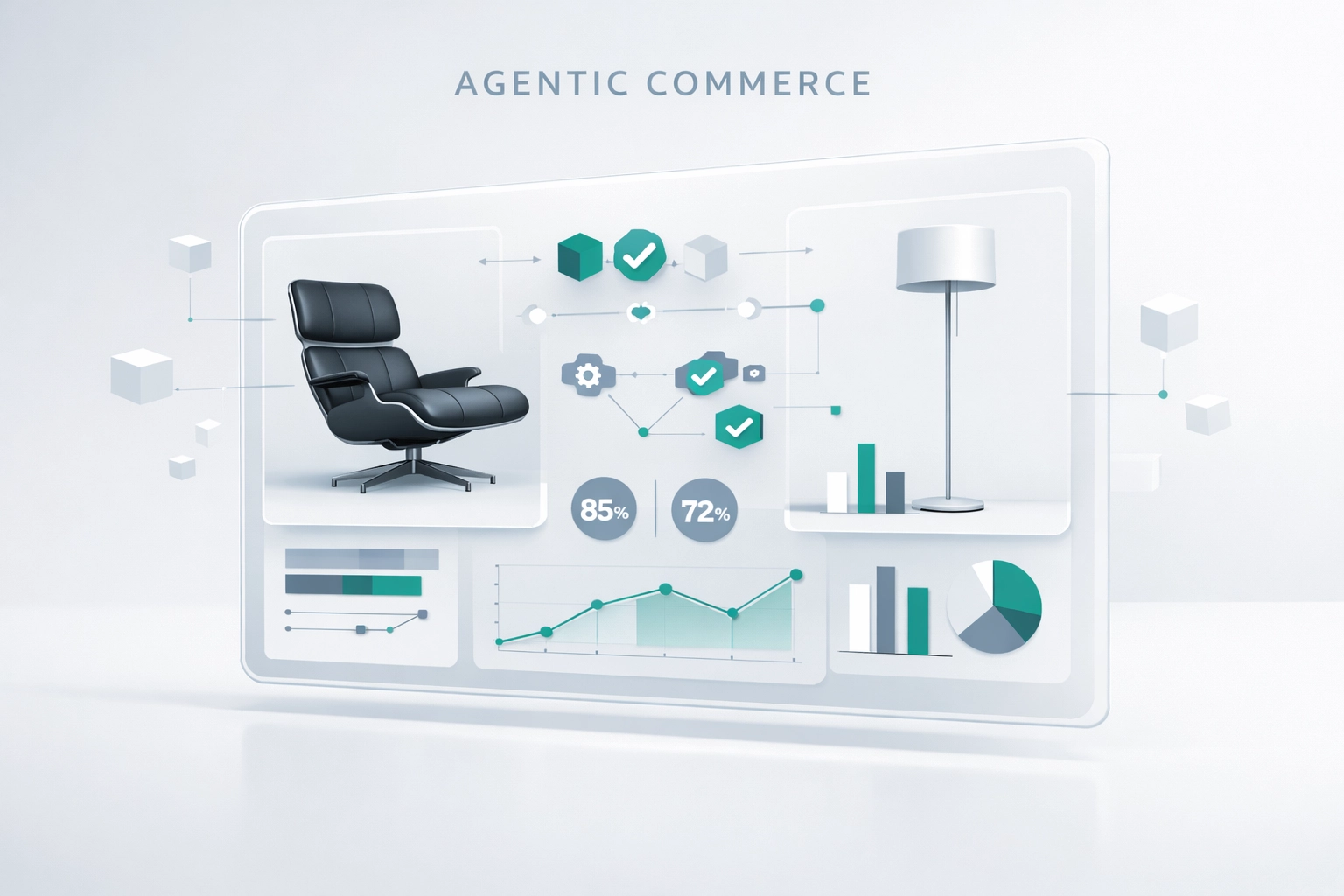
One of the most significant shifts accompanying the global AI Mode rollout is the implementation of the Universal Commerce Protocol (UCP). Google is no longer just a place to find products; it is becoming a place to complete transactions via Agentic Commerce.
Through UCP, consumers can now browse, compare, and finalize purchases directly within the AI Mode interface. Major players like Etsy, Wayfair, and Shopify have already integrated, followed closely by retail giants like Walmart and Target. This creates a seamless conversational flow where a user can say, "Find me a sustainable coffee table that matches the rug I bought last month and fits in my 10×12 living room," and the AI will handle the comparison and checkout.
For e-commerce brands, this means that visibility now depends on your ability to feed structured data into Google’s ecosystem. If your product schema is outdated or your inventory isn't synced via high-quality API feeds, you are effectively opting out of the most lucrative shopping funnel in the history of the internet.
Why Your Current SEO Strategy is Probably Failing
Traditional SEO focused on keywords and backlinks. While these remain important, as we've discussed regarding why Google's AI search still rewards the SEO basics, they are no longer sufficient. In an environment dominated by Personal Intelligence, the AI prioritizes "Brand Authority" and "User Intent Match."
Here is the reality: 72% of users now prefer conversational AI interfaces for complex decision-making over standard search result pages. When a user asks for a recommendation, Google’s AI looks for brands that have established a clear, authoritative voice and a history of solving specific user problems.
If your website is just a collection of generic blog posts, you will fail. You need a technical foundation that allows AI crawlers to understand the context of your expertise, not just the keywords. This is why we emphasize comprehensive organic SEO that prioritizes semantic depth and technical precision.
The Necessity of AI SEO Audits
How do you know if your brand is even "visible" to Google's Personal Intelligence? You can't just check a rank tracker anymore. Because results are personalized, "Position 1" looks different for every single person.
This is where AI SEO Audits become essential for survival. An AI-focused audit doesn't just look at broken links and meta tags; it evaluates how your data is interpreted by Large Language Models (LLMs). It tests for:
- Entity Recognition: Does the AI identify your brand as a specific entity with defined expertise?
- Conversational Relevance: Does your content answer the "follow-up questions" that users ask in AI Mode?
- Schema Accuracy: Is your structured data robust enough to feed into Agentic Commerce protocols?
- Sentiment and Trust: How does the AI perceive the "trustworthiness" of your brand based on third-party mentions and reviews?
Without an AI SEO Audit, you are essentially flying blind in a personalized storm. Expert SEO Consulting specializes in these deep-dive technical evaluations to ensure your brand is positioned as a primary source for Google’s personal assistant.
SEO Training for In-House Teams: Closing the Gap
The pace of change is so rapid that many in-house marketing teams are still using 2023 playbooks in a 2026 world. This gap is dangerous. To stay competitive, your team needs to understand the nuances of AI-native search.
We provide specialized SEO Training for in-house teams that focuses on the transition from "Search Engines" to "Answer Engines." This training covers:
- How to write for LLM consumption without losing human engagement.
- Managing the Universal Commerce Protocol for retail brands.
- Understanding the feedback loops between Google Workspace data and search visibility.
- Leveraging our specialized SEO services to scale content that satisfies both robots and humans.
The goal is to turn your team from reactive observers into proactive strategists who understand that "Personal Intelligence" is the new baseline for digital marketing.

Strategic Roadmap: Preparing for the Global Shift
If you haven't yet adjusted your strategy for the global rollout of AI Mode, you are already behind. However, the window for correction is still open. Here is what you must do immediately:
1. Optimize for Intent, Not Just Keywords
Stop chasing high-volume keywords that have no conversion intent. Google’s AI is incredibly good at identifying "window shoppers" versus "active buyers." Your content should focus on solving the specific, multi-layered problems that your customers face.
2. Double Down on First-Party Data
Personal Intelligence thrives on data. While Google uses its own ecosystem (Gmail, Calendar), you should be building your own database of user preferences and behaviors. This allows you to create hyper-targeted content that mirrors the personalization users are becoming accustomed to.
3. Audit Your Technical Infrastructure
Ensure your site architecture is clean and your sitemaps are perfectly optimized. If the AI can't crawl you efficiently, it won't recommend you. You can review our product sitemap or post sitemap as examples of how structured data helps organize vast amounts of information for search engines.
4. Embrace Conversational Content
Think about how people talk, not how they type. Users are asking Google's AI Mode questions like, "What's the best way for me to fix my leaky faucet given I only have basic tools and 30 minutes?" If your content is structured as a 2,000-word essay with the answer buried at the bottom, the AI will scrape the answer and never send you the click. Structure your content to be "fragment-friendly": provide clear, concise answers that the AI can easily cite.
The Irreversible Shift
The transition to Personal Intelligence isn't a trend; it is the final destination of the search evolution. Google has successfully moved from a tool that finds information to a tool that understands the user.
For brands, the challenge is clear: you must become a trusted partner in the user’s life. This requires a level of technical sophistication and content depth that most "budget" SEO agencies simply cannot provide. You need a partner that understands the intersection of AI architecture and human psychology.
Is your brand ready to be the answer provided by a user's personal assistant? Or will you be filtered out as "irrelevant noise"?
The time to pivot is now. The global rollout is complete, and the competition for personalized relevance has never been more intense. Don't leave your brand's future to chance or outdated strategies.
Ready to dominate the era of Personal Intelligence?
Book a consultation with Expert SEO Consulting today and let's build a strategy that ensures your brand isn't just seen( it’s chosen.)