The era of chasing the "ten blue links" is officially over. If your digital strategy is still built solely on traditional keyword rankings, you are invisible to the millions of users now using ChatGPT, Perplexity, and Google AI Overviews to find answers.
In 2026, the game isn't just about being found: it’s about being cited. When an AI model synthesizes an answer, it selects the most authoritative, structured, and relevant data points to present to the user. If you aren't the source of that data, you don't exist in the conversation. At Expert SEO Consulting, we’ve transitioned our clients from legacy SEO to an AI-first framework.
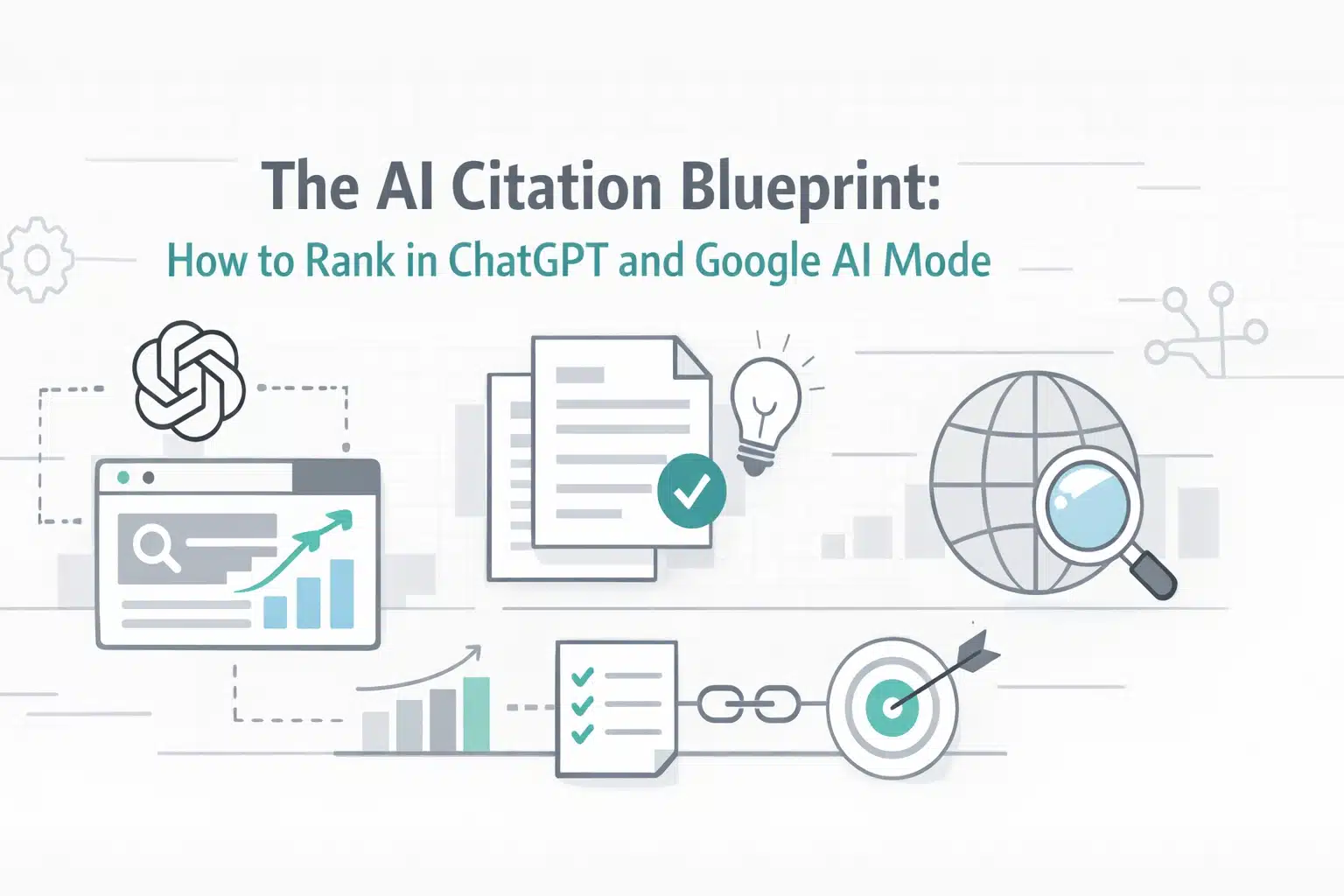
This isn't a "maybe" or a "someday" shift. It is a fundamental, irreversible change in how information is consumed. To survive, you need the AI Citation Blueprint.
The New Hierarchy: Where AI Finds Its Truth
AI models don't browse the web like humans; they ingest it like a giant dataset. Recent research into AI sourcing patterns reveals a stark hierarchy of authority. While Google’s organic search might still reward a mix of niche blogs and major publications, AI models exhibit a heavy bias toward specific "truth pillars."
Data shows that Wikipedia dominates ChatGPT’s top sources, accounting for nearly 48% of citations among the platform’s most-cited domains. But for brands looking to break through, the real opportunity lies in the "Social Validation" and "Editorial Authority" tiers. Reddit has emerged as a powerhouse, frequently ranking as the #1 most-cited domain overall across millions of AI responses.
Why? Because AI models crave community-validated consensus. They want to know what real people are saying about products and services. Following close behind are high-authority editorial giants like Forbes, which act as a universal winner across almost every AI platform.
The Citation Breakdown by Content Type
You might think long-form thought leadership is the only way to get cited. The data tells a different story:
- Listicles (22%): AI loves the structured, comparative nature of "Top 10" lists.
- Articles (17%): Traditional deep-dives still hold weight for complex queries.
- Product Pages (14%): ChatGPT is increasingly citing branded domains directly, showing an 11.1-point higher preference for vendor websites than Google’s traditional search does.
Anatomy of an "Answer Capsule"
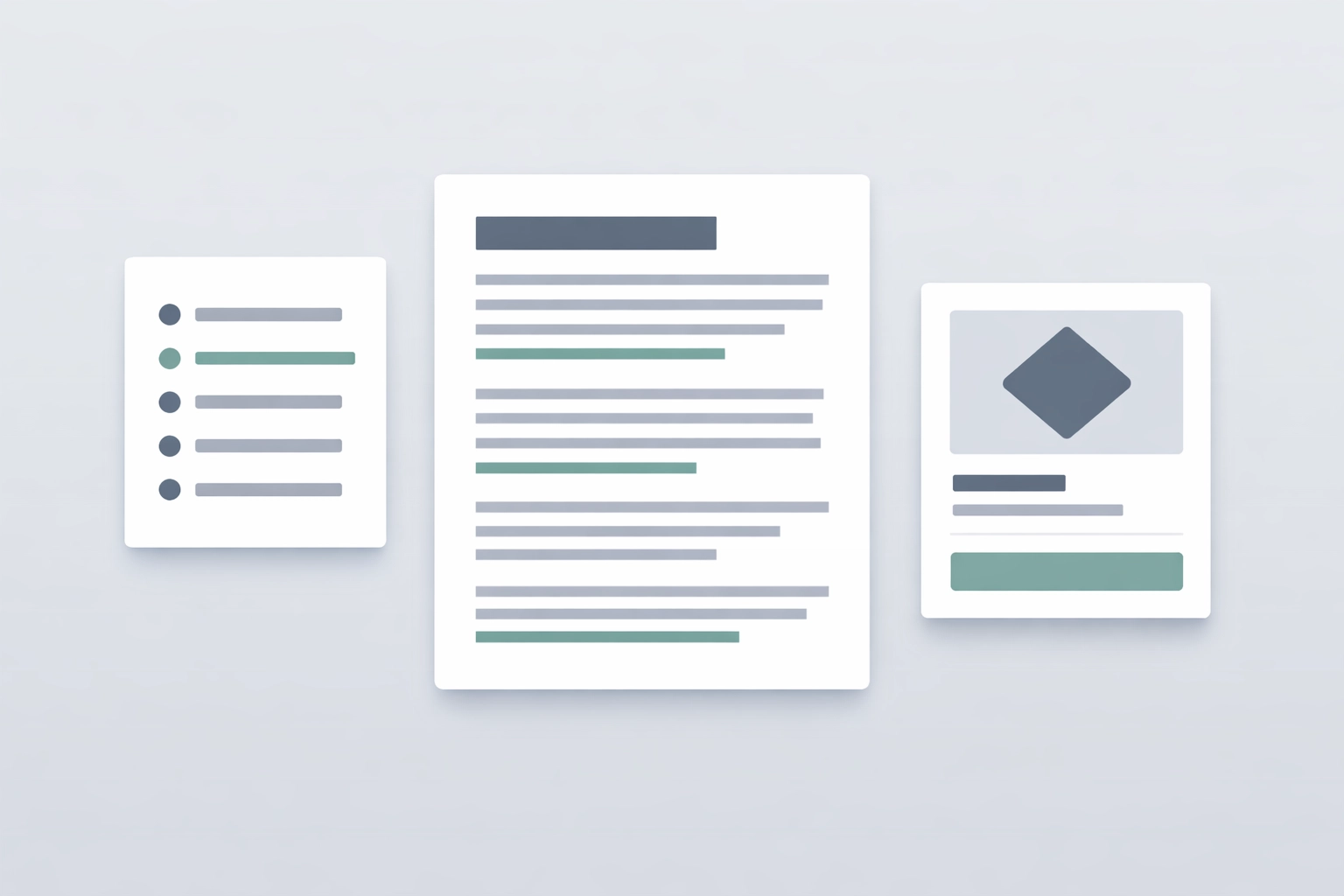
Traditional SEO focused on "dwell time" and "click-through rate." AI SEO focuses on "extraction efficiency." To be cited, your content must be structured into what we call Answer Capsules.
Our research into AI linguistic patterns reveals that structure increases citations by 40%. AI systems favor content with clear heading hierarchies and short, punchy paragraphs (2–4 sentences). But it goes deeper than just formatting.
The 30% Rule and Positional Bias
ChatGPT and Google AI Mode exhibit a massive positional bias. 44% of all citations come from the first 30% of your content. If you are burying your lead or "saving the best for last," you are effectively disqualifying yourself from the AI's citation pool. You must front-load your insights.
Furthermore, 53% of citations are extracted from the middle of paragraphs, rather than the first or last sentences. This suggests that AI models are looking for the "meat" of the explanation rather than introductory fluff or concluding summaries.
Linguistic Precision: Definitive Language Wins
Stop using hedging language. Words like "might," "could," or "potentially" are citation killers. AI models prefer definitive language. Cited passages use clear definitions ("X is," "X refers to") nearly twice as often as non-cited content.
We also see a massive spike in entity density. While typical English text contains 5–8% proper nouns, heavily cited AI content averages 20.6%. You need to mention specific brands, tools, people, and proprietary frameworks to anchor your content as a reliable dataset.
The Freshness Gap: Why Your 2024 Content is Already Obsolete
One of the most jarring shifts in AI search is the demand for real-time relevance. AI systems prefer substantially fresher content than traditional search.
On average, AI assistants prefer content that is 25.7% fresher than what appears in standard organic results. In fact, ChatGPT often cites URLs that are 393 days newer than the organic results Google displays for the same query.
This means a 30-day content refresh cycle is no longer optional: it is essential for survival. If you aren't updating your core pages with new data, original research, and current statistics, you are handing your citations over to a competitor who is. At Expert SEO Consulting, we help clients navigate this through AI SEO Audits that identify exactly which pieces of content are falling behind the "freshness curve."

Enter CiteMetrix: The Expert SEO Consulting Edge
How do you measure success in a world without traditional rank tracking? You can't manage what you can't measure. This is why we developed CiteMetrix.
CiteMetrix is our proprietary approach to tracking "Share of Model." Instead of just looking at where you rank on page one of Google, we analyze how often your brand is cited as a source in LLM responses. We look at:
- Extraction Rates: How easily can AI models pull data from your site?
- Sentiment Clustering: Is the AI representing your brand with the right "subjectivity score" (aiming for that sweet spot of 0.47, which resembles expert analyst commentary)?
- Source Reliability: Are you being cited alongside Wikipedia and Forbes, or are you buried in the "References" section?
Building a robust Content Strategy in 2026 requires more than just writers; it requires data architects. You need to ensure your site is fully accessible to AI crawlers and that your schema markup (FAQPage, HowTo, and Product) is flawless.
Eric’s Take: The No-Nonsense View
"Look, I’ll be real with you: the days of gaming the system with some 'magic' keywords are gone. I tell my clients this every single day: the AI doesn't care about your feelings, it cares about your facts. If your site is a mess of vague blog posts and outdated info, ChatGPT is going to ignore you. We’re seeing companies lose 40% of their traffic overnight because they didn't realize the 'search' button is being replaced by the 'ask' button. You either become the source the AI trusts, or you become the ghost of the internet. Let's get your site structured right before the window closes."
: Eric Richmond, Owner
How to Optimize for AI Citations Right Now
If you want to secure your place in the AI-driven future, here are the immediate next steps you must take:
- Deploy Answer-First Formatting: Use H2 headers as direct questions and the following paragraph as a concise, 2-4 sentence answer. Treat every heading like a prompt.
- Audit Your Entity Density: Use our SEO Tools to ensure your proper noun density is hovering around 20%. Call things by their names.
- Prioritize Listicles and Product Data: Structure your most valuable information into lists and high-detail product pages. Remember, listicles account for 22% of all AI citations.
- Boost Original Research: Nothing forces a citation like proprietary data. If you have stats that don't exist anywhere else, the AI must cite you as the origin point.
- Fix Your Technical Foundation: Ensure your page sitemap and product sitemap are optimized for modern crawlers.
The shift to AI-driven search is the single most significant event in the history of digital marketing. The companies that adapt their Content Strategy today will own the citations of tomorrow.
Is Your Brand Citability-Ready?
Don't wait for your traffic to hit zero before you decide to act. The transition to AI Search is happening in real-time. Whether you are looking for a comprehensive AI SEO Audit or a complete overhaul of your digital presence, our team at Expert SEO Consulting is ready to lead the way.
We’ve helped brands like Teri Goldstein and Evan Herman navigate the complex waters of modern search, and we can do the same for you.
The blueprint is here. The tools are ready. The only question is: will you be the source, or will you be forgotten?