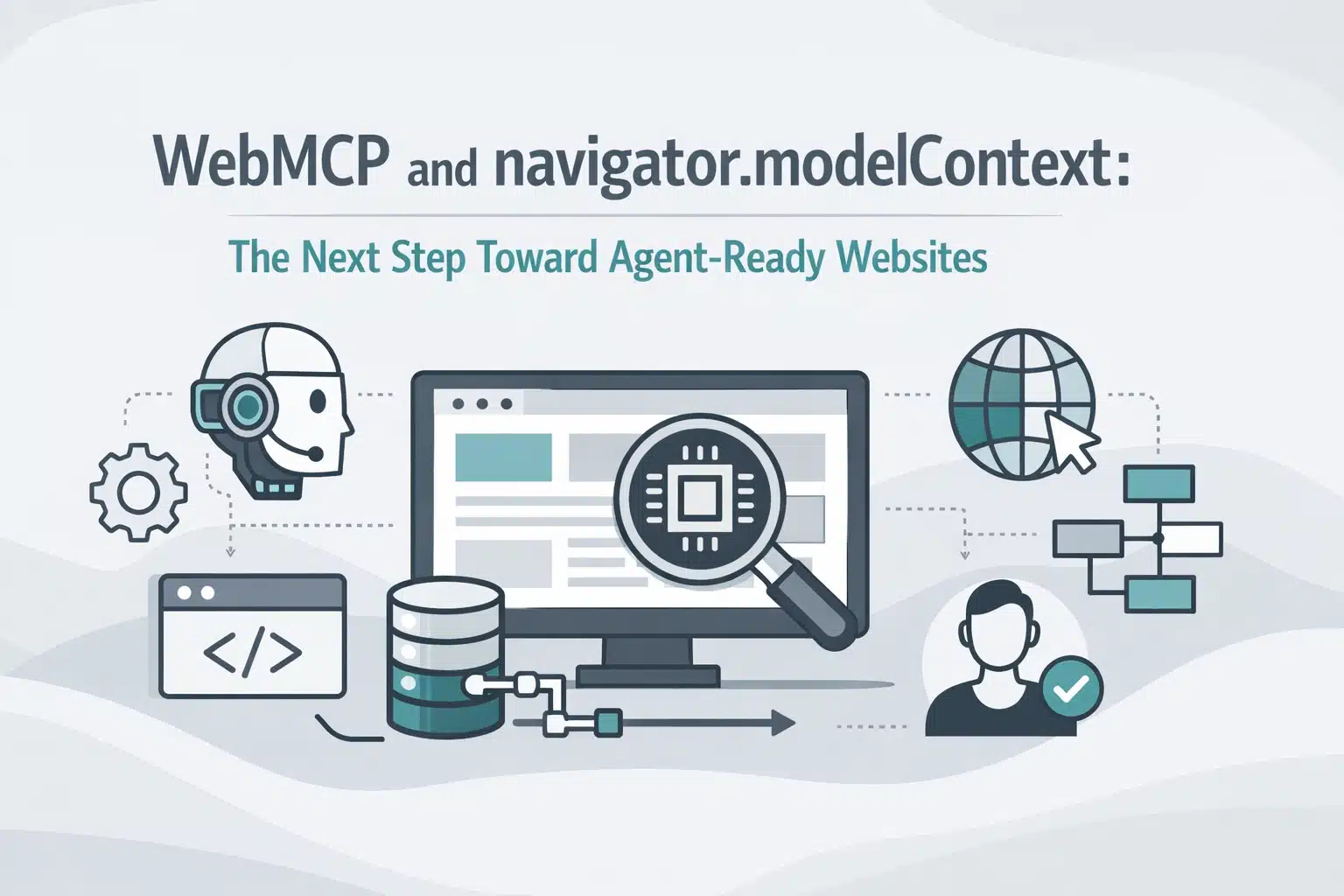
The Evolution From Rankings to Transactions
Here’s what most businesses still don’t realize: the search landscape has fundamentally shifted from “getting found” to “getting things done.” While companies obsess over keyword rankings and click-through rates, Google and Chrome are quietly building infrastructure for a world where AI agents don’t just find information—they complete transactions on behalf of users.
That infrastructure is called WebMCP (Web Model Context Protocol), and it introduces a new browser API—navigator.modelContext—that will fundamentally change how websites interact with AI agents. This isn’t speculative futurism. Chrome 146 shipped an early preview in late 2025, and the W3C Web Machine Learning Community Group is actively developing this as an open standard.
The question isn’t whether the agentic web is coming. The question is whether your website will be ready when AI agents start choosing which businesses to transact with based on which sites are easiest to use programmatically.
What WebMCP Actually Does (And Why DOM Scraping Is Dead)
Traditional AI agents face a fundamental problem: they have to guess. When an agent tries to book a flight, file a support ticket, or add a product to cart, it must scrape the DOM to identify elements, guess which button corresponds to the intended action, simulate clicks and form submissions like a human would, and hope the UI hasn’t changed since the last time it visited.
This approach is fragile, unreliable, and breaks constantly. Change a CSS class or restructure a form, and the agent fails silently.
WebMCP eliminates this guessing game entirely. Instead of forcing agents to reverse-engineer your interface, websites can now publish a structured “tool contract”—a formal declaration of available actions that agents can call directly through the browser.

Here’s how it works: developers use navigator.modelContext.registerTool() to define functions with three key components: a clear name and description in natural language (what the tool does), a JSON Schema defining expected inputs (parameters the agent needs to provide), and a handler function that executes the action in the page’s JavaScript context.
For example, a hotel booking site might register a searchAvailability tool that accepts check-in date, check-out date, and number of guests as structured parameters—no clicking required.
The genius of WebMCP is that it uses the same JSON Schema format that Claude, GPT, Gemini, and other major language models already use for tool-calling. This means the standard is model-agnostic by design. It doesn’t matter whether the agent is powered by Google, OpenAI, Anthropic, or an open-source model—the tool contract remains the same.
Why This Matters: From Visibility to Execution
We’ve spent years helping businesses optimize for visibility: ranking for the right keywords, appearing in featured snippets, earning backlinks. That work still matters. But WebMCP represents a parallel evolution—from being discoverable to being executable.
Think about it this way: when an AI agent helps a user book travel, it doesn’t just need to know your hotel exists. It needs to be able to check availability, compare rates, and complete a reservation—all without breaking or requiring manual intervention.
The businesses that thrive in this environment won’t just be the ones with the best SEO. They’ll be the ones whose websites are agent-ready: stable, well-documented, and easy for AI systems to transact with reliably.
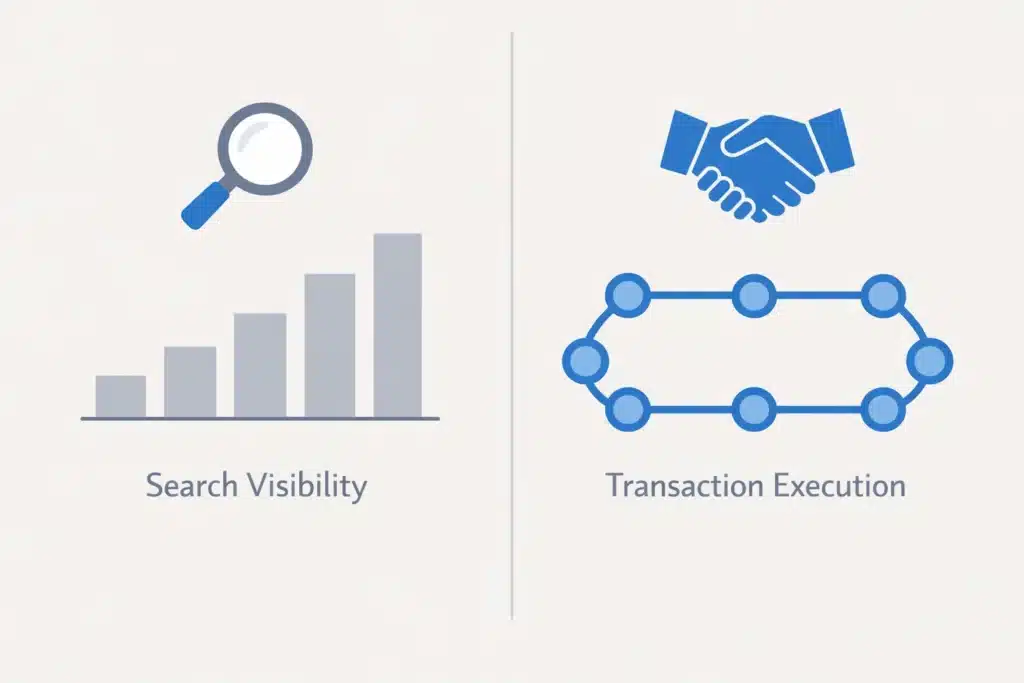
This mirrors the shift we saw with voice search and featured snippets. Early adopters of structured data and clean information architecture gained disproportionate visibility. The same dynamic is playing out now with agentic transactions—except the stakes are higher because we’re talking about revenue, not just traffic.
Declarative vs. Imperative: Two Paths to Agent Readiness
WebMCP offers two implementation approaches, and understanding both helps clarify the technical roadmap.
The imperative API (JavaScript-based) gives developers maximum control. You register tools programmatically, define complex validation logic, and handle edge cases in code. This approach works well for dynamic, multi-step workflows like configuring custom products or managing account settings.
The declarative API takes a simpler approach using enhanced HTML forms. Developers add special markup to standard forms, and the browser automatically exposes them as tools. When an agent invokes a declarative tool, Chrome displays a form UI for visual field population and requires user confirmation before execution. This approach prioritizes transparency and user control over flexibility.
Both methods share a critical security principle: the browser mediates every tool call. Tools execute sequentially (not in parallel), inherit the user’s session and permissions, and operate within the page’s existing security context. This architecture prevents agents from bypassing authentication or performing unauthorized actions.
Agent Readiness Starts with Visibility
Before we talk about implementation steps, there’s a prerequisite most businesses overlook: there’s no point making your site agent-executable if AI platforms aren’t recommending you in the first place.
Agent readiness is actually a two-layer problem. The first layer is retrieval readiness—whether AI systems know your business exists and cite it when users ask relevant questions. The second layer is execution readiness—whether agents can reliably complete transactions on your site once they arrive. WebMCP addresses the second layer. But if you’re invisible in AI responses today, execution readiness is premature.
This is where CiteMetrix fits into the agent-readiness roadmap. CiteMetrix monitors how six major AI platforms—ChatGPT, Gemini, Perplexity, Claude, Meta AI, and Google AI Overviews—mention and recommend your brand. It tracks which queries cite you, which don’t, and how your visibility trends over time. That data tells you whether the first layer is in place before you invest in the second.
Consider a practical example: a SaaS company spends resources implementing WebMCP tool contracts for their product demo and trial signup flows. That’s smart execution-layer work. But if CiteMetrix shows that none of the major AI platforms cite the company when users ask “what are the best tools for [their category],” agents will never reach those well-built tool contracts. The company optimized the wrong layer first.
The right sequence is: use CiteMetrix to benchmark your AI visibility, identify where you’re being cited and where you’re not, close the retrieval gaps through content and authority work, and then invest in WebMCP implementation for the transactional flows that agents will actually reach.
Practical Steps: Making Your Site Agent-Ready Now
You don’t need to implement WebMCP today, but you should start preparing your infrastructure now. Here’s what that looks like:
1. Benchmark Your AI Visibility First
Before touching your transactional infrastructure, understand where you stand in AI-generated responses. Use CiteMetrix to run a baseline scan across the platforms that matter to your audience. If agents aren’t citing your brand for core service queries, that’s the gap to close first—no amount of WebMCP implementation will help if agents don’t know you exist. CiteMetrix is currently in beta at citemetrix.com/beta.
2. Stabilize Core Transactional Flows
Identify the high-value actions on your site: booking appointments, requesting quotes, submitting support tickets, configuring products. Document these flows explicitly—what inputs are required, what validation rules apply, what outputs are returned. Agents need consistency and predictability.
3. Clean Up Forms and APIs
Make sure your forms use semantic HTML with proper labels, validation attributes, and error handling. If you expose REST APIs, ensure they’re well-documented with clear schemas. WebMCP doesn’t replace good fundamentals—it builds on them.
4. Invest in Structured Data and Entity Clarity
Structured data (Schema.org markup) remains foundational. It helps AI systems understand what your business offers, which services are available, and how different entities relate. WebMCP handles the “how to transact” layer; structured data handles the “what exists” layer. Both are essential.
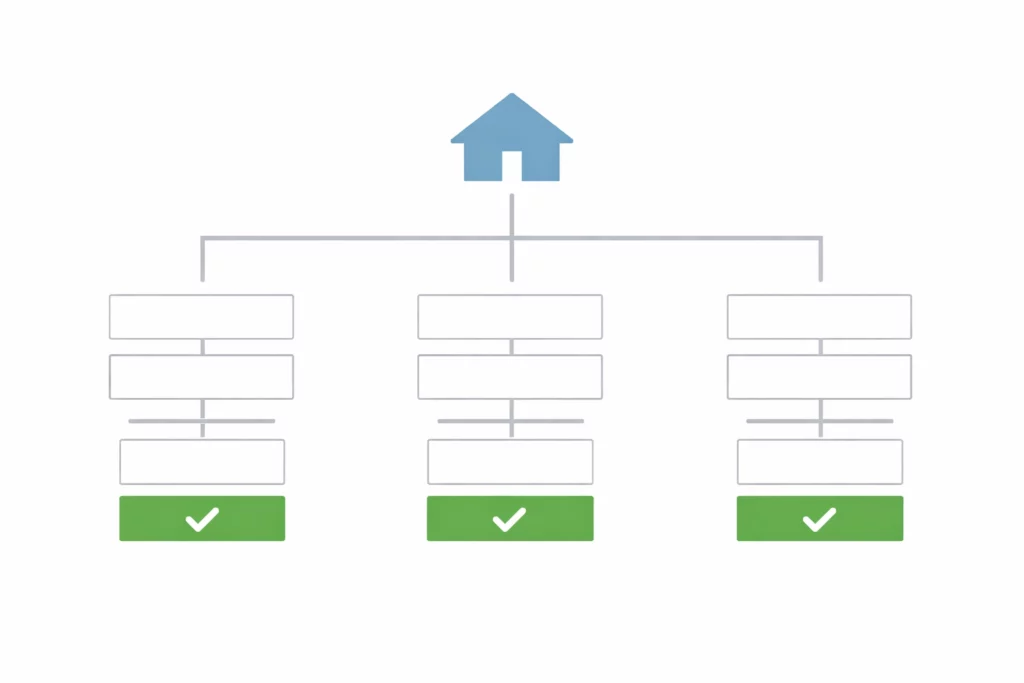
5. Improve Information Architecture
Agents perform best when site structure maps cleanly to user intents. If your navigation is confusing to humans, it will be impossible for agents. Clear categorization, logical URL structures, and consistent naming conventions all matter.
6. Plan for Error Handling and Edge Cases
When an agent encounters an error, it needs structured feedback—not a generic 404 or “Something went wrong” message. Design error responses that tell agents what happened and how to recover.
7. Consider Security and Authentication
Agents will inherit user sessions, but you still need to think through authorization boundaries. Which actions require additional verification? When should agents be allowed to proceed autonomously versus requiring explicit user confirmation?
The Measurement Challenge: Visibility vs. Execution
Traditional SEO measurement focuses on visibility: rankings, impressions, clicks. But the agentic web introduces a dual measurement framework that requires tracking both layers of readiness.
Retrieval readiness is measurable now. CiteMetrix provides the data: which AI platforms cite your brand, for which queries, how often, and how that’s trending. It tracks sentiment—whether you’re being recommended or merely mentioned—and identifies competitive gaps where rivals are being cited instead of you. This is the visibility layer, and it’s the leading indicator of whether agents will ever reach your site in the first place.
Execution readiness will become measurable as WebMCP adoption grows. Metrics like tool invocation success rates, transaction completion rates via agents, and error frequency will emerge as the standard becomes more widely implemented.
At Expert SEO Consulting, our AI SEO Audits now assess both dimensions. We use CiteMetrix to evaluate whether AI systems can extract the right information about your business, whether they trust it, and whether third-party sources are corroborating your claims. And we assess whether your transactional flows are stable and well-defined enough for agents to complete key actions without fragile workarounds.
Think of it as a funnel: CiteMetrix tells you whether agents know you exist. WebMCP determines whether agents can successfully do business with you once they arrive. You need both, and you need to measure both—but visibility comes first.
What This Means for Technical SEO and Content Strategy
WebMCP doesn’t replace technical SEO—it extends it. The same principles that made sites crawlable and indexable now apply to making sites executable by agents: clear structure that mirrors user intent, clean code with semantic HTML, reliable infrastructure with good error handling, and comprehensive documentation of what services you offer and how they work.
Content strategy evolves too. Beyond optimizing for keywords and featured snippets, you’re now optimizing for action clarity—making it obvious what users (and agents) can do on your site and how to do it.

The Timeline: When Should You Act?
WebMCP is in early preview. Adoption will be gradual, not overnight. But here’s why waiting is dangerous: by the time agentic traffic becomes material, the businesses that prepared early will have a compound advantage.
They’ll have cleaner infrastructure. Better documentation. More reliable transactional flows. And when agents start choosing vendors based on execution reliability, those businesses will win by default.
Full disclosure: we’re not recommending clients rush to implement navigator.modelContext tomorrow. But we are recommending they start with what’s measurable and actionable today: benchmarking AI visibility with CiteMetrix, closing retrieval gaps, and auditing sites through an “agent readiness” lens—identifying gaps in forms, APIs, documentation, and transactional stability before those gaps become competitive liabilities.
The Bottom Line
The web is evolving from a place where AI agents find information to a place where they complete transactions. WebMCP and navigator.modelContext are the technical foundation for that shift.
But execution without visibility is a dead end. The businesses that will lead in the agentic economy are the ones that secure both layers: first ensuring AI platforms cite and recommend them (the retrieval layer that CiteMetrix tracks), then building the transactional infrastructure that lets agents act on those recommendations (the execution layer that WebMCP enables).
At Expert SEO Consulting, we help businesses navigate exactly these kinds of technical and strategic shifts. Our technical SEO services and content strategy work now includes agent readiness assessments—evaluating whether your site is positioned not just to be found, but to be used reliably by AI systems.
Start by benchmarking your AI visibility: request beta access to CiteMetrix at citemetrix.com/beta. Then book a consultation to audit your site’s full agent readiness—from retrieval to execution. The agentic web is coming. The question is whether your site will be ready when it arrives.
Sources:
Chrome for Developers: WebMCP Early Preview Program
Search Engine Roundtable: Google WebMCP Coverage
W3C Web Machine Learning Community Group