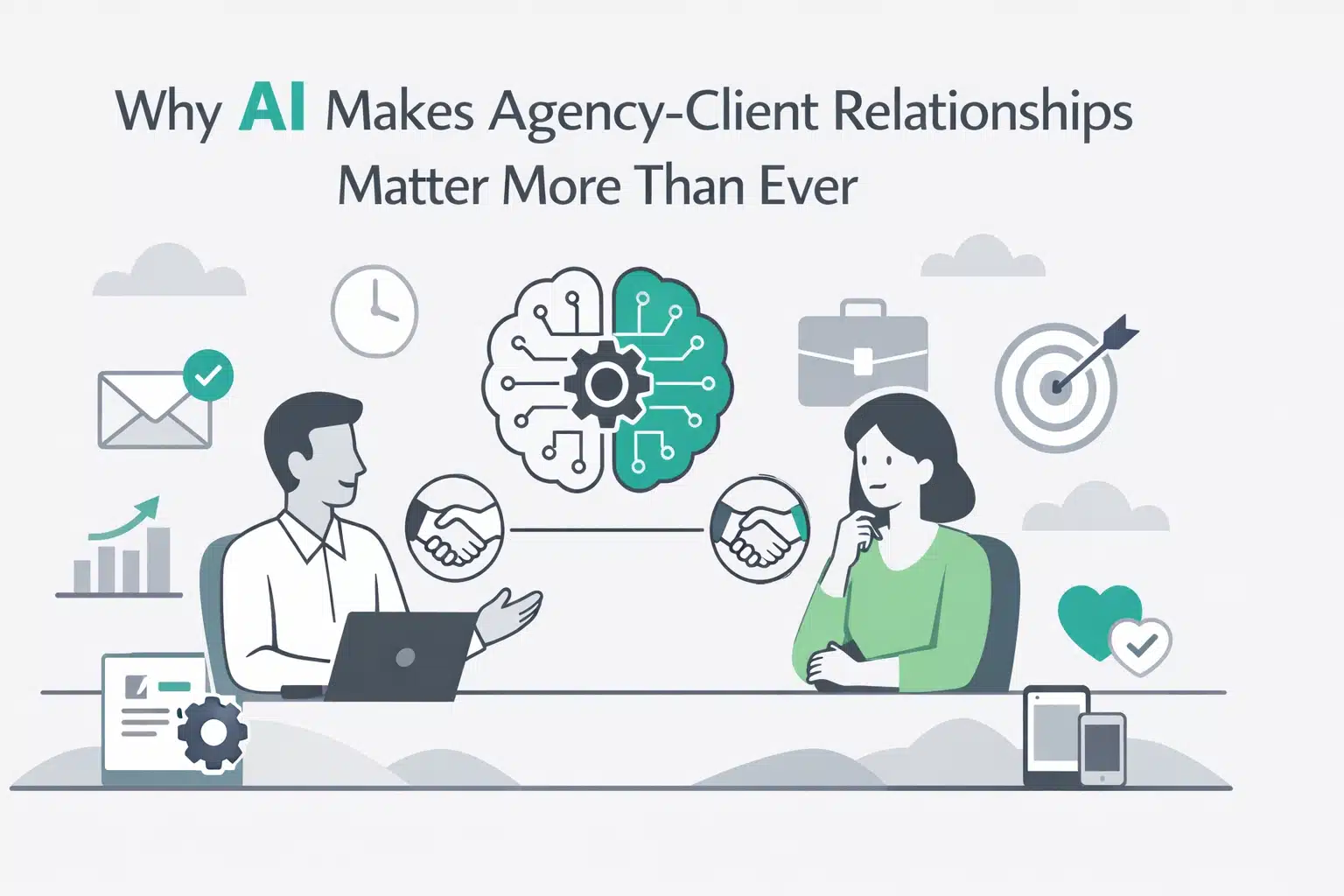
Here's the thing nobody told you about the AI revolution: it was supposed to make agencies obsolete. Instead, it's making the right agency relationships more valuable than they've ever been.
Full disclosure: we're living through a moment where 73% of marketers report using AI in their workflows, and that number climbs every quarter. But here's what the headlines miss: the companies winning right now aren't the ones replacing humans with algorithms. They're the ones who figured out that AI amplifies human expertise, it doesn't replace it.
AI Is a Tool, Not a Strategy (And That Changes Everything)
Let's clear something up immediately: AI can generate content. It can analyze mountains of data. It can A/B test variations at scale that would take a human team months to execute.
What AI fundamentally cannot do is understand why your Q3 pipeline dried up even though traffic is up 40%. It can't decode the unstated tension in your executive team about brand positioning. It won't notice that your competitors just shifted messaging in a way that signals a major market move.

ChatGPT doesn't wake up at 3 AM thinking about your business problems. A strategic partner does.
The agencies that survived the last two years of AI disruption did so by recognizing this truth early: AI eliminated the competitive advantage of pure execution. Anyone can generate 50 blog post outlines now. What you can't automate is knowing which three of those 50 actually matter for your business model, your sales cycle, and your specific market position.
The Death of "Task Execution" Agencies (And What Replaced Them)
Remember when agency relationships looked like this? You'd send a ticket: "Need five blog posts about [topic]." Agency delivers. Repeat monthly. Invoice. Everyone's happy.
That model is dying: not slowly, but rapidly. AI commoditized that entire transactional workflow. If all you need is content production at scale, there are now tools that cost $49/month instead of $4,900.
What's replacing it is something closer to strategic consulting than vendor management. The agencies that matter in 2026 are the ones asking questions like:
- "Why are we creating this content in the first place?"
- "What behavior change are we trying to drive?"
- "How does this connect to the pipeline issue you mentioned last month?"
- "Your competitor just published this: what's our positioning response?"
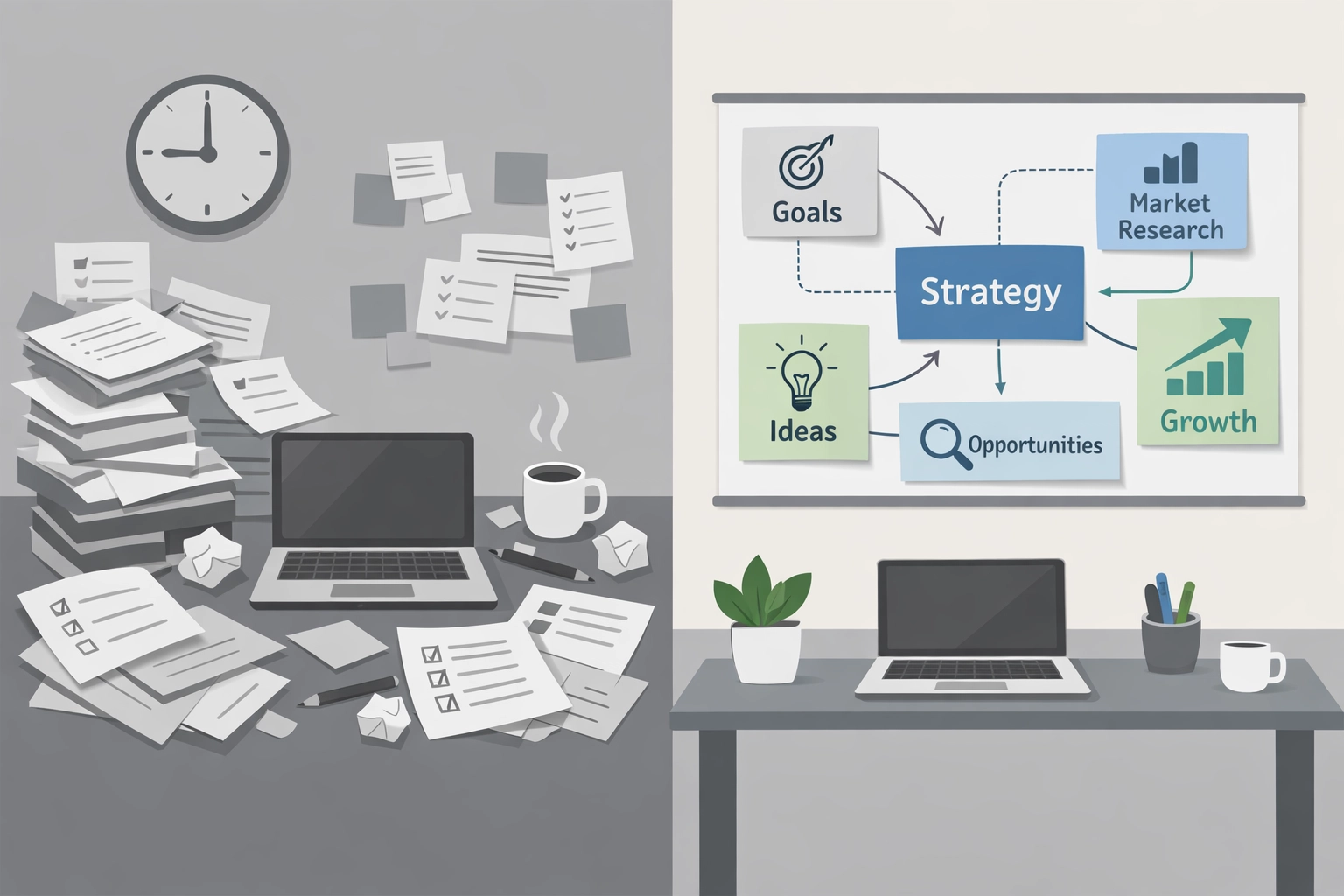
This isn't scope creep. This is the entire value proposition now. When AI handles the "how" of execution, human expertise shifts entirely to the "why" and "what" of strategy.
Why Business Context Can't Be Outsourced to a Model
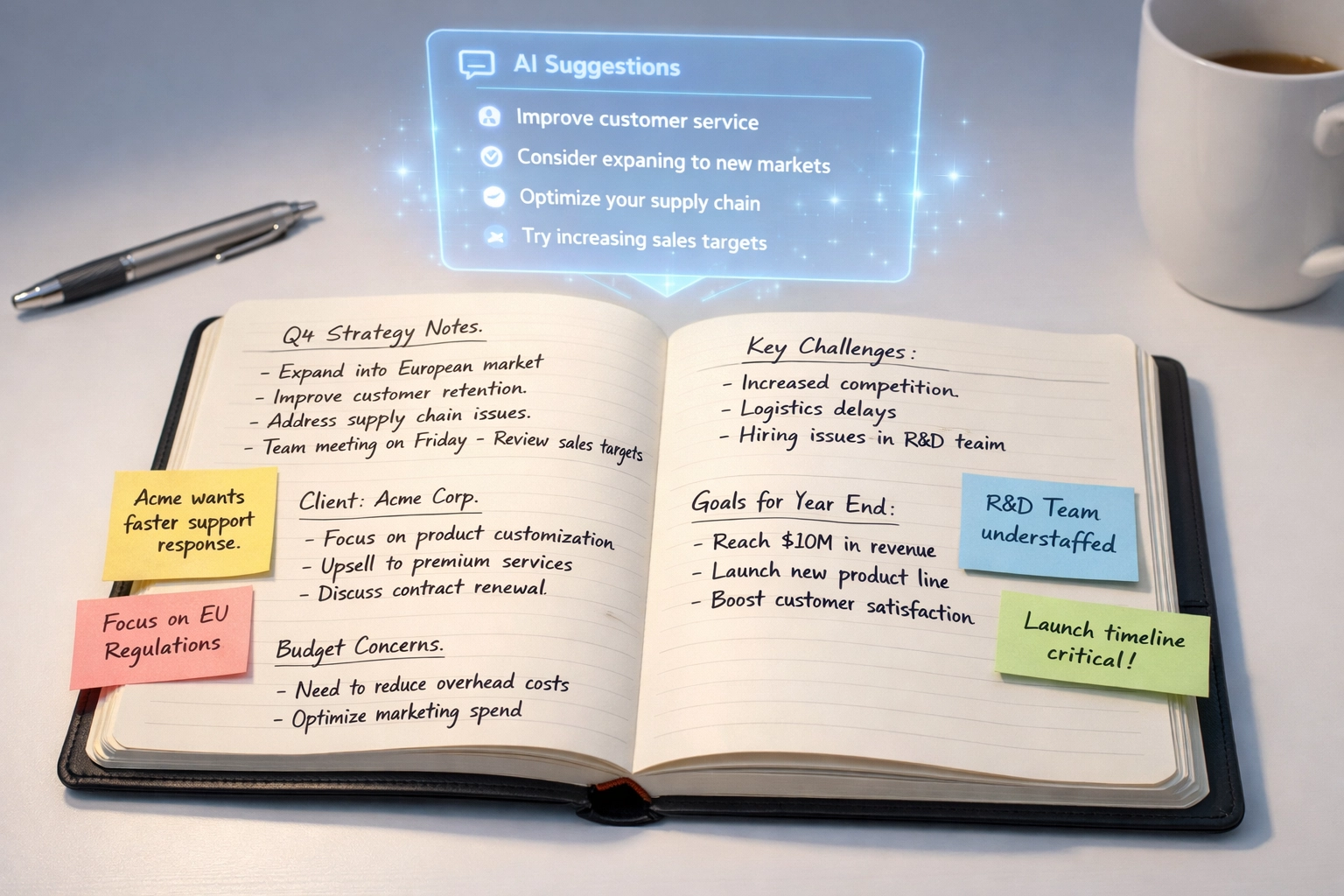
AI operates in one direction: you ask, it answers. It waits for prompts. It has no memory of your goals from six months ago unless you feed them back in. It doesn't know that your CEO hates a certain phrase, or that your sales team struggles to explain your differentiation, or that your market just went through a consolidation that changes everything.
A strategic partner lives in that context. They know:
- Your brand voice isn't just "professional and approachable": it's the specific balance between technical authority and accessibility that differentiates you from competitors who sound like robots
- Your content strategy isn't just "SEO": it's the deliberate shift toward thought leadership that supports your move upmarket
- Your traffic plateau isn't a Google algorithm problem: it's that your ideal customers are now researching in AI chatbots and you're not showing up there
This deep business context: the kind built over months of strategy calls, performance reviews, and market shifts: is what makes recommendations actionable instead of generic. It's why two companies in the same industry need completely different SEO strategies, even though ChatGPT would give them similar tactics.
At Expert SEO Consulting, we've watched this shift transform how we work with clients. The conversations that matter aren't about keyword density anymore. They're about whether your SEO strategy aligns with your sales team's objection handling, or why your organic visibility is strong but qualified leads are flat.
Trust and Transparency When Algorithms Won't Sit Still
Here's what changed in the last 18 months: Google's algorithm has been overhauled more dramatically than the previous five years combined. AI Overviews replaced traditional search results. Zero-click searches hit new highs. SGE (Search Generative Experience) is still evolving week to week.
In this environment, the agency relationship you need isn't one that promises guaranteed rankings or traffic. It's one built on transparency about what's working, what's breaking, and what we're testing next.
When a client's organic traffic drops 25% overnight because Google changed how it displays local results, the conversation needs to be immediate, honest, and strategic. Not defensive. Not full of jargon. Just: "Here's what happened, here's what it means, here's what we're doing about it."
AI can't have that conversation. It can generate a report. It can highlight the data. But it can't walk you through the implications for your Q4 budget, or recommend whether to shift resources toward building brand authority that survives algorithm changes.
Trust in volatile times comes from having a partner who:
- Explains what they don't know, not just what they do
- Recommends against spending when it won't move the needle
- Tells you when a tactic that worked last year won't work this year
- Builds strategies that survive algorithm changes, not chase them
What This Means for How You Choose Partners
The decision framework for selecting an agency has fundamentally changed. The questions that mattered in 2020: "What's your content output capacity?" or "How fast can you turn around deliverables?": are now table stakes that AI handles.
The questions that matter in 2026:
Do they ask questions about your business before proposing tactics? If the pitch is generic "SEO best practices," they're selling execution. If the conversation starts with understanding your sales cycle, competitive position, and growth blockers, they're thinking strategically.
Can they explain the "why" behind recommendations? AI can tell you what to do. A strategic partner can tell you why this specific tactic matters for your specific situation, and what business outcome it connects to.
Do they build your internal capabilities or create dependency? This is the critical distinction. Some agencies want you reliant on their tools and processes. The best ones build your team's strategic thinking while executing on their expertise. We've seen this firsthand: our SEO Training often runs parallel to active client engagements, because building internal understanding makes the partnership stronger, not weaker.
Are they transparent about what's changing? When Google's algorithm shifts weekly and AI search behavior evolves monthly, you need a partner who communicates proactively about implications, not one you have to chase for updates.
The Partnership Model That Actually Works Now
Here's what high-performing agency relationships look like in 2026:
Strategy is collaborative, not outsourced. The agency brings SEO and content expertise. You bring business context, brand knowledge, and market understanding. Neither side can succeed without the other.
AI amplifies, humans decide. Tools generate variations, analyze data, and scale production. Humans determine what matters, validate quality, and connect tactics to business goals.
Communication is continuous, not episodic. Monthly reports aren't enough anymore. The feedback loop needs to be tight: especially when you're testing new approaches to AI visibility or navigating search volatility.
Measurement focuses on business outcomes, not vanity metrics. Traffic is interesting. Rankings are nice. What actually matters: Are we generating qualified leads? Is organic contributing to pipeline? Are we showing up where our buyers are researching?
This is exactly how we structure our Expert SEO Services: as strategic partners who use AI to accelerate execution while keeping human expertise at the center of decision-making.
The Uncomfortable Truth About AI and Agencies
The agencies that are struggling right now are the ones who built their entire value proposition on task execution. The ones thriving have something AI fundamentally can't replicate: deep expertise in how SEO connects to business growth, combined with the judgment to know which tactics matter for which situations.
AI made bad agencies obsolete. It made great agencies indispensable.
Because here's what we've learned after two years of this shift: AI doesn't reduce the need for strategic partners. It raises the bar for what strategic partnership actually means.

When algorithms are volatile, when search behavior is evolving weekly, when your competitors are all using the same AI tools: the differentiator isn't technology. It's having a partner who understands your business deeply enough to navigate that volatility with you.
If your current agency relationship feels like a vendor delivering tasks, or if you're trying to run SEO entirely in-house with AI tools but struggling to connect tactics to strategy, it might be time for a different conversation.
Book a consultation to talk about what strategic partnership actually looks like: and whether your current approach is built for the AI era or still stuck in the old model.