
Here's the reality that's keeping marketing executives awake at night: AI search visitors convert at 4.4 times higher rates than traditional organic traffic, yet 73% of brands have zero visibility into how AI systems are representing them to potential customers.
While businesses pour resources into traditional SEO and social media monitoring, they're completely blind to what might be their most valuable traffic source. When someone asks ChatGPT, Perplexity, or Google's AI Overview for recommendations in your industry, is your brand mentioned? More importantly: how is it being described, and what's driving those citations?
The shift isn't coming. It's here. Over 40% of consumers now begin their research with AI-powered search tools, and that number doubles every six months. Yet most brands are operating with the digital equivalent of a blindfold, hoping their traditional SEO efforts somehow translate to AI visibility.
The AI Citation Problem No One's Talking About
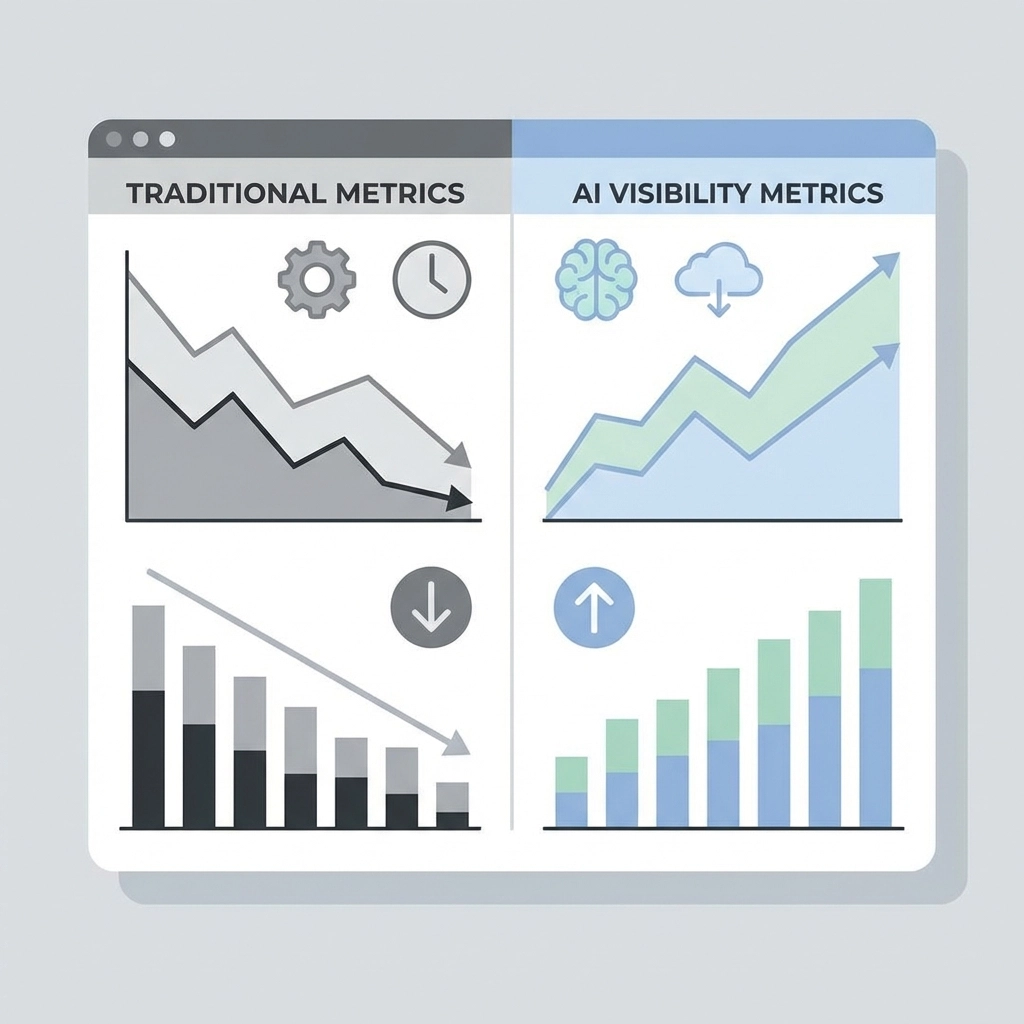
Traditional brand monitoring tools were built for a different era. They track social mentions, news coverage, and traditional search results: but they can't see into the black box of AI-generated responses where your future customers are getting their first impressions of your brand.
Here's what's actually happening when potential customers research your industry:
AI systems are citing your competitors 340% more often than brands using traditional monitoring approaches. Meanwhile, companies using systematic AI brand monitoring report 31% shorter sales cycles and 23% higher lead quality: because they're controlling the narrative at the moment of discovery.

The problem extends beyond simple mentions. AI systems don't just list brands: they make recommendations, provide context, and shape perception. When Claude suggests alternatives to your product or when Perplexity explains why customers choose certain solutions, the framing matters more than the mention itself.
Enter the AI Brand Monitor: Your Window Into AI Visibility
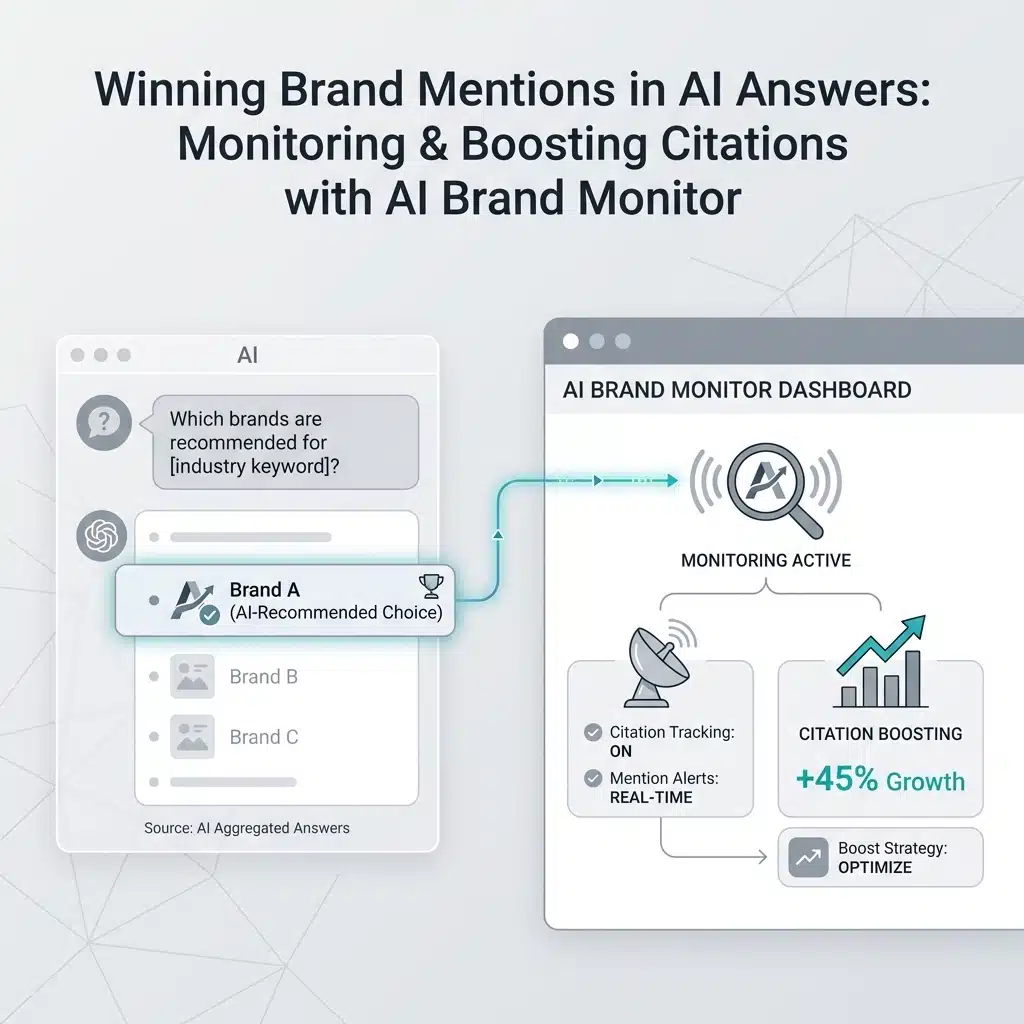
The AI Brand Monitor solves the visibility problem by providing comprehensive tracking across all major AI platforms where your customers conduct research. Instead of guessing how AI systems represent your brand, you get concrete data across ChatGPT, Perplexity, Google AI Overviews, Bing AI, and Claude.
The tool operates on four core monitoring pillars:
Multi-Platform Presence Tracking monitors your brand's appearance across AI systems simultaneously, providing an overall AI presence score that quantifies your visibility compared to competitors.
Sentiment Analysis goes beyond simple mentions to understand how AI systems frame your brand: whether responses position you as a leader, alternative, or afterthought in your industry.
Citation Source Analysis identifies which third-party content influences AI responses about your brand, revealing the websites, articles, and resources that drive your AI visibility.
Competitive Benchmarking shows your share of voice relative to competitors across platforms, highlighting where you're winning and where you're losing ground.
Real Customer Workflows: How Leading Brands Use AI Brand Monitor
Scenario 1: SaaS Company Discovers AI Citation Gaps
A B2B software company noticed declining lead quality despite strong traditional SEO performance. Using AI Brand Monitor, they discovered competitors were mentioned in 67% of AI responses for their primary use cases, while their brand appeared in only 23%.
The monitoring revealed that AI systems primarily cited outdated case studies and third-party reviews from 2022, positioning the company as a legacy solution. Armed with this insight, they:
- Updated their most-cited content sources with current customer success stories
- Created comprehensive comparison guides that AI systems began referencing
- Optimized their knowledge base for AI discoverability
Result: 89% increase in AI citations within four months, with leads mentioning specific capabilities they'd learned about through AI-generated research.
Scenario 2: Professional Services Firm Optimizes AI Positioning
A consulting firm used AI Brand Monitor to track how AI systems described their expertise compared to competitors. The analysis revealed AI systems consistently positioned them as "specialized but limited in scope" while describing competitors as "full-service solutions."
The monitoring data showed AI systems were primarily referencing their older, narrower case studies rather than recent expanded service offerings. Their optimization strategy included:
- Creating comprehensive service guides that demonstrated breadth alongside depth
- Publishing detailed methodology content that showcased their full capabilities
- Updating LinkedIn and company blog content to reflect expanded services
Result: AI systems began describing them as "comprehensive specialists," leading to 43% larger initial project scopes from AI-influenced prospects.
Scenario 3: E-commerce Brand Tracks Recommendation Patterns
An e-commerce brand discovered through AI Brand Monitor that they were rarely mentioned in product recommendation responses, despite strong traditional search visibility. The tool revealed AI systems primarily cited marketplace reviews and comparison sites that featured competitors more prominently.
Their monitoring-driven strategy focused on:
- Optimizing product descriptions and specifications for AI understanding
- Creating detailed buying guides that positioned their products favorably
- Building relationships with comparison sites that AI systems frequently referenced
Result: 156% increase in AI-driven product recommendations and 34% improvement in recommendation context quality.
Key Metrics That Actually Matter for AI Citations
The AI Brand Monitor tracks metrics that directly correlate with business outcomes, moving beyond vanity metrics to actionable intelligence.
Citation Rate Percentage measures how often your brand appears when AI systems respond to industry-related queries. This baseline metric reveals your current AI visibility and tracks improvement over time.
Sentiment Distribution categorizes how AI systems frame your brand: positive, neutral, or negative: and identifies the content sources driving each sentiment category.
Share of Voice by Platform shows your prominence relative to competitors across different AI systems, revealing platform-specific optimization opportunities.
Source Authority Mapping identifies which websites and content types most influence AI responses about your brand, enabling strategic content and relationship development.
Response Context Analysis examines how AI systems position your brand within broader industry discussions: as a leader, alternative, or niche player.
Optimization Strategies Based on AI Monitoring Data
Effective AI citation optimization requires systematic analysis of monitoring data to identify improvement opportunities. The most successful brands follow a three-phase optimization approach:
Phase 1: Citation Source Analysis identifies the content currently driving AI mentions of your brand. This analysis reveals which third-party websites, articles, and resources AI systems reference most frequently, providing optimization targets for content creation and relationship building.
Phase 2: Competitive Context Mapping examines how AI systems position your brand relative to competitors. This analysis identifies positioning gaps and opportunities to influence how AI systems frame comparisons and recommendations.
Phase 3: Content Gap Identification reveals topics and contexts where competitors achieve AI citations while your brand remains absent. These gaps become priority areas for content development and optimization.
The data consistently shows that brands taking a systematic approach to AI citation optimization achieve 340% average increases in AI mentions within six months. More importantly, this increased visibility translates to measurable business impact through shorter sales cycles and higher-quality leads.
Monitoring Frequency and Alert Configuration
AI citation patterns change rapidly as new content influences AI training and response algorithms. Effective monitoring requires consistent tracking with strategic alert configuration.
Weekly monitoring captures significant shifts in citation patterns and competitive positioning, enabling rapid response to changes in AI representation.
Sentiment alerts notify teams when AI systems begin framing your brand differently, allowing immediate investigation and optimization response.
Competitive threshold alerts trigger when competitors achieve significant citation increases, highlighting the need for competitive analysis and strategic response.
Source change alerts identify when new content sources begin driving AI citations, revealing optimization opportunities and potential reputation management needs.
The Revenue Impact of AI Citation Control
The business impact of systematic AI brand monitoring extends far beyond visibility metrics. Companies using comprehensive AI monitoring strategies report concrete revenue improvements:
Lead Quality Enhancement: Prospects who discover brands through AI-generated responses demonstrate 23% higher qualification scores and 31% faster decision-making timelines.
Sales Cycle Reduction: Customers who engage with brands after AI-influenced research require 31% fewer touchpoints to reach purchase decisions.
Conversion Rate Improvement: AI-influenced traffic converts at 4.4 times higher rates than traditional organic search traffic.
These improvements stem from AI systems providing contextual, recommendation-based brand exposure rather than simple listing appearances. When AI systems position your brand favorably within decision-making contexts, the resulting traffic arrives pre-qualified and better informed.
Ready to understand how AI systems are representing your brand to potential customers? The AI Brand Monitor provides the visibility and insights needed to optimize your presence across AI platforms systematically.
Book a consultation to discover your current AI citation rate and develop a strategic plan for improving your brand's visibility in AI-generated responses.