
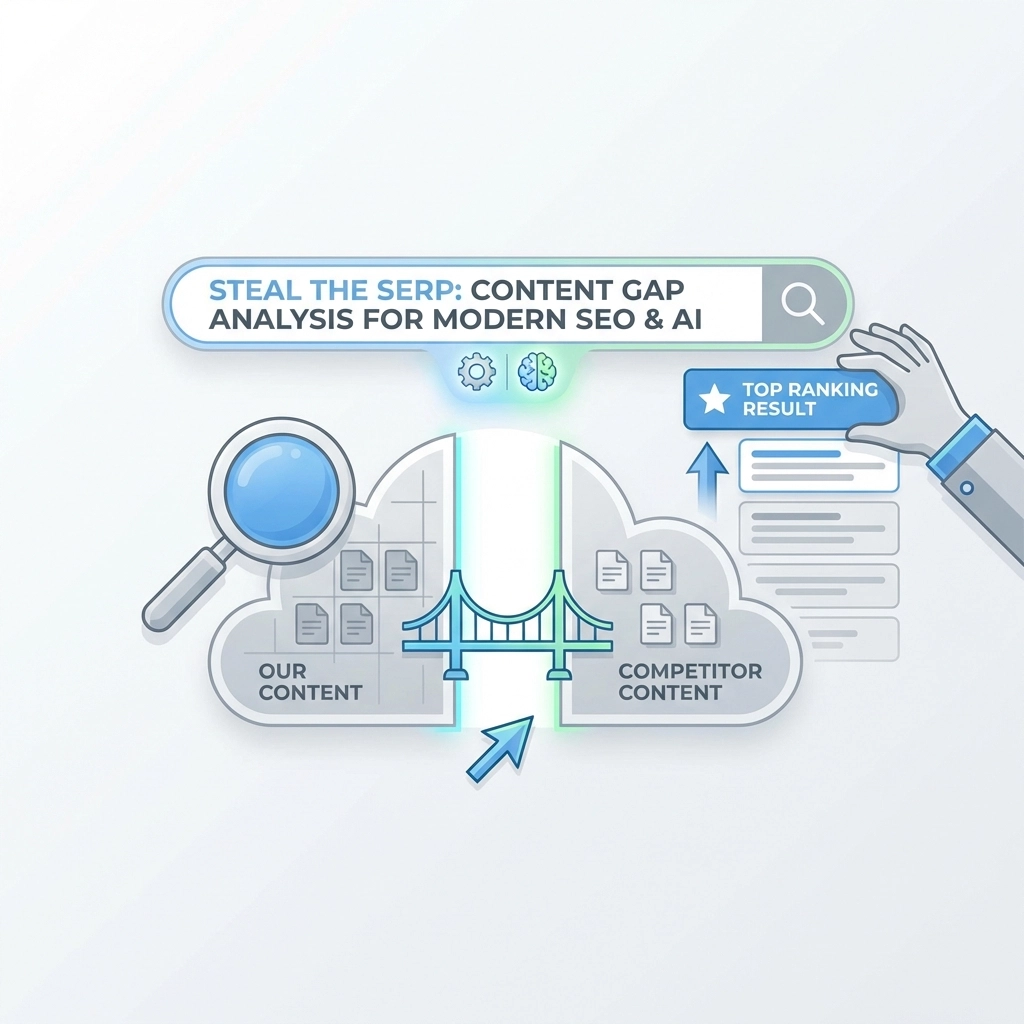

Here’s a hard truth: 91% of web pages get zero organic traffic from Google. Zero. And in 2026, with AI-generated answers now dominating the top of search results, that number is climbing.
The brands winning right now aren’t just creating more content: they’re creating smarter content. They’re finding the exact gaps their competitors left wide open and filling them with precision. This is content gap analysis, and it’s no longer optional for businesses serious about organic visibility.
Whether you’re optimizing for traditional SERP rankings or positioning your brand to be cited in AI-generated responses, understanding where your content falls short is the foundation of every successful strategy.
What Is Content Gap Analysis (And Why It Matters More Than Ever)
Content gap analysis is the process of identifying keywords, topics, and questions your competitors rank for: but you don’t. It’s essentially a strategic reconnaissance mission: figure out what’s working for others in your space, then build content that fills those voids on your own site.
The core components include:
- Keywords competitors outrank you for (your biggest opportunities)
- Keywords competitors rank for that you don’t target at all (blind spots)
- Keywords you rank for that no competitors touch (your unique advantages)
- Content format gaps (maybe they have blog posts, but no video or interactive tools)
But here’s the thing: traditional gap analysis focused almost exclusively on Google’s organic results. In 2026, that’s only half the picture.
AI search engines like Google’s AI Overviews, Perplexity, and ChatGPT now pull information from across the web to generate direct answers. Your content isn’t just competing for a blue link anymore. It’s competing to be the source an AI cites when answering a user’s query.
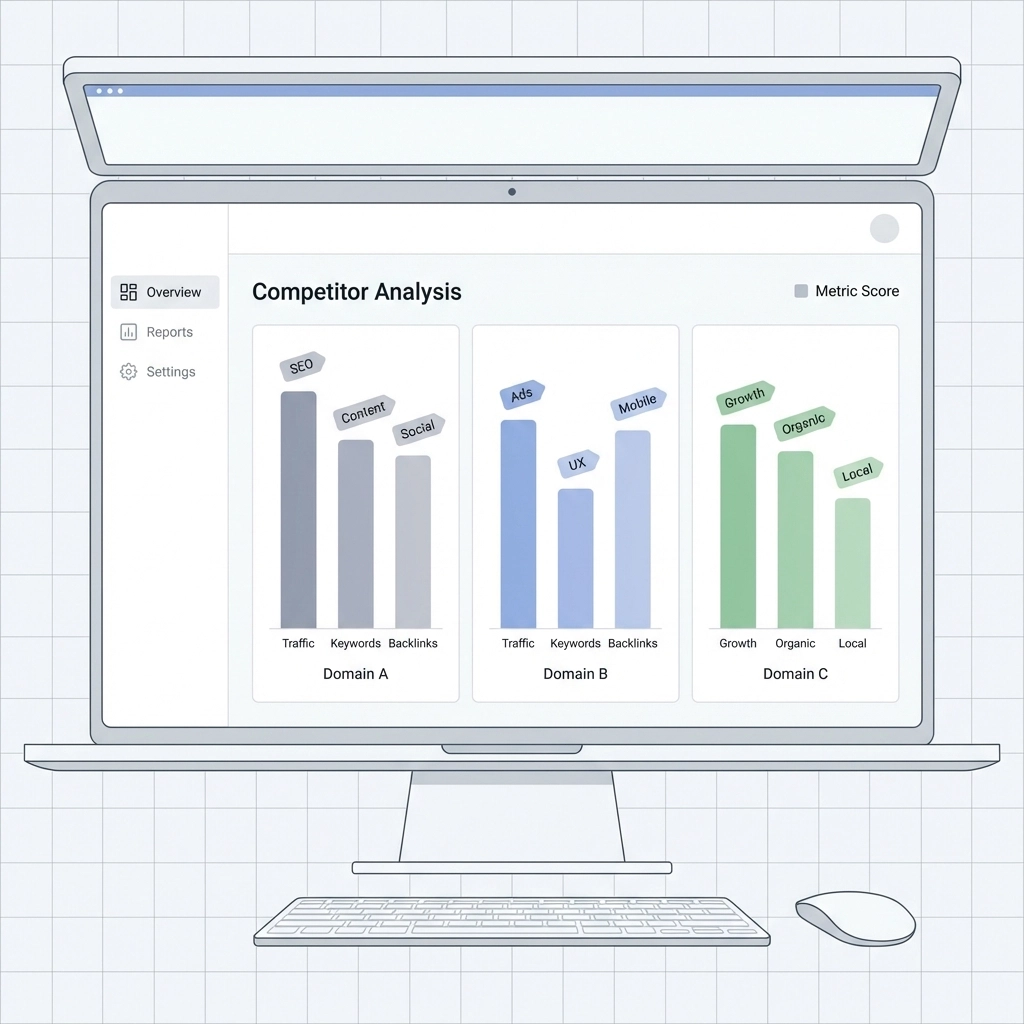
The Dual Challenge: Traditional SERP + AI Citations
Modern content gap analysis must address two parallel goals:
- Rank in traditional organic results : still essential for traffic, brand visibility, and conversions
- Get cited in AI-generated answers : increasingly important as users skip clicking through to websites
These goals overlap, but they’re not identical. Google’s algorithm and an AI model’s citation preferences don’t always align. A page might rank #3 organically but never get mentioned in an AI Overview. Or it might be cited by Perplexity but buried on page two of Google.
This dual challenge is exactly why we built our optimization and analysis tools to address both dimensions. You can’t afford to optimize for one while ignoring the other.
How the Content Gap Analysis Tool Works
Let’s get practical. Here’s how our Content Gap Analysis tool helps you identify: and close: the gaps that matter most.
Step 1: Competitor Benchmarking
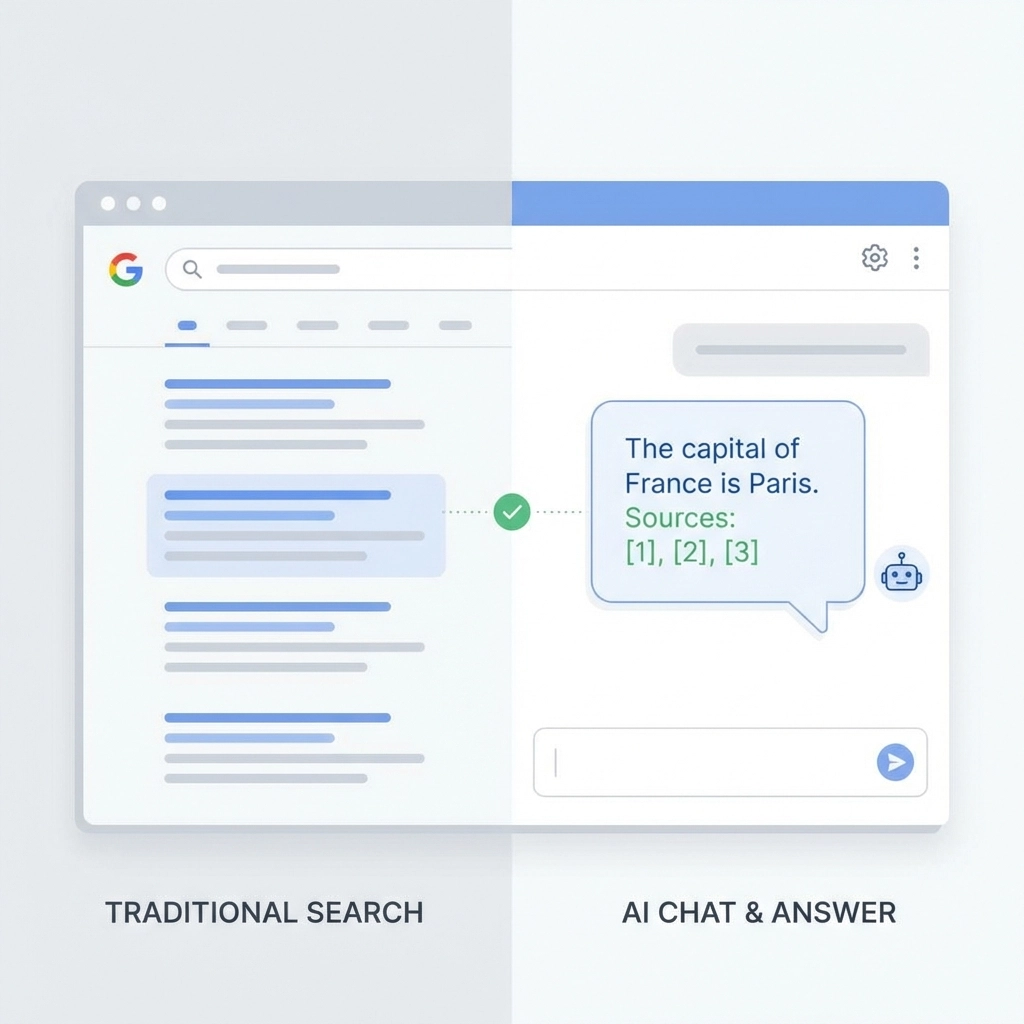
Start by entering your domain alongside 3-5 direct competitors. The tool crawls ranking data across thousands of keywords in your niche, then segments them into actionable categories:
- Gap keywords: Terms your competitors rank for that you don’t
- Weak keywords: Terms where you rank, but competitors outrank you
- Opportunity keywords: High-volume terms with low competition across all domains
- Strength keywords: Your unique ranking advantages
This immediately shows you where you’re losing ground: and where the fastest wins are hiding.
Step 2: AI Citation Analysis
Here’s where it gets interesting. The tool cross-references your gap keywords against AI search behavior, identifying:
- Which topics are generating AI Overviews or Perplexity answers
- Which competitors are being cited in those AI responses
- What content formats (lists, definitions, how-tos) AI models prefer for specific queries
This layer of analysis is critical. A keyword might look low-priority based on traditional metrics, but if it’s triggering AI answers that cite your competitor? That’s a gap worth closing immediately.
Step 3: Content Recommendations
The tool doesn’t just show you problems: it provides solutions. For each identified gap, you get:
- Suggested content titles based on top-performing competitor pages
- Recommended word count and format (long-form guide, FAQ, comparison post, etc.)
- Key subtopics to cover for comprehensive topic authority
- AI optimization tips to increase citation likelihood
This turns raw data into a content roadmap you can execute on immediately.
Real-World Application: A 2026 Case Study
Let’s say you run an e-commerce brand selling sustainable home goods. You’re ranking decently for “eco-friendly cleaning products” but struggling to gain traction on broader terms.
Running a content gap analysis reveals:
- Competitor A ranks for “how to reduce plastic in your kitchen”: you have nothing on this topic
- Competitor B dominates “sustainable home swaps” with a comprehensive guide: yours is a thin 400-word post
- AI Overviews frequently cite a third competitor’s FAQ page when users ask “what makes a product truly sustainable?”
Your action plan becomes crystal clear:
- Create a detailed guide on reducing kitchen plastic (targeting Competitor A’s gap)
- Expand your sustainable home swaps content to 2,000+ words with original research (overtaking Competitor B)
- Build an FAQ page optimized for AI citation on sustainability definitions (stealing the AI answer)
Within 90 days, you’ve closed three major gaps and positioned your brand for both traditional rankings and AI visibility.
Beyond Keywords: The Overlooked Gap Types
Sophisticated gap analysis goes beyond keyword lists. The most valuable opportunities often hide in:
Content Freshness Gaps
When was your competitor’s content last updated? If their top-ranking guide is from 2023, a fresh 2026 version with current data will often outperform it: especially for AI models that prioritize recency.
Thoroughness Gaps
Does your competitor cover a topic in 800 words while leaving key questions unanswered? A comprehensive 2,500-word resource that anticipates follow-up questions signals expertise to both Google and AI systems.
Format Gaps
Maybe everyone in your niche publishes text-heavy blogs. Adding video explainers, interactive calculators, or downloadable templates creates differentiation that algorithms reward.
Trust Signal Gaps
If competitors lack author bios, citations, or E-E-A-T signals, adding these elements to your content creates an authority advantage that’s increasingly important for AI citation selection.
Building a Content Gap Strategy That Actually Works
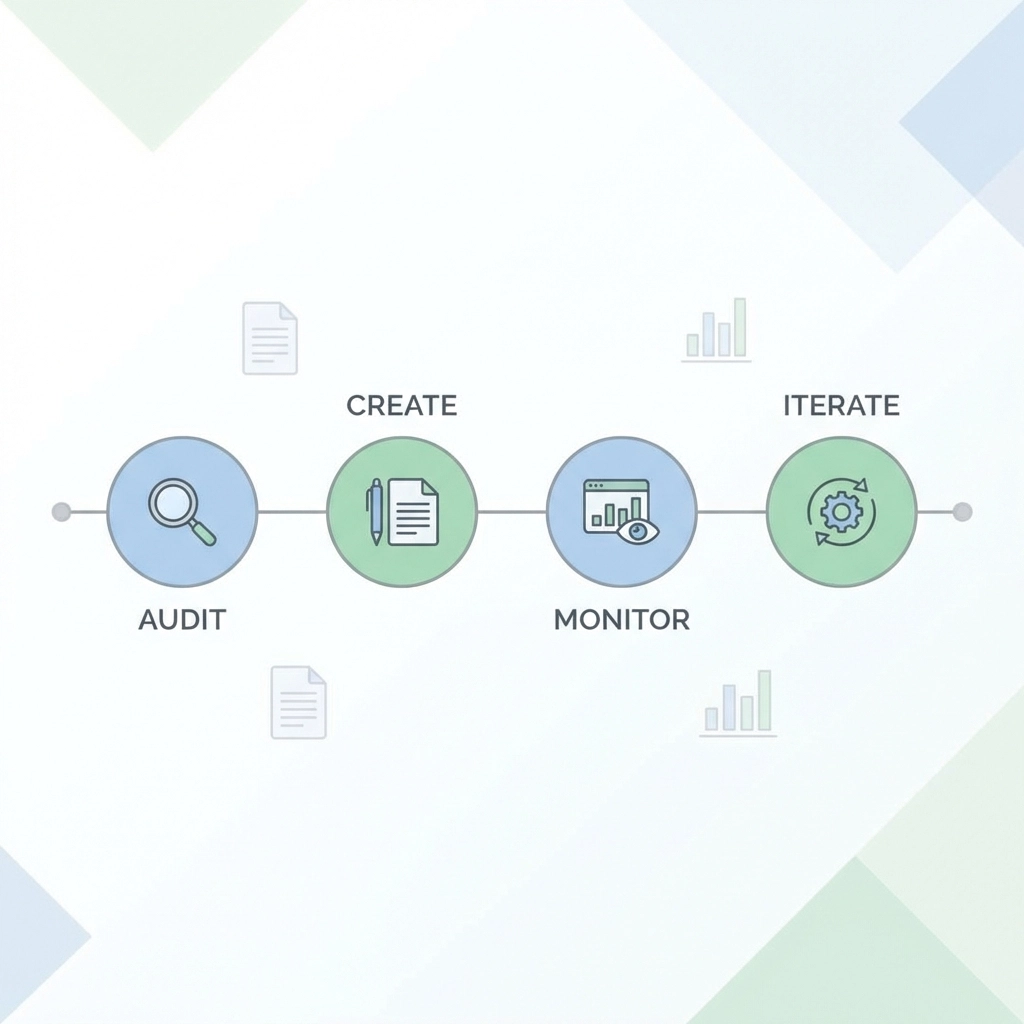
Here’s the framework we use with clients at Expert SEO Consulting:
Month 1: Audit and Prioritize
Run your initial gap analysis. Identify the 10-15 highest-impact opportunities based on search volume, competition level, and AI citation potential.
Month 2-3: Create and Optimize
Produce content targeting your priority gaps. Use our AI content auditor to ensure each piece is optimized for both traditional search and AI systems.
Month 4: Monitor and Iterate
Track ranking improvements and AI citation appearances. Refine your approach based on what’s working.
Ongoing: Repeat the Cycle
Content gaps shift as competitors publish new material and search algorithms evolve. Quarterly gap analysis keeps you ahead of the curve.
The Bottom Line
Content gap analysis isn’t a one-time exercise: it’s an ongoing competitive intelligence system. In 2026, when AI-powered search is fundamentally reshaping how users find information, closing these gaps is essential for survival.
The brands dominating SERPs and AI citations right now aren’t necessarily creating more content. They’re creating the right content in the right gaps at the right time.
Ready to identify the gaps holding your organic visibility back? Book a consultation and let’s build a content strategy that steals the SERP: and the AI answer.





3 Comments