
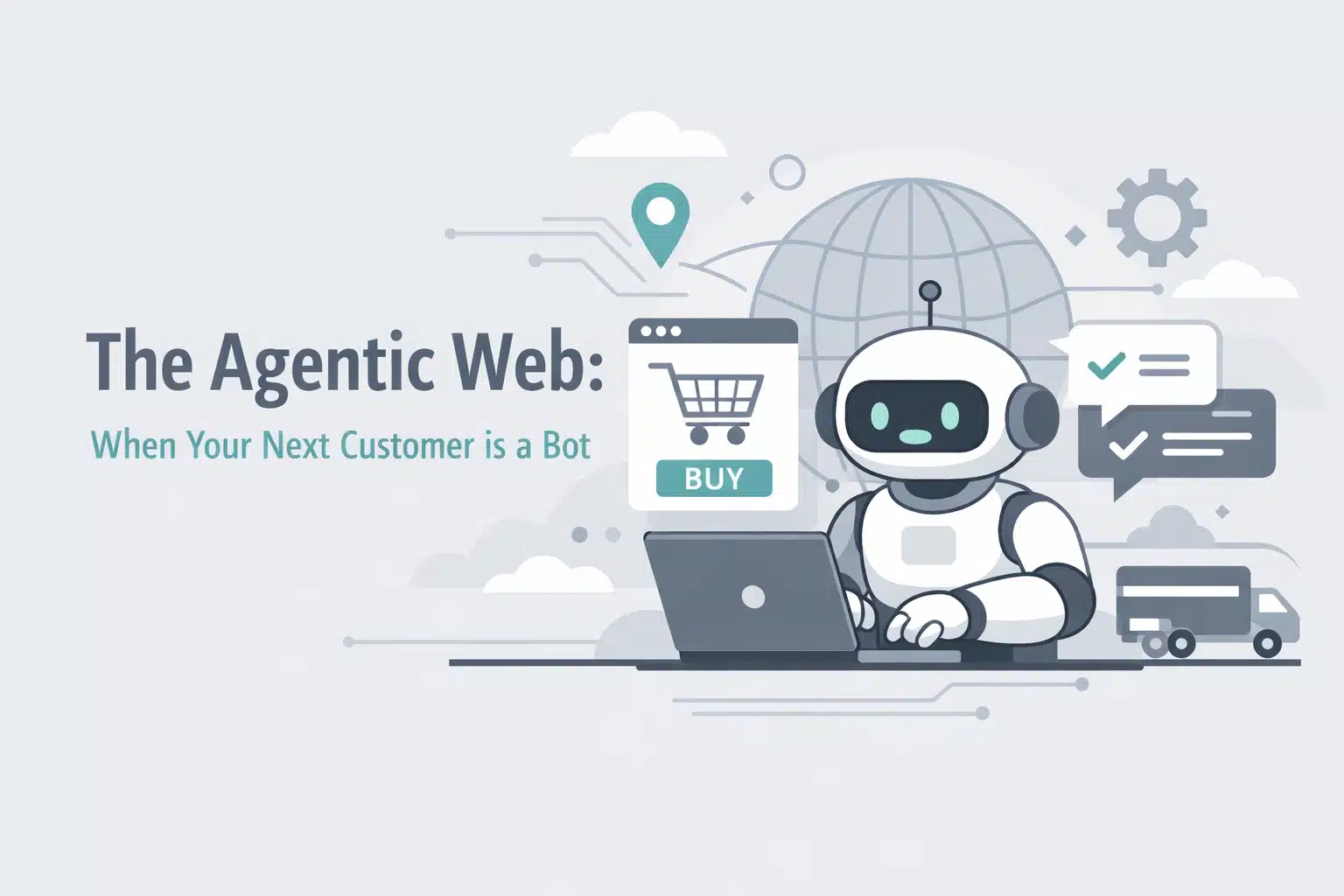
Here's something that'll keep you up at night: your next big customer might not be human.
We're not talking about some distant sci-fi future. Right now, AI agents are crawling, clicking, and completing transactions across the web, autonomously researching products, comparing services, and making purchase decisions without a single human touching a keyboard. Welcome to the Agentic Web, where your website needs to impress silicon as much as it impresses people.
And if your site isn't ready? You're invisible to an entire class of buyers.
What Exactly Is the Agentic Web?
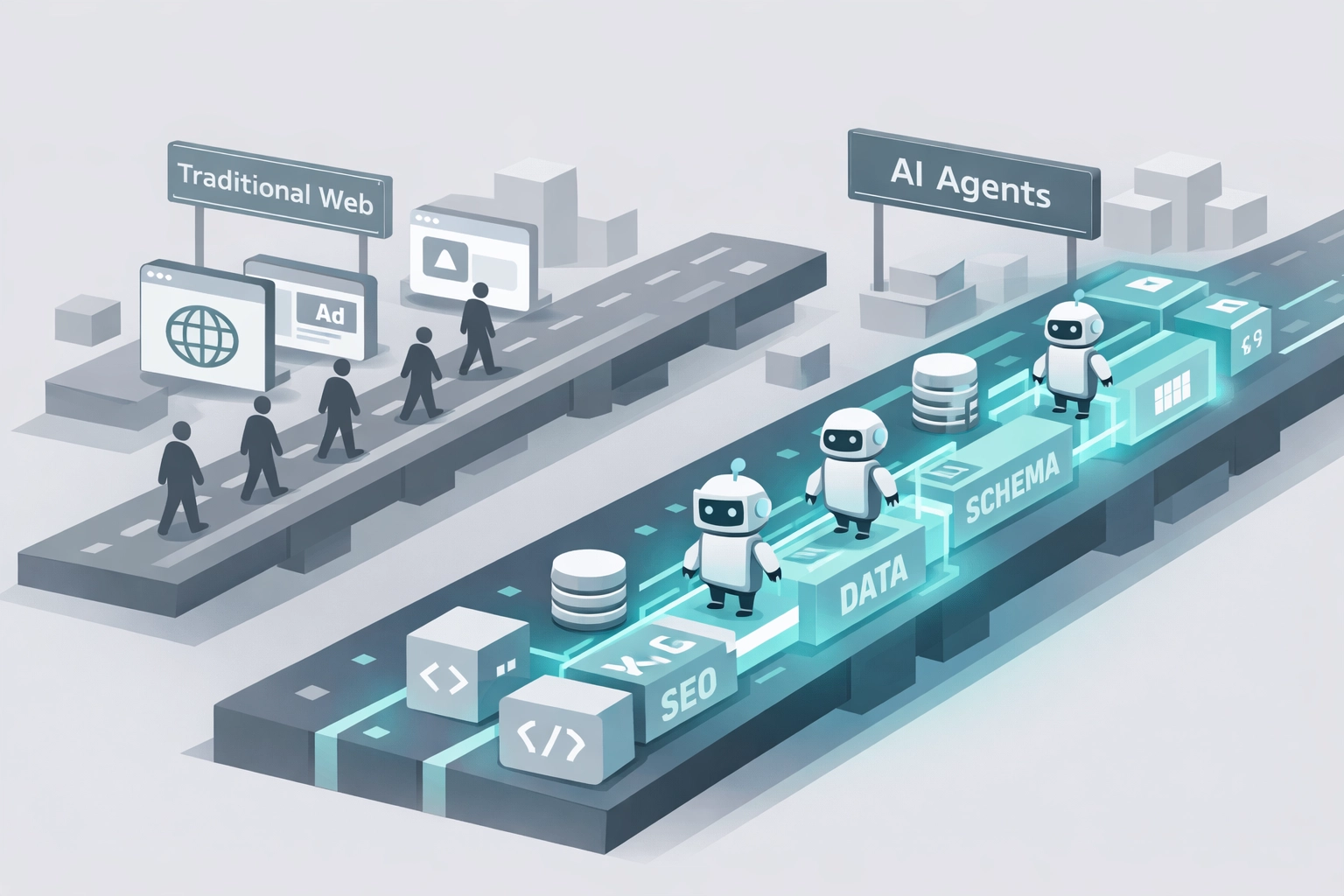
The Agentic Web represents a fundamental shift in how the internet operates. Instead of humans navigating websites with browsers, AI agents autonomously interact with digital content to access information, interpret context, and execute complex tasks on behalf of their human users.
Think of it this way: traditional SEO optimized for Google's crawler and human eyeballs. The Agentic Web optimizes for AI systems that don't just index your content, they use it.
These agents aren't following simple scripts. They're setting goals, planning multi-step strategies, and making decisions across multiple websites and platforms. One AI agent might autonomously research your competitors, evaluate pricing models, read customer reviews, and shortlist vendors, all before its human ever sees your brand name.
The stakes? If your website can't communicate effectively with these intelligent bots, you're missing opportunities before they even register as traffic in your analytics.
AI Agents Don't Browse Like Humans (And That Changes Everything)
Here's where things get interesting, and why traditional web design is suddenly inadequate.
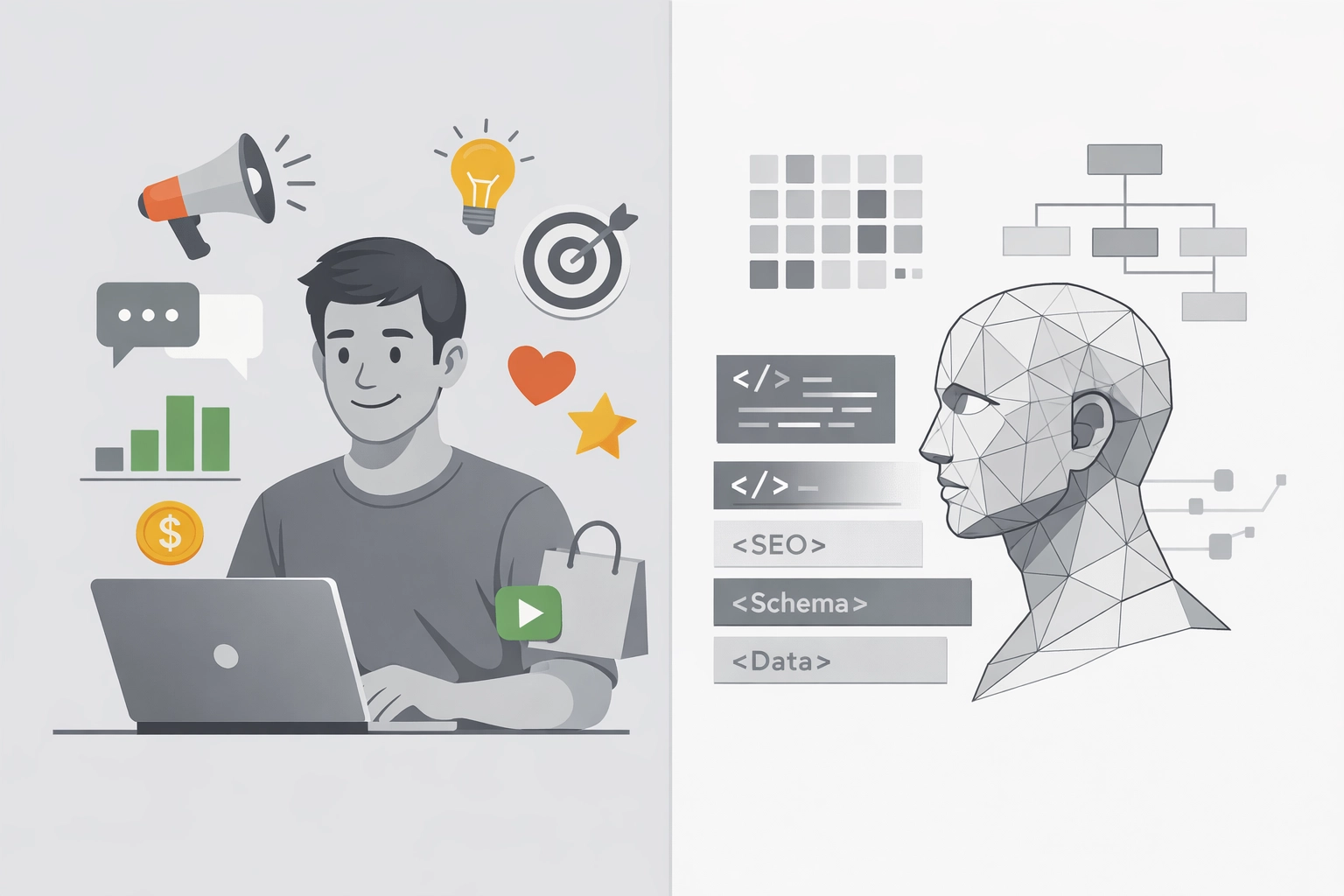
Human users scan headlines, skim paragraphs, and make gut decisions based on visual design. AI agents don't care if your homepage is pretty. They're parsing structured data, interpreting semantic markup, and evaluating whether your content answers their programmatic queries with machine-readable precision.
When an AI agent lands on your site, it's looking for:
- Structured data schemas that clearly define what you offer, who you serve, and how you're positioned
- Semantic HTML that provides context and hierarchy to your information
- Standardized interaction elements that allow autonomous task completion
- Clear, logical navigation that mirrors how machines process information flows
If your content is buried in image text, locked behind JavaScript frameworks that don't render for bots, or presented in vague, marketing-fluff language without clear context, you're invisible.
This isn't just about search engine crawlers indexing pages anymore. AI agents are interacting with your content, interpreting intent, and making autonomous decisions. Your website needs to be bilingual: fluent in human persuasion and machine logic.
The AI Visibility Problem Nobody's Talking About
Google Search visibility is one thing. AI visibility is an entirely different challenge, and most businesses aren't even aware they have a problem.
When ChatGPT, Claude, Perplexity, or any AI-powered research assistant evaluates your business, it's not looking at your site the way a human prospect does. It's aggregating structured information, cross-referencing claims against multiple sources, and assessing your authority based on machine-interpretable signals.
If your content strategy hasn't adapted, you're losing to competitors who've optimized for agent-driven discovery, even if their human-facing website is less impressive than yours.
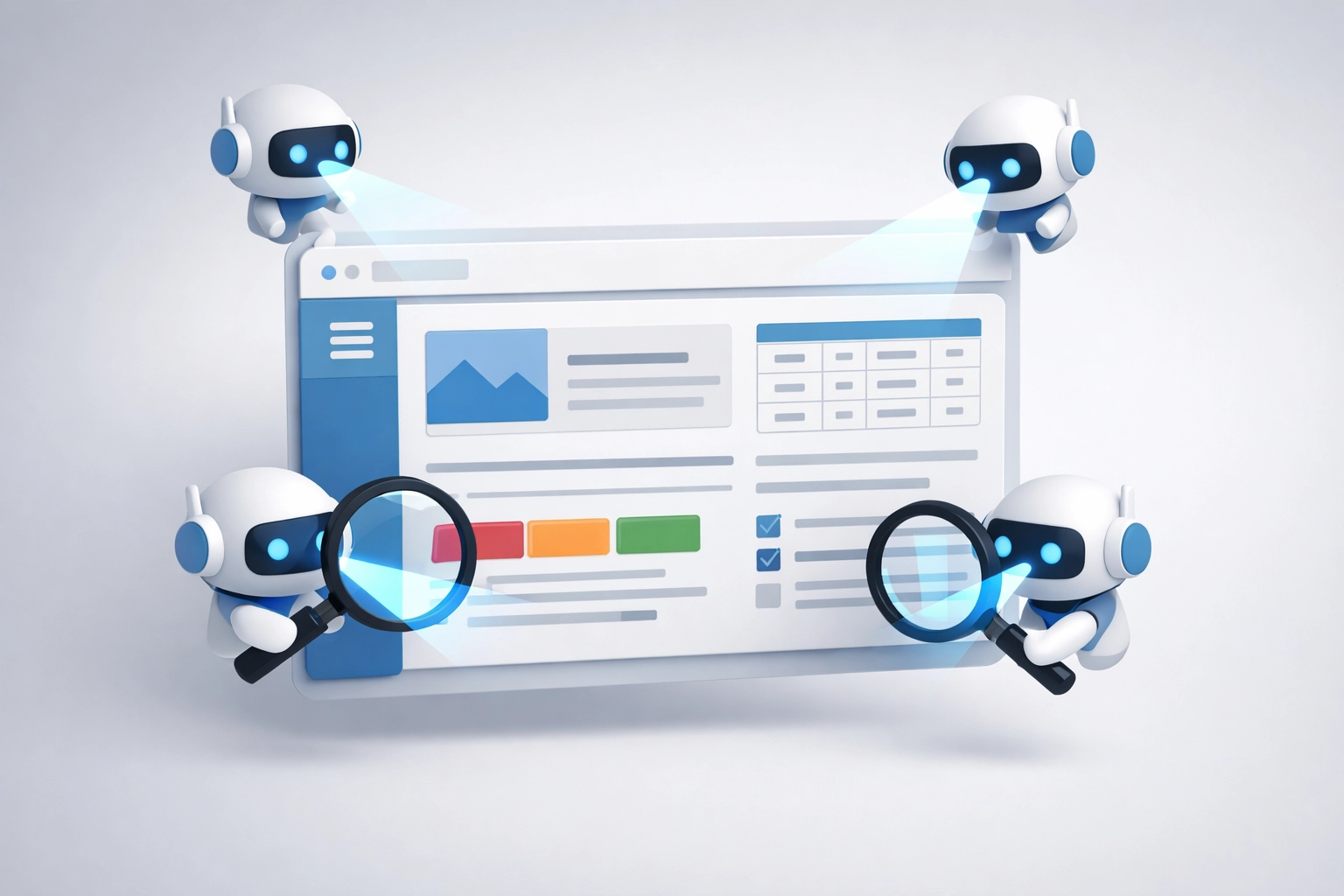
This is where AI SEO Audits become essential. Traditional SEO audits check rankings and backlinks. AI-focused audits evaluate how intelligible your digital presence is to autonomous agents, whether your structured data is comprehensive, your content is contextually clear, and your site architecture supports machine interpretation.
What Optimization for the Agentic Web Actually Looks Like
Let's get practical. Here's what businesses must implement to remain competitive as AI agents become primary web users:
1. Structured Data Everywhere
Schema markup isn't optional anymore: it's the language AI agents speak fluently. Product schemas, organization schemas, FAQ schemas, review schemas: every piece of content should have structured data telling agents exactly what they're looking at and why it matters.
2. Semantic Content Architecture
Your content needs clear hierarchy, explicit relationships between topics, and contextual clarity that allows agents to understand meaning, not just keywords. This means proper heading structures, internal linking that demonstrates topical relationships, and content that answers questions with precision rather than marketing vagueness.
3. API-First Thinking
The most forward-thinking businesses are building native APIs that allow AI agents to access information directly rather than forcing them to parse HTML like humans. If agents can query your inventory, pricing, or service details programmatically, you've removed friction from the autonomous discovery process.
4. Machine-Readable Trust Signals
AI agents evaluate credibility differently than humans. They're looking for verifiable data: customer counts, years in business, certifications, third-party validations: presented in formats they can verify and cross-reference. Vague claims like "industry-leading" mean nothing. Specific, structured evidence means everything.
Your Content Strategy Needs an AI Overhaul
Here's the uncomfortable truth: most content strategies were built for human readers and Google's traditional algorithm. Neither of those priorities adequately prepares you for agent-driven discovery.
AI agents don't respond to emotional appeals or clever wordplay. They're evaluating whether your content provides clear, contextually relevant answers to specific queries. That means:
- Direct answers to common questions, structured in ways agents can extract and cite
- Comprehensive topic coverage that establishes topical authority across your domain
- Consistent terminology that aligns with how agents categorize and understand your industry
- Verifiable claims backed by data, citations, or structured evidence
If your content team is optimizing for "engagement" and "brand voice" without considering machine interpretability, you're building for yesterday's web.
The Competitive Advantage Nobody Sees Coming
Full disclosure: most of your competitors aren't thinking about this yet. The Agentic Web is just emerging from early adopter territory into mainstream necessity, which means businesses that optimize now gain disproportionate advantages.
When AI agents research solutions in your space, they'll surface businesses that:
- Provide clear, structured information about capabilities and differentiators
- Make autonomous evaluation easy through machine-readable content
- Demonstrate authority through verifiable, contextual evidence
If that's you, you're getting shortlisted. If it's not, you're being filtered out before human decision-makers even know you exist.
What You Need to Do Next
The Agentic Web isn't a trend: it's a fundamental evolution in how digital discovery works. AI agents are already evaluating your business, interpreting your content, and making recommendations to human users. The question is whether you're optimized to be found, understood, and preferred by these autonomous systems.
Start with an honest audit:
- Is your structured data comprehensive and accurate?
- Can AI agents easily parse what you do, who you serve, and why you're credible?
- Is your content architecture logical from a machine interpretation perspective?
- Are your trust signals verifiable and machine-readable?
If you're not confident in those answers, you've got work to do. And if you're not sure where to start, that's exactly what Expert SEO Consulting specializes in: helping businesses bridge the gap between traditional web presence and AI-ready digital infrastructure.
The web is changing. Your customers: human and artificial: are already adapting. The only question is whether your business is keeping pace.
Ready to optimize for the Agentic Web? Book a consultation and let's make sure your next customer: whether human or bot( can actually find you.)


3 Comments