Let’s be honest: the traditional e-commerce funnel: the one where a human types a query into a search bar, clicks a link, browses a category page, and manually enters credit card details: is dying. It’s not a slow death, either. With the release of the Universal Commerce Protocol (UCP) by Google in January 2026, we’ve officially entered the era of "agentic commerce."
If your SEO strategy is still focused solely on ranking blue links for human eyeballs, you’re already behind. By the end of 2027, industry analysts predict that over 60% of digital transactions will be initiated or fully completed by AI agents rather than human users. This shift isn't just a trend; it’s a fundamental re-architecting of the internet.
At Expert SEO Consulting, we’ve been tracking this shift closely. The Universal Commerce Protocol is the "technical frontier" I’ve been telling our clients about for months. It is the bridge between your product database and the AI agents that want to buy from you. If you don't build that bridge, your products will effectively become invisible to the most efficient buyers on the planet.
What Exactly is the Universal Commerce Protocol (UCP)?
Think of UCP as the "TCP/IP" of shopping. Just as the internet needed a standardized protocol to allow different computers to talk to each other, e-commerce needs a standardized language to allow AI agents to talk to storefronts.
Until recently, if an AI agent (like a sophisticated version of ChatGPT or a specialized shopping bot) wanted to buy something for you, it had to "scrape" a website like a human would. It had to figure out where the "Add to Cart" button was, handle messy Javascript pop-ups, and hope the checkout flow didn't break. It was inefficient and prone to failure.
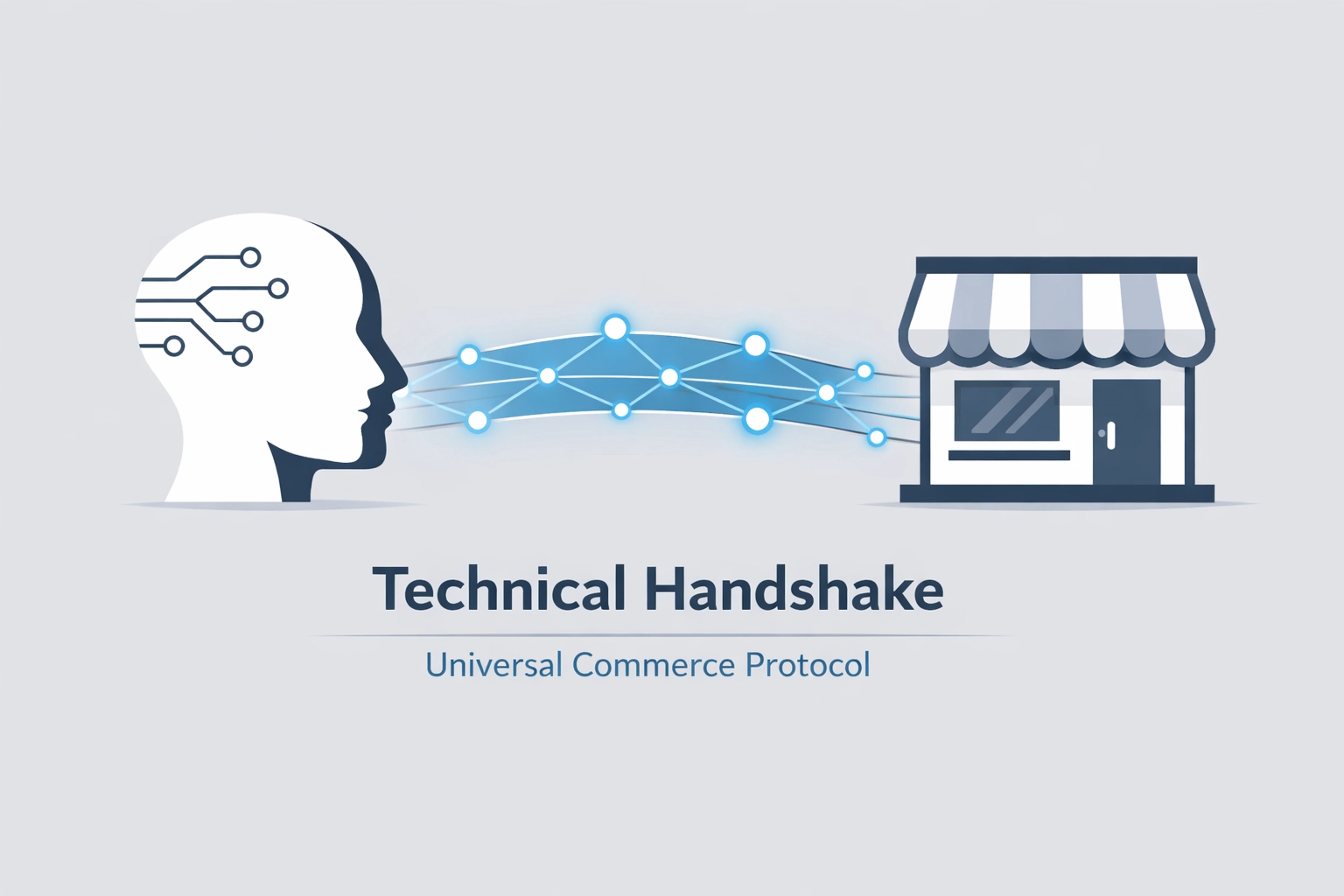
UCP changes the game by establishing an open-source, unified language for digital commerce. Instead of scraping your site, an AI agent performs a technical "handshake" with your server. It asks, "What can you do?" and your site responds with a standardized list of capabilities:
- Discovery: "I have these products in stock at these prices."
- Cart: "Here is how you add items and calculate taxes."
- Checkout: "I accept these payment protocols and can complete the transaction right now."
- Order Management: "Here is the tracking number and the return policy."
This protocol is backed by the heavy hitters: Shopify, Etsy, Target, Walmart, and Stripe are already on board. This is no longer a "maybe." It is the new standard for how things are bought and sold online.
Why UCP is the New "Technical SEO"
For the last decade, technical SEO was about sitemaps, robots.txt, and Core Web Vitals. While those still matter, the frontier has moved. In 2026, technical SEO is about Agentic Discoverability.
If an AI agent is tasked with finding "the best eco-friendly running shoes under $120 available for overnight delivery," it isn't going to look at your beautiful lifestyle photography. It’s going to query the UCP layer of the web. If your site doesn't support the protocol: or if your UCP implementation is buggy: the agent moves on to the next vendor in milliseconds.
This is why we’ve pivoted our AI SEO Audits to focus heavily on protocol compliance. We aren't just looking at whether Google can crawl your pages; we’re looking at whether an AI agent can transact with your data.
The $N \times N$ Integration Problem (And How UCP Fixes It)
In the old world of e-commerce, if a brand wanted to sell on a new platform, they needed a custom integration. Want to sell on Instagram? Integration. Want to sell through a specific voice assistant? Integration. This is the "N x N" problem: every new buyer platform requires a new connection to every seller platform. It’s a mess, and it’s expensive.
UCP collapses this complexity. By integrating UCP once, your store becomes accessible to every AI agent and platform that speaks the protocol. It’s a "plug and play" model for global commerce. For small to mid-sized businesses, this is a massive win. It levels the playing field, allowing you to compete with giants like Amazon because the AI agent doesn't care about the size of your brand: it only cares about the quality of your data and the ease of the transaction.
Moving Beyond the Click: The Role of Structured Data
To win in the UCP era, your Content Strategy must be data-first. In the past, we wrote for keywords. Now, we write for attributes.
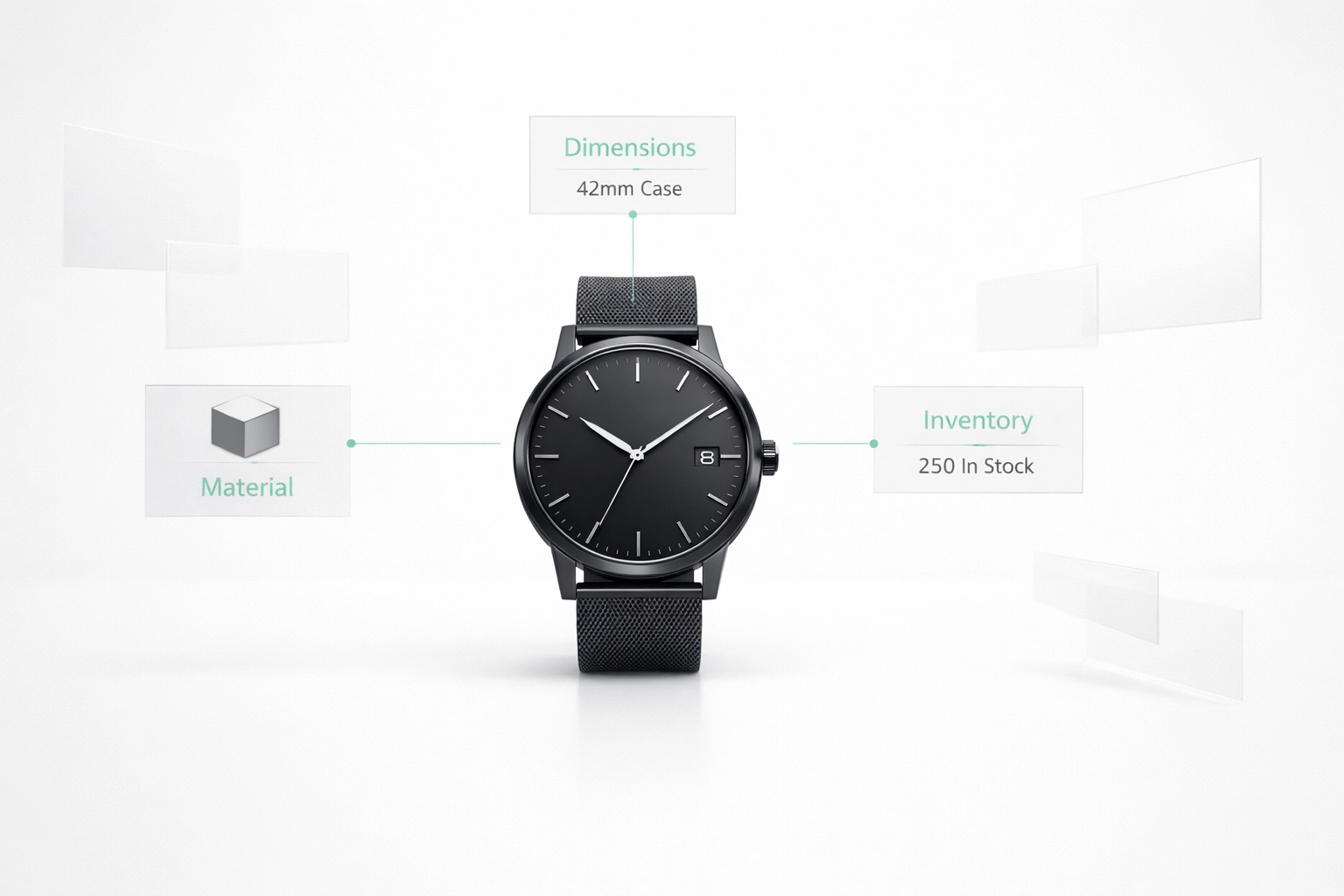
When an AI agent interacts with your site via UCP, it relies on incredibly granular structured data. It needs to know the exact dimensions, weight, material composition, and real-time inventory levels of your products. This isn't just "Schema.org" fluff anymore; this is the literal fuel for your sales engine.
If your content strategy doesn't include a rigorous plan for maintaining high-fidelity product data, your UCP implementation will fail. You can have the best protocol in the world, but if the data you're feeding it is "Product Name: Blue Shirt" with no other details, the AI agent will skip you in favor of a competitor who provides 50 different data points about that same shirt.
How AI Agents Complete Purchases Directly
The most revolutionary part of UCP is the checkout. Through the Agent Payments Protocol (AP2), AI agents can now process payments securely without the human ever seeing the "Review Your Order" page.
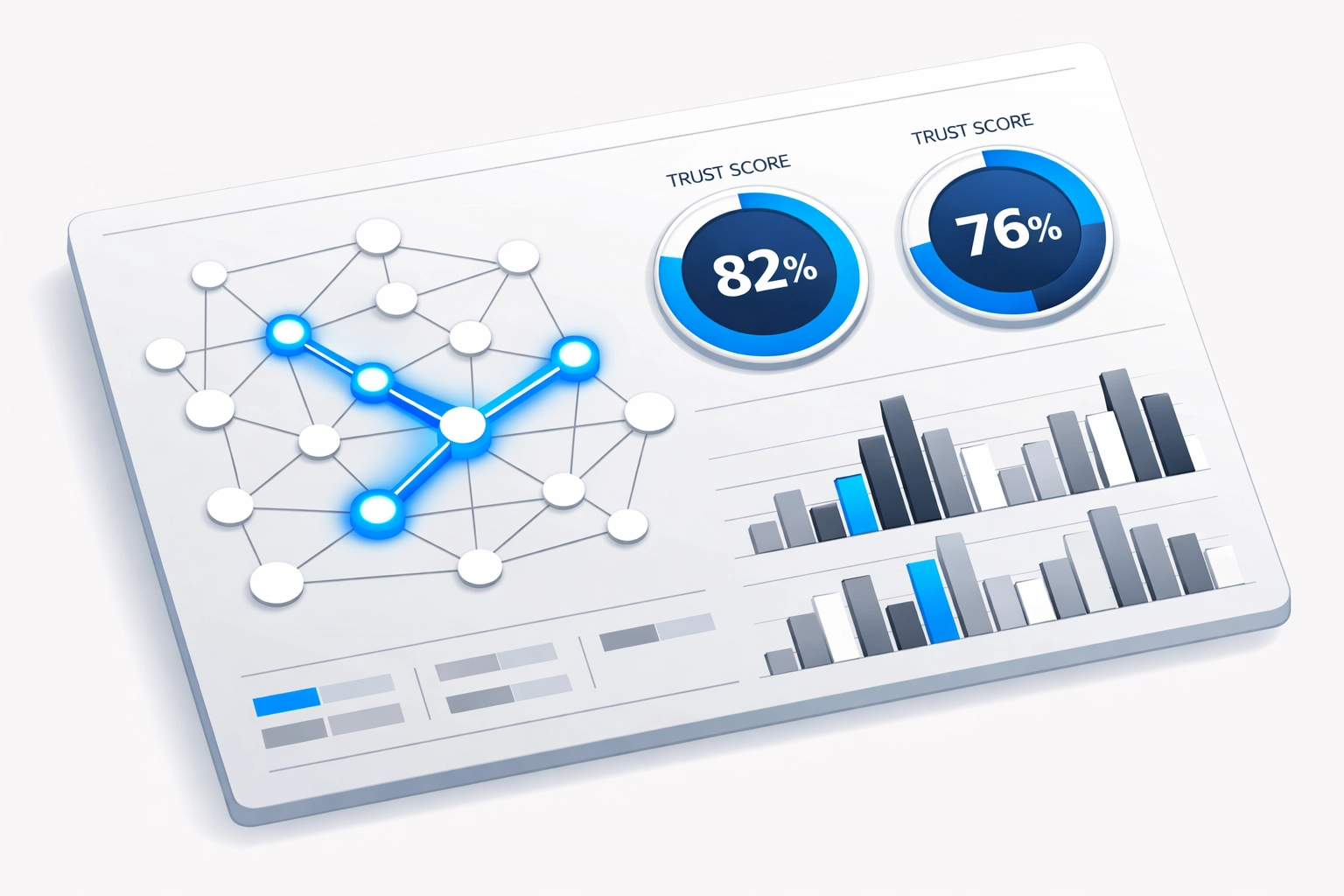
Imagine your customer tells their AI assistant: "I need more laundry detergent, get the same one as last time but find the best price." The agent searches, compares prices via UCP, verifies the store's "trust score" via services like CiteMetrix, and completes the purchase using a stored digital wallet.
The first time the human hears about it is when a notification pops up saying, "Your detergent will arrive tomorrow."
As a business owner, you need to ask yourself: Is your checkout process "agent-friendly"? Most traditional checkouts are filled with friction: forced account creation, newsletter pop-ups, and complicated CAPTCHAs. These are agent-killers. UCP bypasses this friction by providing a machine-readable path to "Success."
Measuring Success in an Agentic World
How do you measure SEO success when there are no "clicks" to your website? This is a question we get at Expert SEO Consulting almost daily.
Traditional analytics are becoming less reliable. If an agent completes a purchase via UCP, that user may never technically "visit" your URL in a way that Google Analytics 4 tracks as a standard session. This is where CiteMetrix comes in. We are increasingly using specialized tools to track "Brand Citations" and "Agent Preference Scores."
We need to know:
- How often is your brand being cited as a top choice by AI models?
- What is the "conversion rate" of AI agent queries to UCP transactions?
- Where in the "technical handshake" is the agent dropping off?
If you want to see how your site stacks up, check out our 2026 SEO Success Scorecard, which breaks down these new metrics in detail.
The Action Plan: How to Prepare for the UCP Frontier
The transition to Universal Commerce Protocol isn't something that will happen in five years: it's happening right now. If you're an e-commerce business owner, here is your immediate roadmap:
- Audit Your Technical Infrastructure: Is your current platform (Shopify, Magento, Custom) UCP-ready? Most major platforms are rolling out updates, but they often require manual configuration.
- Focus on Data Fidelity: Clean up your product feeds. Ensure every attribute: from color hex codes to shipping weights: is accurate and formatted for machines.
- Implement Agent-Friendly Payments: Ensure your payment processor (like Stripe or Visa) is configured to handle agentic transactions through the AP2 standard.
- Monitor Your "Agentic Visibility": Use tools like CiteMetrix to see how AI agents perceive your brand. Are you the "first choice" or an afterthought?
- Revisit Your Content Strategy: Stop writing purely for humans. Start building content that acts as a knowledge base for AI. Check out our Content Strategy services to see how we're helping brands make this shift.
The technical frontier of SEO is no longer about tricking an algorithm into ranking you higher. It’s about building a business that is so technically accessible and data-rich that the world’s AI agents can’t help but buy from you.
Don't Get Left Behind in the "Agentic" Era
The shift to UCP is the most significant change to e-commerce since the invention of the mobile shopping cart. It is fundamental, irreversible, and: for those who ignore it: potentially catastrophic.
You don't have to navigate this alone. At Expert SEO Consulting, we specialize in helping businesses bridge the gap between traditional SEO and the future of AI-driven commerce. Whether you're a small boutique or a nationwide retailer, the rules of the game have changed.
Ready to see if your site is ready for the next frontier? Let's talk about how we can future-proof your e-commerce engine.
Book a consultation with our team today and let’s get your UCP strategy off the ground.