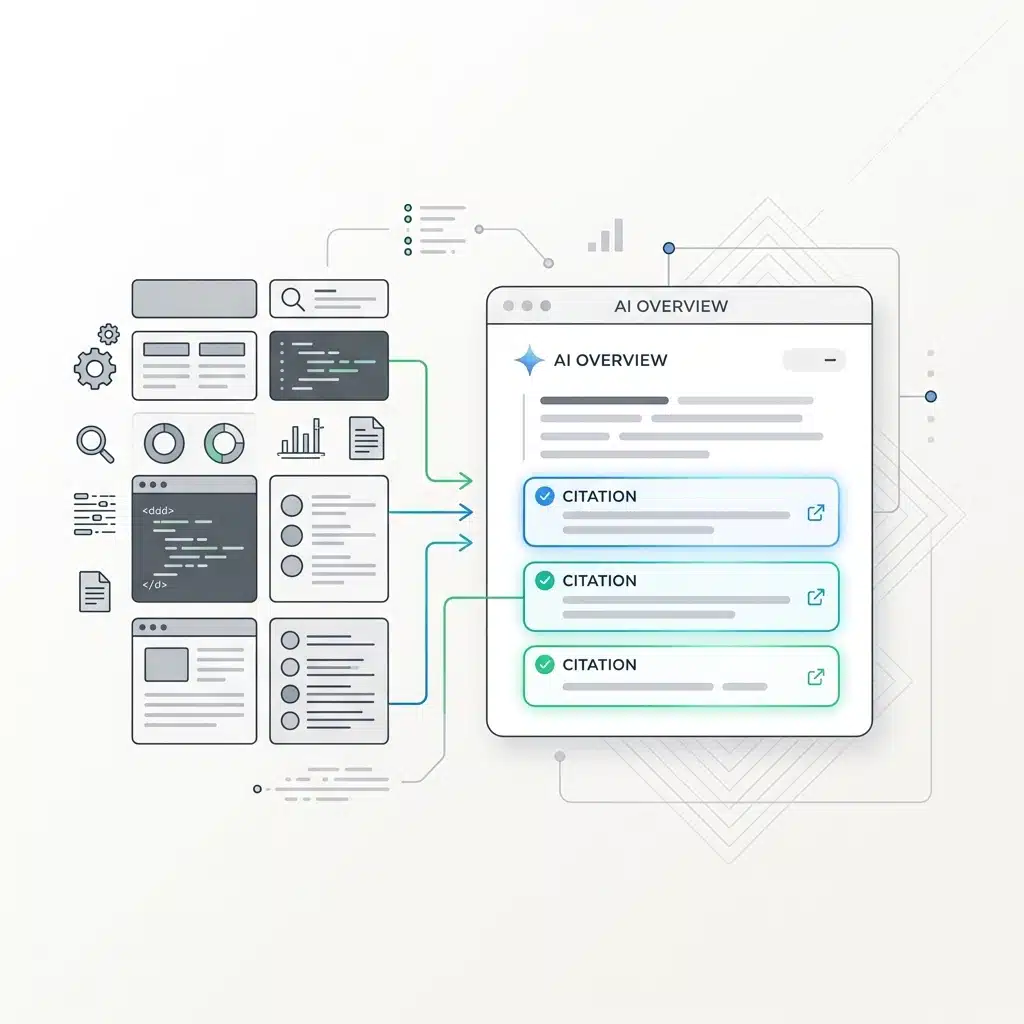
Let this sink in for a second – the majority of Google Searches are AI-powered. We aren’t talking about a “future trend” or a “beta test” anymore. In April 2026, the traditional list of ten blue links is effectively the backup plan. The primary real estate: the “Position Zero” of the modern era: is the AI Overview (SGE). If your brand isn’t being cited in that synthesized summary at the top of the page, you are fighting for the scraps of the remaining 42% of traffic.
The game hasn’t just changed; the board has been flipped. We’ve moved from traditional Search Engine Optimization (SEO) into the era of Agentic Engine Optimization (AEO). At Expert SEO Consulting, we’ve spent the last year refining the “Snippet Optimizer” framework to ensure our clients don’t just exist in the search results: they dominate the citations that drive the AI’s narrative.
The Death of the “Click-Through” and the Birth of the “Citation”
For decades, we obsessed over click-through rates (CTR). We wanted users to see a meta description, feel a spark of curiosity, and click. But AI Overviews have shifted the user behavior fundamentally. Many users now get their answer directly from the Google Gemini-powered interface without ever leaving the search results page.
This “zero-click” reality sounds terrifying to old-school marketers, but here is what most people miss: being the cited source in an AI Overview creates a level of brand authority that a standard organic listing never could. When Google’s AI says, “According to [Your Brand], the best way to optimize a snippet is…” you aren’t just a search result. You are the verified expert.
Securing that citation requires a specialized Content Strategy that prioritizes machine-readability and semantic clarity over keyword density.

Agentic Engine Optimization (AEO): The New North Star
Traditional SEO was about convincing a crawler that your page was relevant. AEO is about proving to an AI agent: an “agentic engine”: that your content is the most factual, well-structured, and authoritative answer to a specific problem.
The AI doesn’t just look for keywords; it looks for entities and relationships. It asks: “Does this source provide a definitive answer? Is the data structured in a way I can easily synthesize? Does this source have the topical authority to be trusted?”
To win in this environment, your site needs to undergo regular AI SEO Audits to identify where your content is failing to communicate with these AI agents. If your data is buried in long, rambling paragraphs or hidden behind non-semantic code, the AI will bypass you for a competitor who is “Snippet Optimized.”
The Snippet Optimizer Framework: How to Win the Citation
Winning an AI Overview citation is heavily correlated with winning the Featured Snippet. Our research shows that pages that capture the “Position Zero” snippet are cited in the AI Overview over 70% of the time. Here is the blueprint for optimizing your content for this new reality.
1. The 40-60 Word Rule
AI models are programmed for conciseness. When you are targeting a specific query, your “direct answer” should be between 40 and 60 words.
- Why? Paragraphs shorter than 30 words often lack enough context for the AI to deem them “complete.”
- The Risk: Go over 80 words, and you risk the AI truncating your message or: worse: misinterpreting your point because of “fluff” sentences.
2. The Question-Heading Hook
Structure your H2s and H3s as direct questions. Instead of a heading that says “Snippet Optimization Benefits,” use “What are the benefits of snippet optimization for AEO?”
Immediately following that heading, provide your 40-60 word answer. This creates a clear “handshake” between your content and the AI agent. You’ve identified the intent (the question) and provided the immediate value (the answer).
3. Use “Low-Friction” Language
The AI agents that power Google’s overviews prefer simple, accessible language. Avoid unnecessary jargon: unless it’s a specific technical entity: and use direct, active voice.
- Pro Tip: Use “you” instead of first-person “we” or “I” when providing instructions. It makes the content feel more like a universal truth, which AI systems are more likely to cite as a factual source.

Beyond the Text: Structural Requirements for AI Citations
You can write the best content in the world, but if the technical foundation is shaky, the AI will ignore you. This is where many DIY SEO efforts fall apart.
Structured Data and Schema Markup
Schema markup is no longer optional; it is the fundamental language of AEO. By using JSON-LD to explicitly define your data: whether it’s a “How-to,” a “FAQ,” or a “Product”: you are giving the AI a cheat sheet.
When Google’s AI is trying to synthesize an answer about “how to secure a citation,” it looks for the HowTo schema to understand the steps. If your competitor has it and you don’t, they win: every single time. Check out our AI search evolution category for more on how these technical shifts are impacting the landscape.
Lists and Tables: The AI’s Favorite Snacks
AI Overviews love lists. They are easy to parse and easy to display in a summarized format.
- Bulleted Lists: Keep them to 5-8 items.
- Numbered Lists: Use these for sequential processes.
- Tables: Tables are incredibly high-value for AEO because they preserve exact data points without the risk of linguistic “hallucination” from the AI. If you have data, put it in a table.

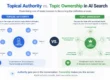
Building Topical Authority (The “Cluster” Strategy)
Google’s AI doesn’t just look at a single page; it looks at your entire site’s footprint to determine if you are a “trustworthy” source. This is the “E” for Experience and “A” for Authority in E-E-A-T.
You cannot win a citation for a high-value keyword if that is the only page on your site dedicated to that topic. You must build a content cluster. If you want to be cited for “AI Snippet Optimization,” you need supporting articles on:
- The history of Google’s AI updates.
- The technical side of Gemini and LLMs in search.
- Case studies on AEO implementation.
- Comparisons of different snippet types.
When you surround your “money page” with these supporting assets, you signal to the AI that you aren’t just lucky: you’re the expert.
The Real-World Impact: Why This Matters Now
Let’s be blunt: the companies that ignore AEO in 2026 will follow the same path as the companies that ignored mobile optimization in 2015. They will become invisible.
When 58% of searches are AI-powered, your organic traffic isn’t just “dipping”: it’s being redirected to your competitors who bothered to optimize their snippets. Securing a citation in an AI Overview is the equivalent of a primetime television endorsement. It’s a massive trust signal that shortens the sales cycle and positions your brand as the definitive leader in your space.

What You Need To Do Next
The transition to AI-driven search is irreversible. The “Snippet Optimizer” mindset isn’t just about getting a few more clicks; it’s about future-proofing your brand’s digital existence.
- Audit Your Current Snippets: Are you winning any? If so, are they being cited in AI Overviews?
- Refactor Your Content: Go back to your top-performing pages and implement the 40-60 word direct answer rule.
- Implement Advanced Schema: Don’t just settle for the basics. Use specific, nested schema to define your site’s entities.
- Monitor Your Mentions: Use tools to track when your brand is being cited (or ignored) by Google’s AI.
If this sounds like a lot of heavy lifting: it is. The bar for entry into the “Citation Circle” is higher than it has ever been. But the rewards for those who get it right are unprecedented.
Don’t let your brand get left behind in the “blue link” era. It’s time to modernize your presence and claim your spot at the top of the AI Overview.
Ready to secure your citations and dominate the AEO landscape? Book a consultation with Expert SEO Consulting today and let’s put the Snippet Optimizer framework to work for you.