For years, the SEO industry has sold you a comfortable lie: "Just write great content, and the rankings will follow." It’s a poetic sentiment, but in 2026, it’s also a dangerous one. If you’re a business owner wondering why your meticulously researched, 2,000-word masterpiece is sitting on page four while a Reddit thread and a three-sentence AI summary take the top spots, you aren’t alone. You’re simply playing by a rulebook that Google set on fire eighteen months ago.
The reality is that "good content" is no longer the finish line; it is barely the entry fee. We are currently witnessing a fundamental shift in how information is indexed, retrieved, and presented. With AI-powered results now accounting for 58% of Google searches, the traditional "click-and-read" model is being replaced by the "summarize-and-act" model.
At Expert SEO Consulting, we’ve moved past the "content is king" era. We’ve entered the age of Agentic Engine Optimization (AEO). If your strategy hasn’t made that jump, your traffic won't either.
The Death of the "Quality" Monopoly
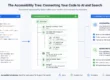
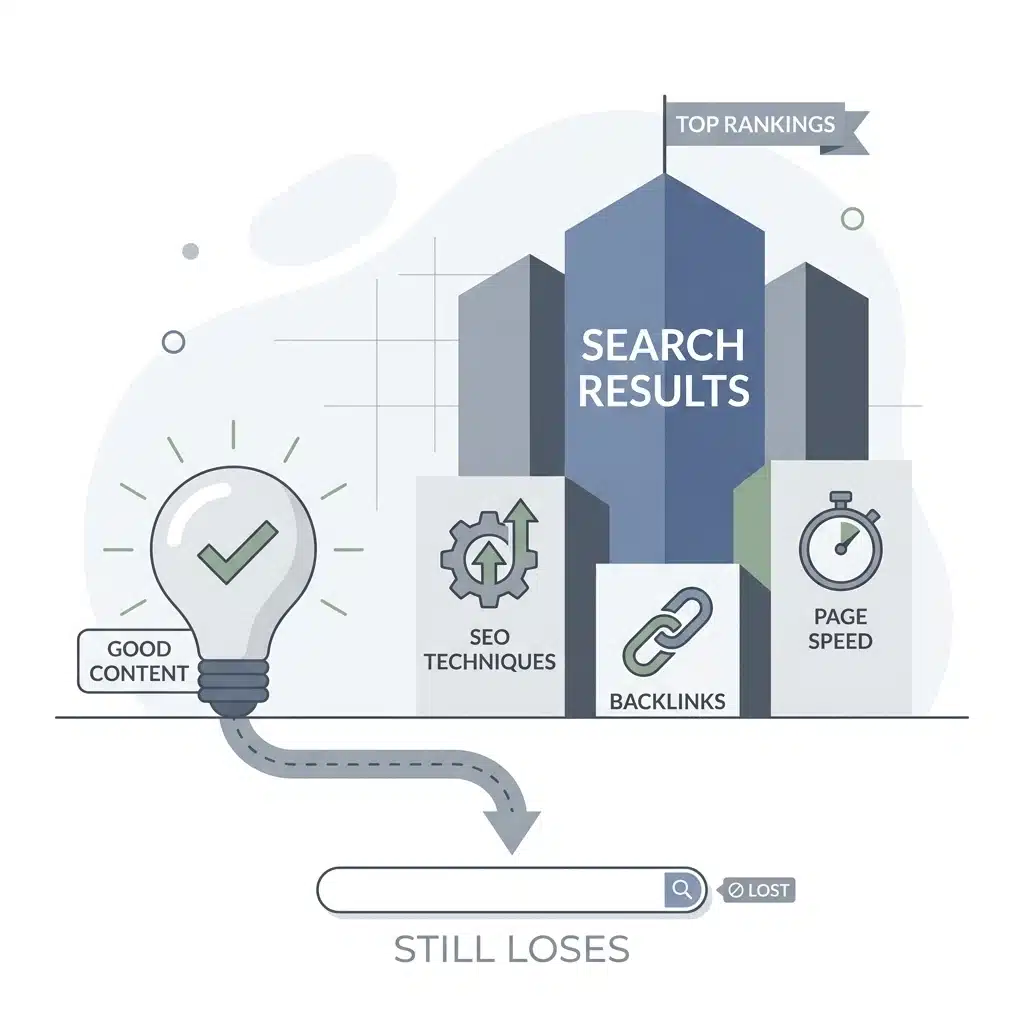
You can hire the best writers in the world, but if your site lacks the technical architecture to support them, you’re shouting into a vacuum. The reason "good content" loses isn't usually the writing itself: it’s the invisible barriers that prevent that writing from being recognized as an authority.
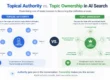
Google’s algorithm has evolved from a keyword-matching engine into a sophisticated entity-recognition system. It doesn’t just read your words; it evaluates your position in the "knowledge graph." If CiteMetrix shows that your competitors have a higher topical authority score because they’ve built a comprehensive ecosystem around a subject while you’ve only written a single "good" post, Google will choose the ecosystem every time.
The Authority Gap
Most small to mid-sized businesses suffer from what we call the Authority Gap. You might write a better article than a major industry publication, but Google views the publication as a "trusted entity." To bridge this gap, you must stop thinking about individual blog posts and start thinking about topical clusters.

Why AI is Eating Your Organic Clicks
The 58% statistic mentioned earlier: that AI-powered results now dominate the majority of searches: is the single most important metric for your 2026 marketing budget. When Google provides an AI Overview (SGE) at the top of the page, the "Zero-Click Search" becomes the default.
In this environment, "good content" that merely answers a simple question is obsolete. Why would a user click your link to find out "how to calculate ROI" when the AI gives them the formula and a calculator right in the search results?
To survive, your content must provide:
- Proprietary Data: Something an LLM hasn't already scraped.
- Lived Experience: Personal anecdotes and case studies that AI cannot replicate.
- Complex Synthesis: High-level strategic advice that requires human nuance.
This is where organic SEO evolves into AEO. You aren't just optimizing for a search engine; you are optimizing for the agents (AI) that feed information to the user.
The Problem: Isolated Content vs. Topic Clusters
One of the most frequent mistakes we see during a search console audit is the "Island Content" phenomenon. This happens when a business produces high-quality content that isn't internally linked or strategically categorized.
If you have a great post about "Sustainable Packaging" but no supporting content about "Biodegradable Materials" or "Supply Chain Ethics," Google views your site as a hobbyist rather than an expert.
At Expert SEO Consulting, we solve this using our internal keyword clustering tool. Instead of targeting "keywords," we target "universes." We map out every adjacent query a customer might have and build a web of content that proves to Google you are the definitive source of truth for that entire niche. If you aren't using a website content gap analysis tool to find these holes, you are essentially leaving the door open for your competitors to walk in and take your traffic.

Technical Debt: The Silent Ranking Killer
You could have the most insightful content on the internet, but if your site takes four seconds to load or has a messy robots.txt file, Google’s crawlers will lose interest before they even get to your first paragraph.
Technical SEO is the foundation upon which your content sits. We often see businesses invest thousands in "quality content" while their site architecture is crumbling. This is why our seo-services always begin with a deep dive into the backend.
Common technical barriers include:
- Rendering Issues: If your content is hidden behind complex JavaScript that Google can't easily render, it doesn't exist.
- Mobile Fragmentation: With the majority of searches happening on mobile devices, any friction in the user experience results in an immediate bounce.
- Poor Indexing: Using tools like a robots-txt-analyzer is essential to ensure Google is spending its "crawl budget" on your most important pages, not your privacy policy or login screens.
Leveraging CiteMetrix for Competitive Intelligence
To win in 2026, you need to know exactly what your competitors are doing right: and where they are failing. We use CiteMetrix to perform a content gap analysis that goes beyond simple keyword tracking.
CiteMetrix allows us to see the "Entity Strength" of your competitors. We can identify which topics they are "owning" in the eyes of Google and find the underserved sub-topics where you can achieve a quick win. If you’re just guessing what to write about, you’re gambling with your marketing budget. Data-driven content selection is the only way to ensure a return on investment.

From SEO to AEO: The Future of Search
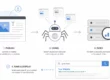
The shift to Agentic Engine Optimization means that your content must be structured in a way that AI agents can easily parse and cite. This involves:
- Structured Data (Schema): Explicitly telling the search engine what your content is, who wrote it, and why they are an authority.
- NLP Extraction: Using an NLP extractor to ensure your key points are phrased in a way that aligns with how natural language processors categorize information.
- Direct Answer Optimization: Crafting "Featured Snippet" bait that AI Overviews will pull directly into the 58% of AI-powered search results.
If your current agency is still talking about "keyword density," they are living in 2018. The game has changed. You need to be optimized for the agents that are now making decisions for the users.
The "Good Content" Diagnostic Checklist
If your traffic is stagnating despite your best efforts, it’s time to run a diagnostic. Ask yourself these three questions:
- Is my content part of a cluster? Use a clustering tool to ensure every post is supported by internal links and related topics.
- Is my technical foundation sound? Run a speed optimizer check and ensure your site is built for the core web vitals of 2026.
- Am I winning the "Entity" game? Check CiteMetrix to see if Google views your brand as an authority in your niche or just another website.

Stop Guessing, Start Dominating
The era of "throwing content at the wall to see what sticks" is over. Google is smarter, the SERP is more crowded, and AI is filtering out the noise. To rank today, you need a combination of high-level strategy, technical precision, and agentic optimization.
At Expert SEO Consulting, we don’t just write "good content." We build authoritative digital ecosystems that demand attention from both humans and AI agents. We’ve helped hundreds of mid-sized businesses reclaim their traffic by identifying the positioning barriers that "good content" can't overcome on its own.
Don't let your hard work get buried on page two. The landscape has shifted, and it’s time for your strategy to shift with it.
Ready to see what's actually holding your rankings back?
Book a consultation with our team today and let’s bridge the gap between "good" and "number one."