
You check your brand's visibility in ChatGPT, see your product prominently cited in the default feed, and assume your generative search strategy is bulletproof. But switch the model interface from Instant to Thinking mode, run the exact same prompt, and watch your brand vanish entirely: replaced by a competitor you've never even heard of.
If you think OpenAI's search interface is just delivering faster or slower versions of the exact same answer, you are missing a fundamental shift in how artificial intelligence retrieves knowledge. Recent industry analyses show that distinct reasoning tiers do not merely scale speed; they fundamentally alter retrieval parameters, token compute budgets, and source evaluation algorithms.
For digital marketers and brand executives, this bifurcation creates a dangerous blind spot. Understanding why Instant and Thinking modes cite completely different sources: and how to audit your footprint using specialized tracking platforms: is no longer optional. It is essential for survival in modern search.
The Architecture Divide: Instant vs. Thinking Mode Mechanics
To understand why your citation profile shifts dramatically between modes, you have to look under the hood at how compute resources are allocated.
Instant mode is engineered as a high-throughput workhorse. It operates under tight latency constraints (typically responding in one to three seconds) and employs minimal internal chain-of-thought processing. When a user submits a query, Instant mode relies on rapid semantic retrieval, matching the query against high-velocity indexes and surface-level association vectors. Because its compute budget per token is strictly rationed, it favors concise, highly prominent, and easily digestible web references.
Conversely, Thinking mode unleashes a vastly expanded computational budget. It executes hidden, multi-step reasoning paths before outputting a single word. By running extensive tree-of-thought evaluations, logical consistency checks, and deeper semantic syntheses, Thinking mode takes anywhere from five to thirty seconds to formulate a response.
This extended processing time changes the retrieval criteria entirely. Instead of grabbing the most obvious high-ranking page in a standard index, Thinking mode digs into authoritative reference nodes, granular case studies, and dense technical documentation that support complex logical arguments.

Why Citation Sources Diverge Across Modes
The divergence in citations between these two modes stems from a fundamental conflict between popularity and provenance.
1. The Velocity Bias of Instant Mode
Instant mode favors high domain authority, broad keyword matching, and widespread brand mentions. Because it lacks the compute cycles to cross-examine complex claims, it leans on established aggregator sites, top-tier media outlets, and high-volume content that dominates traditional search rankings. If your brand has strong shallow visibility, you will frequently appear here.
2. The Verification Bias of Thinking Mode
Thinking mode acts like a meticulous researcher. As it constructs multi-step answers, it evaluates sources for logical coherence, granular technical detail, and contextual depth. It frequently bypasses generic listicles and PR-driven roundups in favor of original research reports, academic citations, developer documentation, and niche expert blogs that provide verifiable data points.
When your brand strategy only targets top-of-funnel keyword volume, you win in Instant mode but fail the rigorous scrutiny of Thinking mode.
Uncovering Your Citation Blind Spots with CiteMetrix
Auditing how your brand appears across different AI reasoning environments requires more than manual spot-checking. This is where advanced monitoring platforms become indispensable.
Using CiteMetrix, marketing teams can track exact brand citations, sentiment, and source attribution across various AI platforms and reasoning tiers. CiteMetrix allows you to map out whether your digital assets are being pulled into fast conversational lookups or deep analytical syntheses.
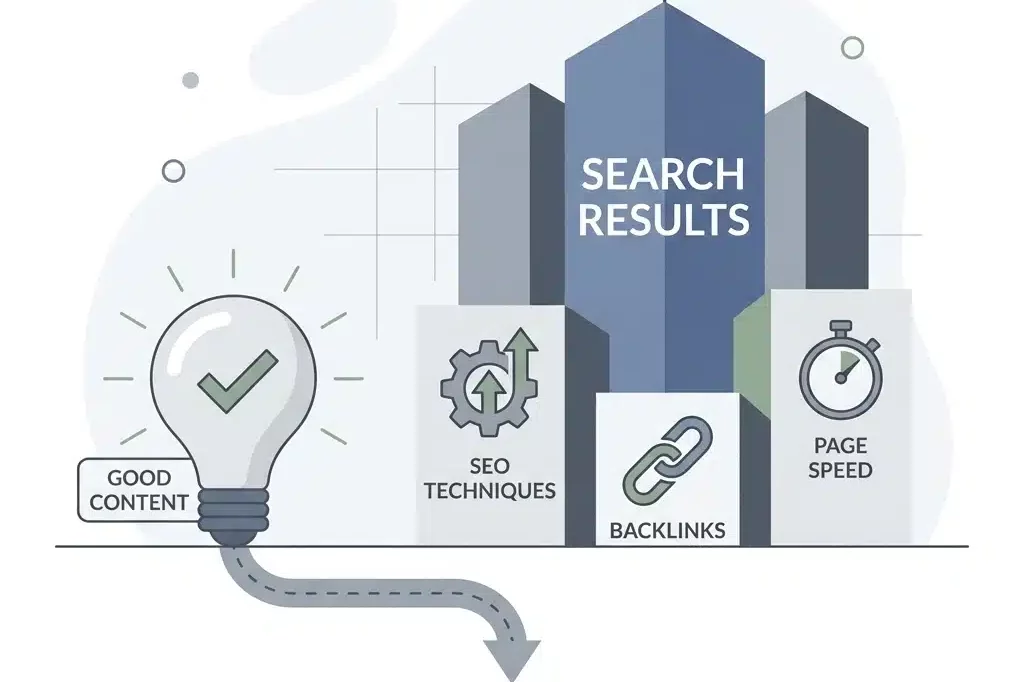
When analyzing your coverage gaps through a dedicated citation tracker, look for these common patterns:
- The High-Instant / Zero-Thinking Trap: Your brand dominates quick summaries because of high social mentions, but disappears when users ask complex, multi-step queries about industry solutions because your site lacks deep technical content.
- The Niche-Authority Paradox: You are invisible in Instant mode due to lower overall search volume, but you anchor every single citation in Thinking mode because LLMs rely on your whitepapers for complex logic.
To explore how these tracking frameworks integrate into broader visibility audits, review our guide on how an AI citation tracker strengthens your search visibility.
Strategic Optimization: How to Win in Both Modes
Achieving dual-mode dominance requires a balanced optimization strategy that satisfies both rapid retrieval engines and deep analytical evaluators.
Optimize for Speed and Scale (Instant Mode)
To secure your position in fast conversational responses, focus on:
- Clear Semantic Entity Definitions: Ensure your brand, products, and core services are explicitly defined using robust schema markup.
- Concise Executive Summaries: Structure key landing pages with direct, bulleted answers right below H2 headings so Instant mode can ingest your core value proposition instantly.
Optimize for Depth and Authority (Thinking Mode)
To capture citations when models engage in deep reasoning, you must build content that AI systems trust for complex problem-solving:
- Original Research and Data: Publish proprietary studies, benchmarks, and data tables that LLMs cite as definitive proof points during multi-step reasoning.
- Exhaustive Technical Documentation: Create comprehensive guides, implementation walkthroughs, and architectural breakdowns that serve as reference nodes for deep logical queries.

For a deeper dive into structuring your digital infrastructure for multi-platform environments, explore our specialized SEO tools and support services.
Future-Proofing Your Generative Search Strategy
The evolution of AI search from single-pass answers to multi-tiered reasoning models proves that the old playbook of chasing static keyword rankings is obsolete. Your brand cannot afford to win only half the battle. By auditing your presence across both Instant and Thinking modes and deploying comprehensive optimization frameworks, you ensure your authority remains unshakeable: regardless of how much compute the model uses.
Ready to uncover where your brand stands in generative search? Book a consultation with our expert team today to map out your custom AI citation strategy.